A significant geopolitical shift is unfolding on India's eastern frontier, demanding urgent strategic attention. The erosion of India-Bangladesh relations following the political changes in Dhaka presents a complex challenge, compounded by Dhaka's warming ties with both Pakistan and China. This realignment, alongside a noticeable rise in religious fundamentalism, is fostering a new and high-stakes form of anti-Indian politics that threatens India's core security interests in the sensitive northeastern region.
A Perfect Storm: Geopolitical Shifts and Internal Transformation
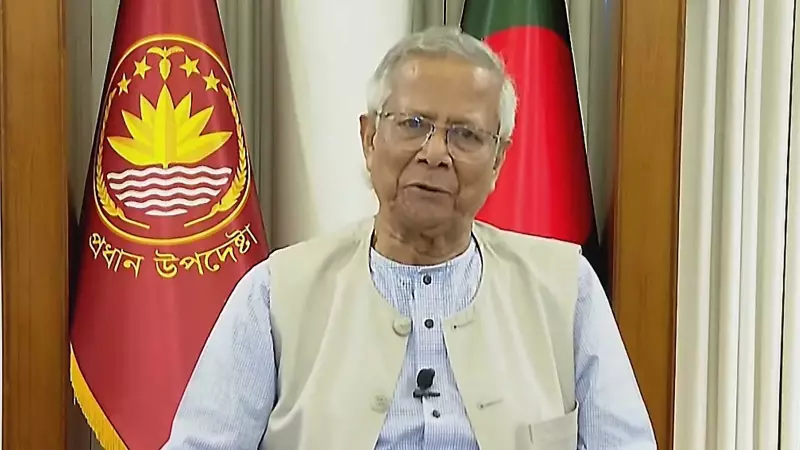
The swift deterioration in bilateral ties after Muhammad Yunus and his caretaker government assumed power was, to many observers, an expected outcome. India's prolonged support for the previous Awami League administration, despite criticisms of its authoritarian tendencies, had fostered significant resentment among sections of the Bangladeshi populace. New Delhi's subsequent decision to back the interim government, even as it faced allegations of flouting democratic norms, has now come at a substantial strategic and moral cost.
Concurrently, Bangladesh is undergoing a profound internal transformation. The country appears to be rewriting its foundational narrative, moving away from its secular-linguistic roots towards religious majoritarianism and extremism. Incidents like the attack on the syncretic cultural institution Chhayanaut are not isolated but part of a broader campaign. Minority communities face increasing vilification, while militant religious groups are gaining ground.

This internal shift dovetails dangerously with external geopolitical maneuvering. An increasingly congenial relationship is developing between Dhaka and Islamabad, aimed at reimagining Bangladesh's history to facilitate full normalization with Pakistan. More critically, Bangladesh's long-standing economic ties with China are rapidly expanding into the defense and strategic domains. With major Chinese investments in infrastructure, ports, and roads, whispers of a potential strategic link-up between Bangladesh, Pakistan, and China are growing louder, directly threatening India's strategic and maritime interests in the east.
The High Cost of Strategic Paralysis for India
For India, the implications are severe. Bangladesh's growing proximity to China and Pakistan directly imperils the security of India's northeastern states, with some political voices in Dhaka even openly discussing cutting off this region. However, India's response has been perplexingly measured and reactive. Its own domestic record on minority issues has undermined its moral authority to critique Dhaka's treatment of its Hindu and Buddhist communities.
This strategic hesitation is emboldening adversarial forces. The combination of rising extremism and deepening anti-Indian sentiment creates a volatile mix. Given Bangladesh's chequered electoral history, any future government is likely to remain dependent on fundamentalist forces, limiting India's diplomatic options. While India may feel its choices are stunted—lacking a clear political ally in Dhaka and grappling with its own majoritarian impulses—strategic paralysis is not a viable option at such a pivotal moment.
Charting a Path Forward: India's Imperative to Act
New Delhi must formulate a decisive and multi-pronged strategy to deter further consolidation of this adverse axis. Diplomacy and economic engagement remain crucial first steps, but stronger measures are necessary should they falter. An immediate priority must be strengthening ties with Myanmar, especially considering the strained relations between Dhaka and Naypyidaw. Concurrently, India must deepen engagement with Southeast Asian nations to prevent strategic isolation in case of regional tensions.
India also needs to closely examine the evolving US-Bangladesh relationship. Speculation about Washington's role in the previous government's downfall, combined with recent strains in Indo-US ties and the Trump administration's affinity for Pakistan's military leadership, further constrains India's room for maneuver.

The historical context looms large. Bangladesh's birth in 1971 was forged in a brutal war against Pakistan, with India playing a pivotal role. The nation's identity has long oscillated between secular-linguistic and religious poles. Today, a section of the youth, animated by global political volatility, seeks a "fresh start," often without grasping the implications of severing these historical and geographical realities.
Ultimately, how Bangladesh reconciles its past, present, and future is its sovereign right. Yet, in the interconnected landscape of South Asia, destinies are intertwined. Ethnic violence and majoritarian impulses spill across borders. India now faces a deteriorating strategic environment and growing loneliness. This solitude, however, must invite sober reflection and resolute action. If India cannot ensure a friendly government in Dhaka, it must, at the very least, work to neutralize Bangladesh's capacity to harm its vital national interests. The time for kid gloves is over; India must start acting right away.