India's Unique Railway Stations Split Between Two States
In a country as vast and diverse as India, the railway network often mirrors its complex geographical and administrative landscape. Among the thousands of stations that dot the Indian Railways map, two stand out for their unique characteristic: they are geographically divided between two different states. This unusual arrangement presents interesting challenges and stories related to governance, operations, and local identity.
Bhawani Mandi Railway Station: A Junction Between Rajasthan and Madhya Pradesh
One of these remarkable stations is Bhawani Mandi, located in the western part of India. This station serves as a crucial junction where the boundaries of Rajasthan and Madhya Pradesh intersect. The platform area of Bhawani Mandi is strategically positioned such that one part falls under the jurisdiction of Rajasthan, while the other is administered by Madhya Pradesh.
This division has practical implications for railway operations and local administration. For instance, railway staff and officials might need to coordinate across state lines for maintenance and management tasks. Additionally, passengers traveling through Bhawani Mandi experience a unique cross-state journey without even leaving the station premises.

Navapur Railway Station: Bridging Maharashtra and Gujarat
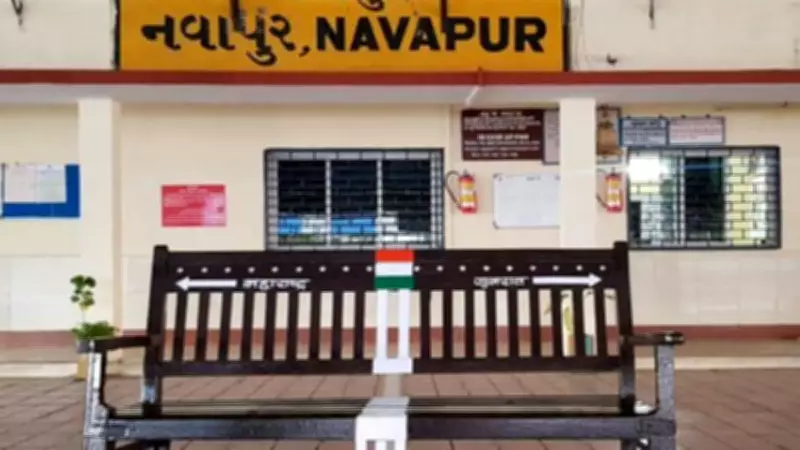
The second station with this distinctive feature is Navapur, situated in the western coastal region. Navapur Railway Station is split between the states of Maharashtra and Gujarat, making it another fascinating example of India's inter-state railway infrastructure.
At Navapur, the platform and surrounding areas are divided by the state border, which runs through the station. This setup requires careful planning for services like ticketing, security, and station upkeep, as responsibilities are shared between the railway zones of the two states. It also highlights how Indian Railways adapts to geographical realities to ensure seamless connectivity.
Operational and Administrative Aspects
The existence of such stations raises intriguing questions about how Indian Railways manages these cross-border facilities. Key operational aspects include:
- Jurisdictional Coordination: Railway authorities from both states must work together to handle day-to-day operations, from scheduling trains to maintaining infrastructure.
- Revenue Sharing: Ticket sales and other revenues generated at these stations might be allocated based on the portion of the station in each state, requiring transparent accounting systems.
- Security Arrangements: Law enforcement and security measures involve coordination between the police forces of the two states, ensuring passenger safety across the divided premises.
Significance and Cultural Impact
Beyond logistics, these stations symbolize India's unity in diversity. They serve as microcosms where cultural and linguistic elements from two states blend, offering passengers a glimpse into regional variations. For locals, these stations often become points of pride and identity, representing their unique position at the crossroads of state boundaries.
Moreover, such stations underscore the efficiency of Indian Railways in navigating complex administrative landscapes. By maintaining operational harmony across state lines, they demonstrate the robustness of India's federal structure and the collaborative spirit of its railway network.
In summary, Bhawani Mandi and Navapur Railway Stations are not just transit points but landmarks of geographical and administrative ingenuity. Their divided nature between Rajasthan-Madhya Pradesh and Maharashtra-Gujarat, respectively, adds a layer of uniqueness to India's extensive railway system, reflecting the country's ability to integrate diverse regions into a cohesive national infrastructure.