

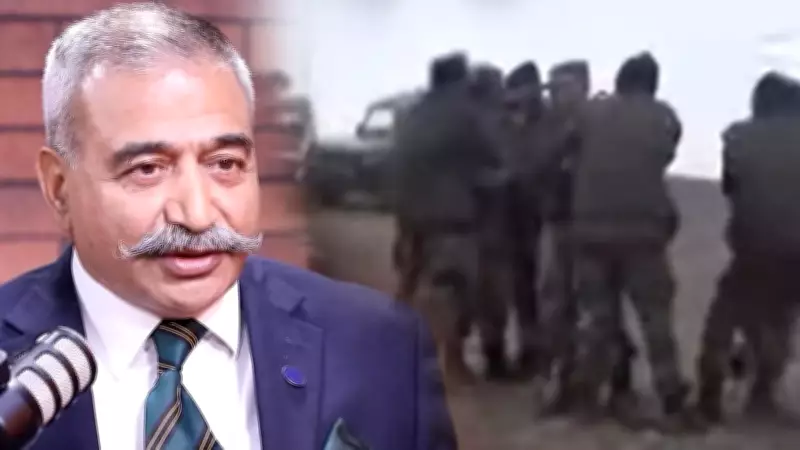
Former DGMO Lt Gen A.K. Bhatt Reveals India's Decisive Doklam Response
In a significant disclosure, former Director General of Military Operations (DGMO) Lieutenant General A.K. Bhatt has provided fresh and detailed insights into the 2017 Doklam crisis, shedding light on India's unconventional and resolute actions to counter Chinese attempts to alter the status quo at the sensitive tri-junction area.
The Tense Confrontation: Dozers and Human Barriers
Bhatt explained that as Chinese troops advanced with bulldozers to construct a road in the Doklam region, Indian forces swiftly mobilized to block their progress. Indian soldiers formed a human barrier, standing firm against the incursion, while Border Roads Organisation (BRO) dozers were deployed directly opposite Chinese machinery, creating a dramatic face-off that halted construction activities. This immediate physical response was crucial in preventing any further advancement by Chinese engineering units.
Strategic Stakes: The Jampheri Ridge Threat
The former military commander emphasized the high strategic risk involved. He detailed that if China had completed the road, it would have gained access to the Jampheri Ridge, a geographically dominant position overlooking India's Siliguri Corridor. This narrow stretch, often referred to as the "Chicken's Neck," is a vital land connection to India's northeastern states. Control of the ridge by China could have posed severe security challenges, potentially compromising India's territorial integrity and military logistics in the region.

Political Clarity and the 72-Day Standoff
Bhatt highlighted that India acted with clear political direction, authorizing troops to cross into Bhutanese territory—where Doklam is located—to physically obstruct the Chinese. This bold move, based on India's treaty obligations with Bhutan, sparked an intense 72-day military standoff, one of the longest in recent India-China border history. The confrontation involved diplomatic maneuvers and military posturing, ultimately leading to a disengagement after negotiations.
Reflecting on India's Resolve and Norms
The retired lieutenant general stressed that this unconventional approach underscored India's unwavering resolve to safeguard its strategic interests and uphold established norms along the Doklam plateau. By taking a firm stance, India demonstrated its commitment to maintaining stability in the region and protecting the sovereignty of its allies, setting a precedent for future engagements in border areas.
Bhatt's revelations add depth to the understanding of the Doklam crisis, illustrating the blend of tactical ingenuity and strategic foresight employed by Indian forces. The use of BRO dozers in a direct confrontation symbolizes India's readiness to employ all available resources in defense of its territorial claims and regional security architecture.






