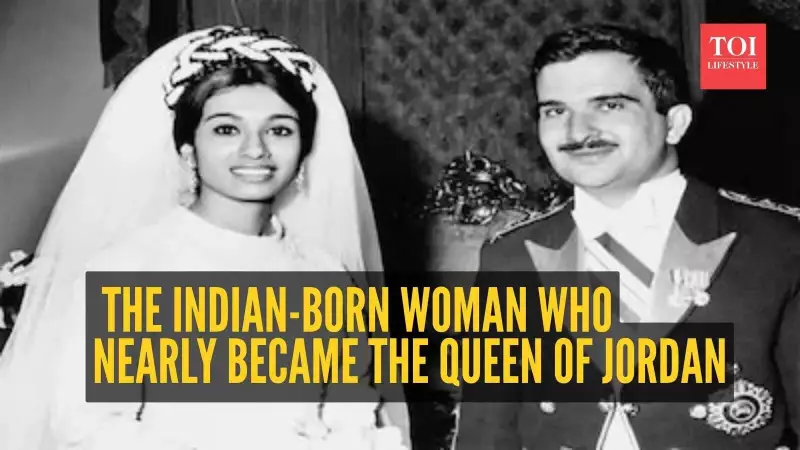
As India's Prime Minister concluded a significant diplomatic visit to Jordan, the spotlight on strengthened bilateral ties revealed a deeper, more personal connection between the two nations. Beyond the official meetings and agreements lies a fascinating human story that has quietly linked India and Jordan for decades.
The Calcutta-Born Princess: A Life Shaped by History
Princess Sarvath El Hassan entered the world as Sarvath Ikramullah in Calcutta (now Kolkata) in 1947, mere weeks before the cataclysmic Partition of India. Born into the distinguished Bengali Muslim Suhrawardy family, her early life was immediately framed by monumental historical change. Following Partition, her family relocated to Pakistan, setting the stage for a life spent navigating shifting national identities.
Her upbringing was steeped in public service. Her father, Mohammed Ikramullah, became Pakistan's first Foreign Secretary. Her mother, Begum Shaista Suhrawardy Ikramullah, broke barriers as one of Pakistan's pioneering female parliamentarians and later served as ambassador to Morocco. This environment of diplomacy and duty meant Sarvath spent her formative years across various countries, gaining an innate understanding of international affairs.

An Academic and Royal Journey to Jordan
Her education culminated at the prestigious University of Cambridge in the United Kingdom, further polishing her worldview. However, a pivotal turn awaited her in 1968. In Karachi, she married Prince Hassan bin Talal of Jordan, who was then the Crown Prince. This union transformed Sarvath Ikramullah into Crown Princess Sarvath of Jordan, placing her among the highest-ranking women in the Hashemite Kingdom and positioning her just a step away from the throne.
As Crown Princess, she dedicated herself to substantive work, focusing on education, women's empowerment, social welfare, and public health. Her efforts moved beyond ceremonial duties, reflecting the ethos of service ingrained in her from childhood.
The Path Not Taken: A Queen in Waiting
History, however, took a different course. In 1999, the late King Hussein of Jordan altered the line of succession shortly before his passing, naming his son, Abdullah II ibn Al Hussein, as the next king. This decision meant Prince Hassan was no longer the heir, and consequently, Princess Sarvath did not ascend to become Queen of Jordan.
Despite this shift, Princess Sarvath and Prince Hassan have continued to play significant and active roles within the kingdom's public and royal spheres. They remain prominent figures, engaging in diplomatic and social initiatives, and are even participants in European royal events, maintaining their international profile.
This unique personal narrative of an Indian-born princess in Jordan's royal family adds a rich, human layer to the diplomatic relations between India and Jordan. It serves as a lasting, personal bridge between the two cultures, enduring far beyond formal state visits and political communiqués.