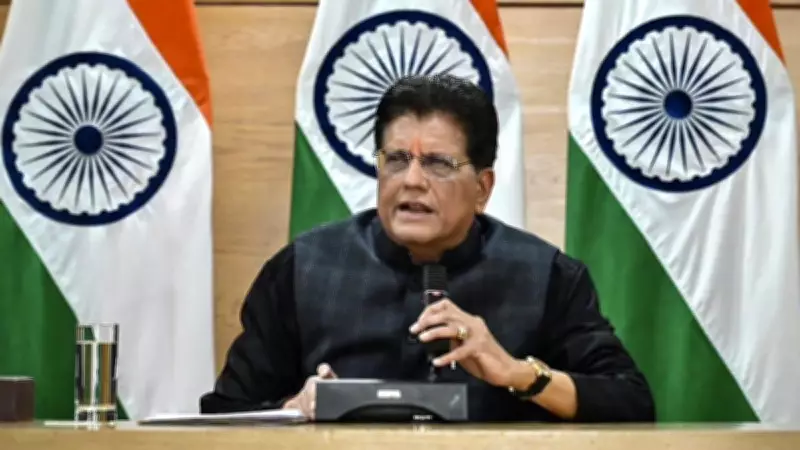
India-US Trade Agreement Reaches Final Stages, Goyal Confirms Safeguards for Key Sectors
Commerce and Industry Minister Piyush Goyal has announced that the comprehensive trade deal between India and the United States is now in its final phase of detailed negotiations. In a significant statement to reporters, Goyal emphasized that the interests of India's agriculture and dairy sectors will be fully protected under the forthcoming agreement.
Minister's Assurance to 140 Crore Indians
"Today 140 crore Indians are celebrating a trade deal, which is under final stages of detailing between the negotiating teams of both countries," Goyal declared. His remarks come as both nations work to finalize what promises to be one of the most substantial bilateral trade agreements in recent history.
The minister's explicit commitment to safeguarding agriculture and dairy interests addresses longstanding concerns within India's farming community and dairy industry. These sectors have been particularly sensitive points in trade discussions, given their economic importance and employment generation across rural India.

Strategic Importance of the Bilateral Pact
The India-US trade agreement represents a strategic deepening of economic ties between the world's largest democracy and its most powerful economy. As negotiations approach completion, several key aspects have emerged:
- Comprehensive Coverage: The deal is expected to encompass multiple sectors including manufacturing, services, and digital trade
- Balanced Approach: Negotiators have reportedly worked to ensure mutual benefits while respecting each country's domestic priorities
- Economic Integration: The agreement will likely enhance supply chain connectivity and investment flows between the two nations
Protection for Sensitive Sectors
Goyal's assurance regarding agriculture and dairy reflects the government's commitment to protecting vulnerable sectors that form the backbone of India's rural economy. The dairy industry alone supports millions of small and marginal farmers, while agriculture employs nearly half of India's workforce.
The minister's statement suggests that negotiators have successfully incorporated safeguards that will prevent market disruption while allowing for increased trade in other areas. This balanced approach has been crucial in building domestic consensus for the agreement.
Next Steps in the Negotiation Process
With the deal now in its final detailing phase, both negotiating teams are working to:
- Finalize specific tariff reduction schedules across various product categories
- Establish clear rules of origin to determine product eligibility for preferential treatment
- Create mechanisms for resolving trade disputes that may arise in the future
- Develop implementation timelines that allow industries adequate adjustment periods
The completion of this trade agreement is expected to significantly boost bilateral trade, which currently stands at approximately $200 billion annually. Both countries have identified substantial potential for growth across multiple sectors once the agreement is implemented.
As the negotiations conclude, stakeholders across India's business community are preparing for new opportunities while appreciating the government's commitment to protecting sensitive sectors that are vital to the nation's food security and rural livelihoods.