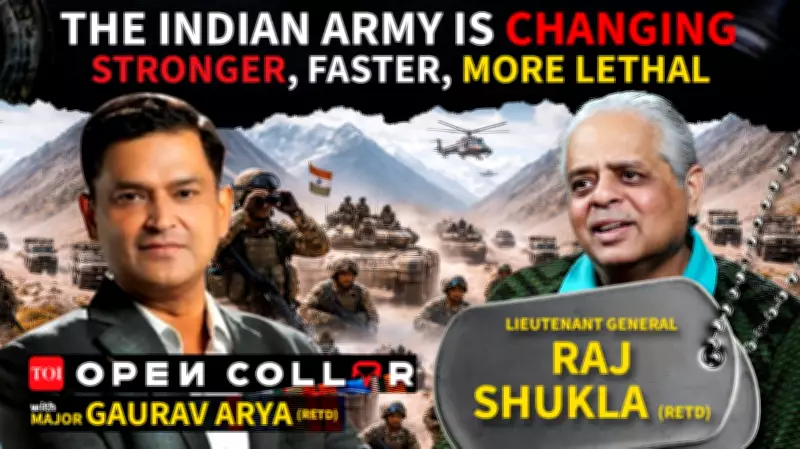
The Indian Army's Unprecedented Transformation: A New Era of Warfare
In a compelling discussion on OPEN COLLAR, Major Gaurav Arya engages with retired Lieutenant General Raj Shukla to unravel the most significant and swift evolution the Indian Army has ever undertaken. This transformation is not merely incremental but represents a fundamental shift in how India prepares for and conducts warfare in the 21st century.
Core Components of the Modernization Drive
The conversation delves into several key innovations reshaping the army's structure and capabilities:
- Integrated Battle Groups (IBGs): These are self-contained, agile units designed for rapid deployment and decisive action. Unlike traditional brigades, IBGs integrate infantry, artillery, armor, and support elements into a single cohesive force, enhancing operational flexibility and speed.
- Rudra Brigades: Specialized formations focused on leveraging advanced technologies, including drones and electronic warfare systems, to gain a tactical edge in contested environments.
- Drone Warfare and Stand-Off Capabilities: The army is increasingly incorporating unmanned aerial vehicles (UAVs) for surveillance, reconnaissance, and precision strikes. Stand-off warfare, which involves engaging enemies from a distance using missiles and long-range artillery, reduces risks to personnel while maintaining offensive pressure.
- Missile Forces: Enhanced missile systems provide strategic depth and deterrence, allowing the army to project power across vast distances and respond swiftly to threats.
Geopolitical Drivers and Strategic Lessons
This modernization is heavily influenced by pressing geopolitical realities. Lessons from Operation Sindoor have underscored the need for faster, more coordinated responses in high-altitude and complex terrains. Simultaneously, rising tensions with China and Pakistan have accelerated reforms, pushing the army to adopt doctrines that counter hybrid threats and border incursions effectively.

The discussion highlights how these reforms align with the broader shift towards Theatre Commands, which aim to unify army, navy, and air force operations under a single command structure. This integration ensures seamless coordination and resource allocation during conflicts, moving away from siloed approaches.
Technological Frontiers: The Quantum Leap
Emerging technologies play a pivotal role in this transformation. The conversation explores advancements in artificial intelligence, cyber capabilities, and quantum computing, culminating in the Military Quantum Mission Policy Framework. This initiative focuses on harnessing quantum technologies for secure communications, advanced encryption, and superior data processing, positioning the Indian Army at the forefront of military innovation.
By embracing these technologies, the army is transitioning towards faster, smarter, and more decisive warfare. The goal is to reduce decision-making cycles, enhance situational awareness, and execute precision strikes with minimal collateral damage.
Implications for Future Conflicts
The reforms discussed signify a departure from conventional warfare models. The Indian Army is now prioritizing:
- Agility and Speed: With IBGs and rapid deployment strategies, the army can respond to threats in hours rather than days.
- Technological Superiority: Investments in drones, missiles, and quantum tech ensure a competitive edge against adversaries.
- Integrated Operations: Theatre Commands and joint warfare doctrines foster unity among armed forces, optimizing combat effectiveness.
This transformation prepares the army for a future where conflicts may be short, intense, and technology-driven, requiring unparalleled adaptability and innovation.