

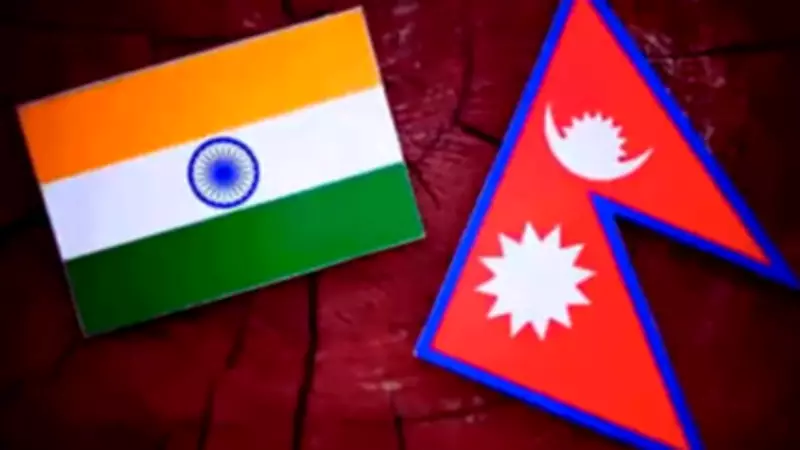
India-Nepal Relations: From Civilizational Bonds to Strategic Recalibration
For generations, Nepal has represented far more than just a neighboring nation to India. It has functioned as a trusted shoulder along India's northern frontier—a border where threats were historically minimal, where people moved freely, where shared temples were sites of fervent prayer, and where the legendary Gurkhas came to embody the very essence of valor. The enduring narrative of Roti-Beti—the sharing of bread and bloodlines—fundamentally shaped how India perceived and managed its relationship with Nepal. The open border, cultivated on the bedrock of profound cultural commonality and civilizational kinship, was treated less as a deliberate policy decision and more as an inherent, natural condition. This belief-based narrative held firm for many decades.
The Erosion of Trust and Security Challenges
However, this foundational narrative has since undergone several sharp and disruptive mutations. India has been notably slow to adjust and recalibrate its strategy in response. The very same open border that once symbolized deep mutual trust gradually transformed into a corridor for serious security threats that India could no longer afford to ignore. Networks backed by Pakistan's Inter-Services Intelligence (ISI) systematically exploited this frontier. Modules of terrorist organizations like Lashkar-e-Taiba and Jaish-e-Mohammed utilized Nepal as a staging and transit zone. Radicalization efforts, quietly funded through foreign channels, established institutional footholds. Organized syndicates operating with impunity engaged in trafficking fake currency, narcotics, and humans. Corrupt financial flows even influenced election funding.
India's response evolved incrementally over time—from civil police efforts to the deployment of central armed police forces, eventually moving toward smarter border management systems. While this strategic hardening was a necessary security measure, it inevitably cooled the bilateral relationship. The warm, affective narrative of a shared identity gave way to a colder, more pragmatic question: how close is too close for two sovereign nations?

China's Strategic Inroads and India's Delivery Deficits
Concurrently, as India was tightening its border posture, China was making calculated and strategic investments across Nepal's human and physical terrain. Chinese study centers seeded cultural and educational influence. Infrastructure investments were precisely targeted at development-arid regions where India had made grand promises but delivered very little—projects announced with great fanfare, only to be delayed by poorly defined timelines and chronic implementation failures.
China built roads and enhanced connectivity; India often sent goodwill gestures, deferrals, films, and more fanfare. This disparity yielded predictable consequences. Nepal's political landscape fractured severely, with the monarchy collapsing, Maoists rising to power, and political instability becoming a permanent feature of Kathmandu's governance. India persisted with a habit of backroom management of Nepali power groups—a tactic reflecting a deeper strategic miscalculation. The reality is that China's influence cannot be effectively balanced at the level of a smaller nation sandwiched between two giants; it must be countered at China's own level, a core truth India overlooked for too long.
The Pivotal 2015 Earthquake and Blockade Crisis
The year 2015 changed everything. Nearly eighty percent of Nepal's population resides on just twenty percent of its land—the southern Tarai belt adjoining India. This demographic and geographic reality has always rendered the relationship structurally sensitive. In the devastating aftermath of the 2015 earthquake, with Nepal at its most vulnerable, the Madhesi community—Nepali citizens of the Tarai belt who share deep ethnic and cultural ties with communities across the Indian border—initiated a crippling trade blockade against Kathmandu. They protested their perceived marginalization in Nepal's newly drafted constitution.

The blockade strangled the flow of essential supplies into an already stricken nation. India, perceived as inadequately pressuring the Madhesi groups to lift the blockade, found itself cast as indifferent to Nepal's profound suffering. Whether this perception was entirely fair remains debatable, but its impact was unequivocal: India was branded as non-humanitarian at the precise moment when humanitarian standing mattered most, an image damage it has struggled to repair.
Generational Shifts and the Failure of Old Narratives
This crisis exposed a deeper, systemic problem: India had heavily invested in a relationship narrative premised on civilizational solidarity while neglecting the material conditions that give such narratives lasting credibility. India nurtured corruption domestically, indulged in patchwork assistance programs, and allowed chronic delivery deficits to accumulate—all while China invested smartly and visibly in infrastructure, mobility, and connectivity. India remained embedded in belief-based narratives long after the geopolitical and social ground had decisively shifted.
The aspirations of Generation Z erupted first in Bangladesh and then in Nepal. Their demand was consistent: corruption-free, transparent, and accountable governance. The pressures fueling this demand were equally consistent—severe stress in the agricultural sector, rampant unemployment, a dearth of growth opportunities, chaotic and obtrusive urbanization, and the escalating challenges of climate change. Together, these factors suffocated a generation that is globally connected yet locally frustrated.
India missed this critical generational shift. The religious-civilizational narrative, which once served as a soft anchor in Nepal, has been outright rejected by this new cohort. India also overlooked a time-tested wisdom: when a son grows to stand as an equal to the father, the right response is to grant him dignity, space, and the freedom to choose his own path. Forcing old narratives onto a changed generation breeds resentment, not affinity.
The Urgent Need for a New Strategic Framework
Amid China's assertive debt-trap diplomacy and this powerful new generational call for change, India has continued to reason from outdated premises that no longer match on-ground realities. The current geopolitical environment is highly dynamic, fraught with multiple conflicts and increasingly irregular patterns of statecraft. New global narratives have surfaced—cognitive control, balance of power through economic leverage, hybrid pressure zones. China has evolved into a deep-state actor in Nepal, simultaneously drawing Pakistan and Bangladesh closer into its orbit through multi-modal mobility projects, digital encirclement strategies, and advanced high-tech surveillance systems. The strategic encirclement of India's immediate neighborhood is a tangible reality.
Against this complex backdrop, a foundational principle reasserts itself: all wars eventually end in peace. Wise nations have consistently chosen diplomacy and negotiation over prolonged turmoil. Collaboration and mutually dignified arrangements constitute the only sustainable foundation for long-term relationships. Even nations claiming Buddha's tradition of the middle path have drifted from this principle—but the principle itself remains eternally sound.
India must now act with decisive urgency. The 1950 Treaty of Peace and Friendship between India and Nepal requires thoughtful revision—achieved through close, confident negotiations at the diplomatic table, not through the public release of contentious maps that harden positions and invite conflict rather than resolve it.
A Path Forward: Sincerity, Delivery, and Respect
Nepal's new Prime Minister carries a clear mandate for corruption-free, transparent, and accountable governance. This represents a genuine strategic opening, and India must meet it with unwavering sincerity and concrete commitment—not with manipulation, not with patchwork assistance, and not with backroom management of power groups.
On a practical level, this new approach must translate into vibrant village development programs along the shared border, the creation of mutual growth avenues, the establishment of varied institutional linkages, startup ecosystem connections, and the promotion of industrial clusters that generate the right environment for workable, productive relationships to take root. Strong, silent communication flows naturally when the principle of Vasudhaiva Kutumbakam (the world is one family) is genuinely put into action—moving beyond fear psychosis and religious rigidity—and when it is backed by unquestionable democratic governance.
If India draws bigger, more generous lines before the other stakeholders in the regional system, they too will adjust their posture accordingly. The strategic task is not merely to match what China is doing. It is to exceed it—in sincerity, in tangible delivery, and in the profound respect extended to a neighbor whose sovereignty and dignity are absolutely non-negotiable. The geopolitical winds are shifting decisively. The critical question remains: will India read them in time?





