Security has been significantly heightened around Indian diplomatic sites in the Bangladeshi city of Sylhet following a wave of violent protests triggered by the death of a local youth leader. The measures were implemented as a precautionary step amid escalating tensions in the northeastern region of Bangladesh.
Unrest Erupts Over Tragic Death
The situation in Sylhet turned volatile after the death of Nurul Islam Nayan, a prominent youth leader affiliated with the Bangladesh Chhatra League (BCL), the student wing of the ruling Awami League. Nayan died on December 20, 2025, under circumstances that sparked public outrage and led to widespread demonstrations.
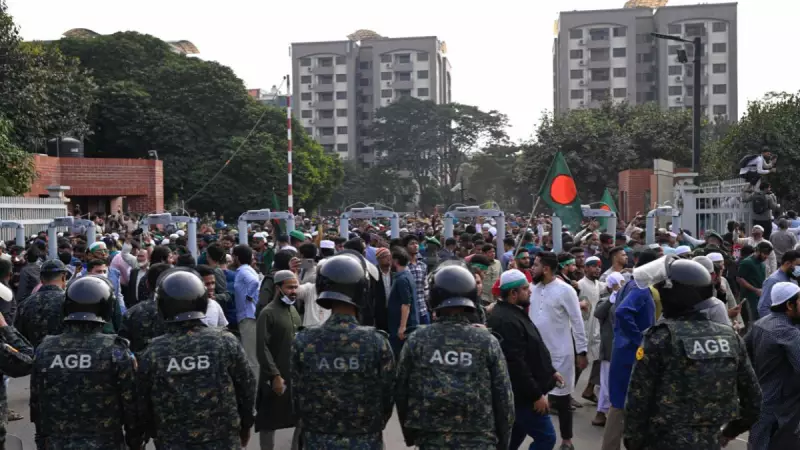
Local reports indicate that the protests, which began on Saturday, quickly intensified. Demonstrators blocked key roads and highways, bringing traffic to a standstill. The unrest was not confined to Sylhet city; it spread to surrounding areas including the upazilas of Companiganj, Gowainghat, and Jaintapur. Protesters demanded a thorough investigation and justice for the deceased leader.

Indian Diplomatic Posts Bolster Defenses
In response to the deteriorating law and order situation, Indian authorities took immediate steps to secure their diplomatic personnel and assets. Security was substantially enhanced at the Indian Assistant High Commission in Sylhet and the Indian Visa Application Centre (IVAC) located in the city.
The security protocol involved coordinating with local Bangladeshi law enforcement agencies. Additional barricades were erected, and patrols were increased in the vicinity of the Indian compounds. The primary objective was to ensure the safety of diplomatic staff and Indian citizens who might need to visit the missions.
An official source emphasized that the move was purely precautionary and based on standard operating procedures during periods of local instability. There were no specific threats directed at the Indian missions, but the volatile environment necessitated a state of heightened vigilance.
Investigations and Political Fallout
Bangladeshi police have launched an investigation into the death of Nurul Islam Nayan. Preliminary reports suggest his body was found with injury marks, fueling speculation and anger among his supporters. The exact cause of death is awaited from a formal post-mortem report.
The incident has ignited a political firestorm, with opposition groups criticizing the ruling party and its associated wings. The Bangladesh Chhatra League has called for calm but also insisted on a transparent probe. The unrest highlights the often tense political landscape in the region, where student politics are deeply intertwined with national power structures.
As of now, Bangladeshi security forces are working to restore normalcy. While the immediate protests have subsided, the underlying tensions remain. The Indian missions continue to operate under a reinforced security blanket, monitoring the situation closely. The Indian government has advised its nationals in Sylhet to exercise caution, avoid protest areas, and follow updates from official channels.
This episode underscores the delicate nature of regional stability and the proactive measures diplomatic missions must undertake to ensure continuity and safety during unforeseen civil disturbances in a host country.