India and Finland Unite on Global Peace and Institutional Reform
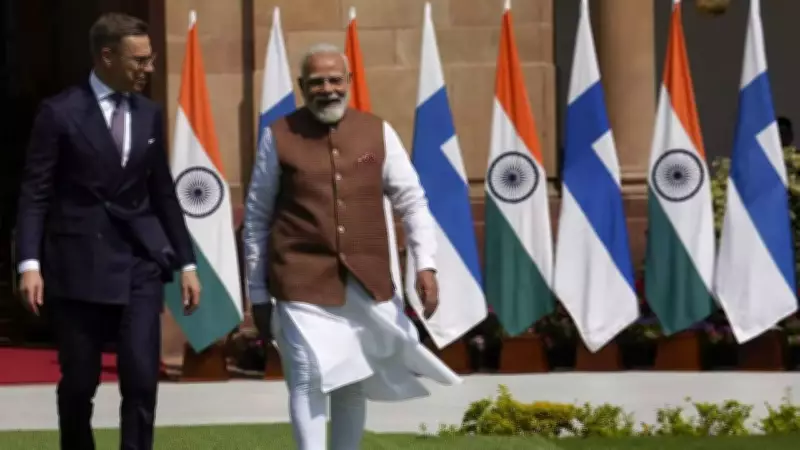
In a significant diplomatic development, India and Finland issued a joint statement on Thursday calling for an immediate end to the Russia-Ukraine conflict while emphasizing the urgent need for reform within global institutions, particularly the United Nations. The discussions took place during Finnish President Alexander Stubb's official visit to New Delhi, where he met with Prime Minister Narendra Modi to strengthen bilateral ties.
Shared Commitment to Ending Conflict and Terrorism
Both leaders asserted that concluding the war in Ukraine is "in everyone's interest" and pledged to support efforts towards achieving a "comprehensive, just, and lasting peace" through dialogue and diplomacy. This commitment is grounded in the principles of the UN Charter and international law, including respect for independence, sovereignty, and territorial integrity.
Prime Minister Modi highlighted that the world is currently navigating a phase of instability and uncertainty, with multiple regions experiencing ongoing conflicts. "In such a global environment, India and Europe, two major diplomatic powers of the world, are entering a golden phase in their relationship. Our growing cooperation is imparting new strength to global stability, development, and shared prosperity," Modi stated.

President Stubb echoed these sentiments, noting the prolonged nature of the conflict. "We have conflict in both regions, in West Asia and also, of course, in Ukraine. And for us, Russia's war of aggression against Ukraine has lasted for too long, four years. We agreed that ending the war is in everyone's interest," he said.
Pushing for United Nations Security Council Reform
A key point of agreement was the necessity of reforming global institutions to better address contemporary challenges. President Stubb specifically emphasized the importance of India securing a permanent seat in the UN Security Council, describing it as "of utmost importance." This endorsement aligns with India's longstanding campaign for a more representative and effective Security Council.
Prime Minister Modi reinforced this view, stating, "We also share the view that reform of global institutions is not only necessary, but urgent in order to address growing global challenges. Furthermore, eliminating terrorism in all its forms remains our shared commitment." The joint statement underscores a mutual dedication to combating terrorism comprehensively.
Strengthening Bilateral Ties in Technology and Defence
The meeting also focused on enhancing bilateral cooperation, particularly in high-technology sectors. Finland, which joined NATO following Russia's invasion of Ukraine, has become a crucial destination for Indian professionals in technology and innovation. To facilitate this, the two nations concluded a comprehensive Migration and Mobility Agreement.
Modi announced that this new strategic partnership will inject momentum and fresh energy into collaboration across several advanced fields. "At the same time, our partnership will deepen further in key sectors such as defence, space, semiconductors, and critical minerals. This strategic partnership between democratic and responsible nations like India and Finland will contribute to ensuring trustworthy technologies and resilient supply chains for the entire world," the Prime Minister elaborated.
The discussions highlighted Finland's evolving role as a strategic partner for India, especially in areas critical to global supply chains and technological advancement. This partnership is seen as a step towards fostering greater stability and prosperity on the international stage, reflecting the shared values and diplomatic weight of both nations.