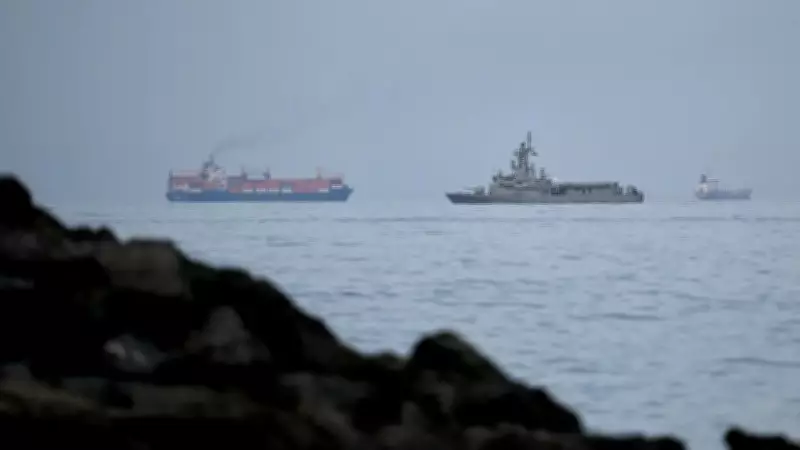
Indian Seafarers Confront Unprecedented Navigation Crisis in Strait of Hormuz
Amid escalating Gulf tensions, Indian merchant ships transiting the critical Strait of Hormuz are navigating a perfect storm of technological disruptions and security threats. While Iran has announced safe passage for containers from "friendly nations," including India, the reality at sea remains fraught with danger and uncertainty.
GPS Failures and Radio Warnings Create Navigation Chaos
Ships in the region are experiencing repeated GPS disruptions, severely compromising their ability to determine precise positions in the narrow, congested waters. Captain Manish Kumar, a master mariner with 28 years of experience currently commanding a chemical tanker stranded in the strait, described the situation as critically dangerous. "Navigation is severely affected due to GPS. It is very difficult to determine the position of the vessel... If you miss the position in such narrow waters, the vessel can be grounded or it can even collide," he explained.
Compounding the technological challenges are persistent radio broadcasts over maritime channels. Ships report hearing messages from Iran's Islamic Revolutionary Guard Corps (IRGC) Navy declaring: "Attention all ships... This is the Sepah Navy... navigation through the Strait of Hormuz is forbidden... no ship is allowed to pass until further notice." These real-time instructions are forcing captains to make split-second decisions about whether to proceed or remain stationary.

Underwater Mine Threats and Designated Transit Corridors
Adding to the peril are warnings about naval mines—explosive devices that can be triggered by contact or proximity. Captain Kumar revealed that vessels are being provided with maps marking specific transit corridors through the hazardous waters. "There are arrows—entry and exit routes marked. It's like a designated passage," he said, noting that despite his decades of experience navigating piracy-prone waters and conflict zones, the current combination of threats feels unprecedented.
The risks are magnified by the nature of cargo transiting the strait. Most vessels are oil or chemical tankers carrying highly flammable materials, meaning any incident could potentially trigger catastrophic explosions.
Security Advisories Paint Grim Regional Picture
Shipping companies have responded by issuing daily "conflict intelligence briefs" directly to vessels, combining military advisories, open-source tracking, and proprietary risk assessments. A March 25 "Middle East Conflict Daily Security Intelligence Update" warned of "extreme caution" across the region, noting continued GPS interference, elevated port security levels, and unconfirmed concerns over mine-laying activity.
Similarly, a March 24 advisory from the Joint Maritime Information Center (JMIC), a US-led multinational coordination body, flagged the regional maritime threat level as "critical." The report cited 21 confirmed incidents since March 1 and ongoing "navigation interference" across the Strait of Hormuz, Gulf of Oman, and Arabian Gulf.
Dramatic Drop in Maritime Traffic
The security crisis has caused a dramatic reduction in vessel traffic through this crucial chokepoint. Where an average of approximately 138 ships transited daily previously, crossings have now dwindled to single digits. The JMIC advisory described GPS interference as "sporadic" and warned that attacks may not be selectively targeted, potentially occurring near ports as well as in open waters.
As Indian seafarers rely increasingly on manual navigation techniques in the absence of reliable satellite systems, the situation underscores the vulnerability of global shipping to regional conflicts and technological warfare. The combination of GPS disruptions, mine warnings, and ambiguous radio communications has created what experienced mariners describe as one of the most challenging navigation environments in recent memory.