India's Millennial Medical Legacy Preserved in Hyderabad's National Centre
Over 900 medico-historical artifacts, some as ancient as 1,000 years, are meticulously preserved at the National Centre of Indian Medical Heritage (NIIMH) in Hyderabad, showcasing India's profound legacy in medicine. Under the SAHI 2.0 initiative, the Centre is set to expand its preservation efforts, ensuring this rich heritage is safeguarded for future generations.
Unveiling the SAHI Portal
The Showcase of Ayurvedic Historical Imprints (SAHI) portal, designed and developed by the Central Council for Research in Ayurvedic Sciences-NIIMH, presents the history of Ayurveda from prehistoric times to the present. Dr. Goli Penchala Prasad, Assistant Director and Principal Investigator of the SAHI Project at NIIMH, Hyderabad, explained to The Tribune that this project aims to investigate and present the medical heritage of Ayurveda dispassionately and critically. It seeks to reconstruct and envisage India's medical past in relation to the broader civilization across various periods.
Furthermore, the portal will map and showcase the dynamic interactions Indian medicine has had with the rest of the world from remote antiquity to today. This initiative provides a comprehensive view of how medical practices evolved and influenced global health traditions.

The Nature of Manuscripts
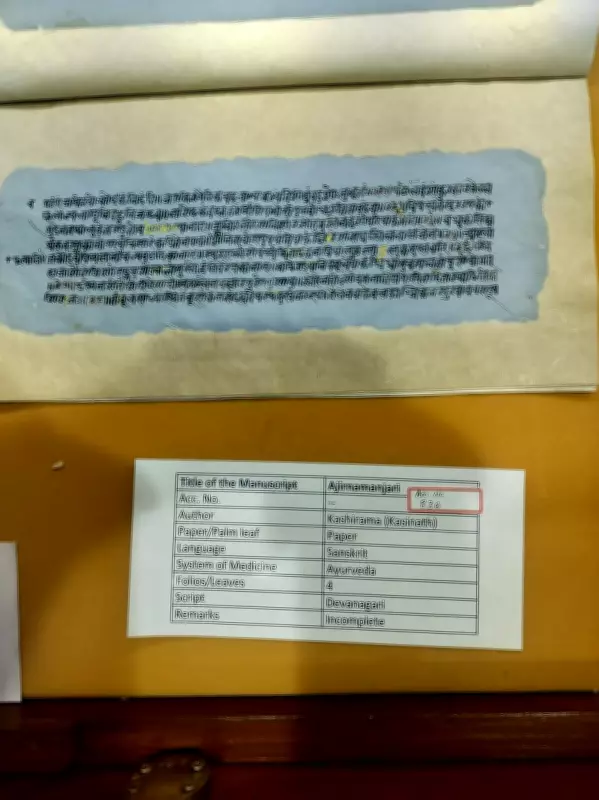
A manuscript is defined as a handwritten composition on materials such as paper, bark, cloth, metal, palm leaf, or even rocks. These precious documents are commonly discovered in palaces, temple residences, monasteries, and the homes of priests, astrologers, traditional architects, and physicians. Dr. Prasad noted that the locations of these inscriptions and manuscripts were often documented in books written by the Archaeological Survey of India (ASI) during the British era. "Then we locate the inscriptions and digitise them," he stated, highlighting the meticulous process of preservation.
Historical Insights into Medicine
From a historical perspective, the study of medicine offers a complete picture of civilization, revealing how ancestors addressed health and disease and the thoughts that guided their actions. For instance, in the ruins of Kumrahar in Bihar, there is mention of Jivaka, the personal physician to Lord Buddha and King Bimbisara. During the Nizam era in Hyderabad, Unani medicine flourished alongside Ayurveda, demonstrating the diversity of India's medical traditions.
An archaeological inscription dating back 1,660 years to King Vikramaditya I of the Chalukyas of Badami Dynasty has also been digitised. This inscription, found on copper plates in Nellore District, indicates that physicians were granted special powers to execute grants during that period, underscoring the esteemed role of medical practitioners in ancient society.
Expanding Preservation Efforts
The SAHI 2.0 initiative represents a significant step forward in preserving India's medical heritage. By digitising these ancient manuscripts and artifacts, the project ensures that this invaluable knowledge is accessible to researchers, historians, and the public. It not only celebrates India's contributions to global medicine but also fosters a deeper understanding of the historical contexts that shaped healthcare practices.
As the Centre continues its work, it aims to uncover more hidden gems from India's medical past, bridging the gap between ancient wisdom and modern science. This preservation effort is crucial for maintaining cultural identity and promoting holistic health approaches rooted in tradition.