

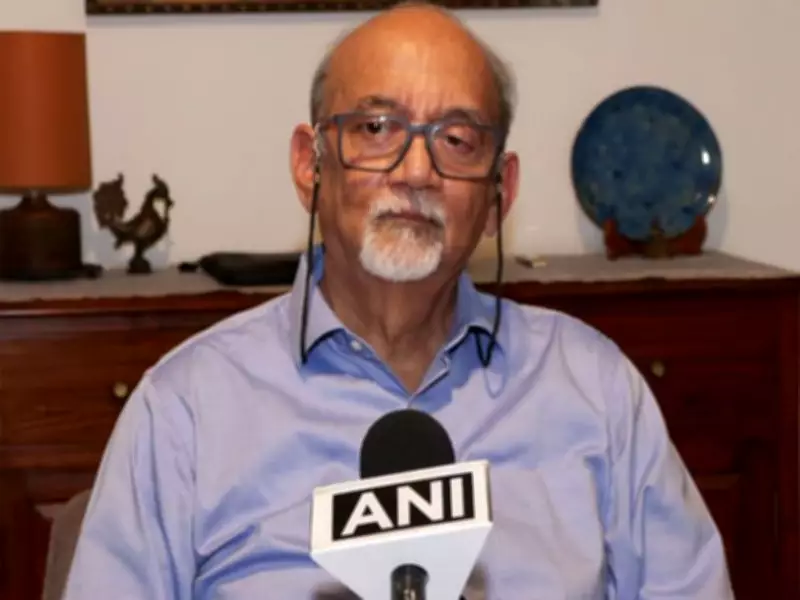
Former Envoy Dinkar Srivastava Questions Pakistan's Role as Mediator in West Asia
As diplomatic tensions simmer in West Asia, reports have emerged suggesting that Pakistan may step in as a broker between the United States and Israel in potential peace talks. However, former Indian Ambassador to Iran, Dinkar P. Srivastava, has cast doubt on Islamabad's credibility in this role, asserting that Iran does not view Pakistan as an honest broker due to its recent alignment with the US.
Iran's Distrust of Pakistan Highlighted
In a pointed critique, Srivastava referenced a key incident from June last year, when Pakistan's General Asim Munir was hosted at the White House for lunch, even as Iran faced attacks from Israel. "Iran could not have forgotten that in June last year, when it was under Israeli attack, General Asim Munir was having lunch at the White House. So they clearly know that Pakistan is not an honest broker," the former envoy stated. This event, according to Srivastava, has eroded Iran's trust in Pakistan, making it an unlikely mediator in the complex geopolitical landscape of West Asia.
Stalemate in West Asia Amid Rejected US Proposal
The diplomatic impasse in the region has been exacerbated by Iran's rejection of a 15-point peace proposal from the United States, aimed at ending the ongoing conflict. Iran dismissed the terms as "maximal" and unacceptable, particularly due to demands for dismantling its nuclear facilities and missile program—elements not included in previous agreements. Srivastava explained that Iran views its missile program as a critical defence mechanism, especially in the context of the current hostilities. "This is the second war which is going on. That's the only, Iran's only defence," he remarked, underscoring the strategic importance of these assets.

He further noted that the US has not achieved a decisive victory, leading to a stalemate. "The US proposal has been rejected by Iran, which described them as containing maximal demands. The US has not won the war. It is a stalemate. And if it's a stalemate, you cannot expect to impose your terms," Srivastava emphasized, highlighting the futility of one-sided demands in such a deadlock.
Dismissal of US Claims and Call for Diplomacy
Addressing US assertions that Iran is desperate for a deal, Srivastava dismissed these as "face-saving" rhetoric. He argued that if Iran were truly in a desperate situation, it would have initiated peace talks proactively. "If they were desperate, they wouldn't have rejected it. They would have been the first to initiate it," he stated, challenging the narrative of Iranian vulnerability.
On the path forward, the former ambassador advocated for a diplomatic solution, stressing the need for an immediate ceasefire and a multilateral approach. "Diplomatic solution is the only way forward. Immediate ceasefire, opening of the Persian Gulf and ceasing the attacks on Gulf countries which are non-belligerents," he proposed. He also suggested resuming nuclear negotiations from where they left off in Geneva prior to the conflict, as a step towards rebuilding trust and cooperation among all parties involved.
Economic Impacts and Strategic Displays
The ongoing conflict has had significant economic repercussions, with Srivastava warning of a sharp rise in oil prices. "Oil prices have already shot up, this is a much bigger shock than the second oil price shock," he cautioned, pointing to the broader global economic consequences of the West Asia crisis.
Regarding Iran's selective allowance of countries to pass through the Strait of Hormuz, Srivastava interpreted this as a demonstration of power. "Iran is underlining the fact that despite taking very heavy military and civilian losses, it still has the capacity to control this strategic waterway," he explained, indicating Iran's resolve to maintain influence in the region.
In conclusion, while Srivastava expressed hope that peace could be achieved through diplomacy, he underscored the necessity of substantial trust-building and cooperative efforts from all sides. "These are things which can be worked out," he remarked, offering a cautious optimism amidst the persistent tensions in West Asia.






