

Denmark Secretly Prepared to Destroy Greenland Airports Against Potential US Military Intervention
While the United States, under President Donald Trump, remained intensely focused on its escalating conflict with Iran, an extraordinary and unprecedented development was quietly unfolding among America's closest allies. Denmark, a steadfast NATO member, had secretly prepared detailed contingency plans to defend Greenland from a potential US military move, including blowing up key airport runways to prevent American forces from landing.
Contingency Plans and Military Preparations
According to exclusive reports by the BBC and The New York Times, Danish authorities initiated these defensive preparations weeks earlier, signaling profound concerns within Copenhagen regarding Washington's intentions toward Greenland. The revelation, first reported by Denmark's public broadcaster DR and later corroborated by European officials speaking to the Financial Times, points to a widening trust deficit between the United States and its traditional allies.
This development reflects how tensions over Greenland, a semi-autonomous Danish territory, have severely strained transatlantic ties at a time when Washington is already under intense global scrutiny for its aggressive actions in Iran. According to the DR report, Danish military planners developed highly detailed scenarios in January, including deploying troops with explosives, preparing to disable runways in Nuuk and Kangerlussuaq, and stockpiling blood supplies to treat casualties in the event of a confrontation.

Intelligence Inputs and Secret Operations
The defensive preparations were based on specific intelligence inputs and political signals that raised serious concerns in Copenhagen about Washington's intentions. The broadcaster cited twelve sources from the Danish government, military establishment, and allied European countries, indicating that the entire operation was maintained at the highest levels of secrecy.
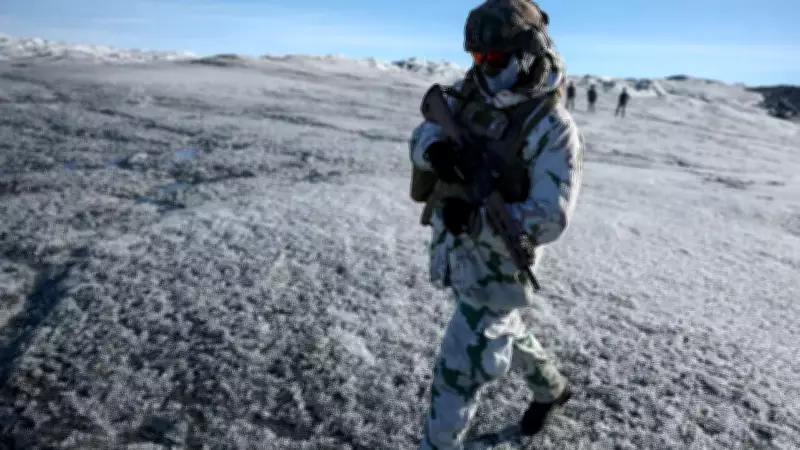
A small but significant contingent of troops from Denmark, France, Germany, Norway, and Sweden was deployed to Greenland's capital Nuuk and the strategic airport at Kangerlussuaq. Danish aircraft and a French naval vessel were also strategically positioned in the North Atlantic region. Officially, this deployment was described as part of joint military exercises under "Operation Arctic Endurance". However, the real objective, according to DR sources, was to substantially raise the cost of any potential US intervention.
"The US would have to carry out a hostile act to get Greenland," a Danish defense source told the broadcaster. The Danish defense ministry declined to comment on these developments when approached by the BBC, maintaining official silence on the sensitive matter.
Strategic Importance of Greenland
The seriousness of these contingency plans reflects a remarkable shift in how European allies perceive the United States under the Trump administration. While Denmark's military capabilities are limited compared to the overwhelming power of the US military, the willingness to prepare for even a hypothetical confrontation highlights the depth of concern triggered by Trump's rhetoric and actions.
The roots of this crisis lie in President Trump's repeated assertions that the United States should take control of Greenland. Calling the island strategically vital, he has consistently argued that "we need Greenland", while also claiming without evidence that Russian and Chinese vessels were operating extensively in the region. Greenland, though geographically distant, holds immense strategic value due to its location in the Arctic, its proximity to key shipping lanes, and its potential natural resources. It remains an autonomous territory within the Kingdom of Denmark, and both Denmark and the United States are NATO members.

Venezuela Operation as Turning Point
Tensions escalated sharply after a dramatic US operation in Venezuela on January 3, when American forces seized President Nicolás Maduro in a lightning strike. This bold move sent shockwaves through global capitals, reinforcing perceptions of an increasingly assertive and unpredictable US foreign policy. The very next day, Trump signaled that Greenland could be next on his agenda. "We need Greenland from a national security situation. It's so strategic," he declared, adding, "Right now Greenland is covered with Russian and Chinese ships all over the place."
A high-ranking Danish security source told DR that the Venezuela operation served as a critical turning point in threat assessment. "When Trump keeps saying he wants to take over Greenland, and then what happened in Venezuela happened, we had to take all scenarios seriously," the source explained. European officials echoed this concern, with one telling the Financial Times, "After Venezuela, they [Americans] thought they could walk on water. Let's take this thing, and this country."
European Solidarity and Deterrent Message
In response to these developments, Denmark sought to build a united European front against potential US actions. France, Germany, Norway, and Sweden extended both political and military support, signaling clearly that any move against Greenland would not be treated as a bilateral issue but as a broader European concern. The deployment of troops and assets, even under the cover of military exercises, was intended to send a powerful deterrent message to Washington.
Analysts suggest that this show of European solidarity may have played a significant role in moderating Washington's stance. Tom Roseth, a professor of intelligence studies at the Norwegian Defense University College, described the situation as highly serious. "Something had to be done in terms of military presence and demonstrating solidarity with Denmark," he stated. "Whether it is called an exercise, an operational deployment, or symbolic support, the effect is what matters. The Americans could not simply arrive with a small force and raise the flag, if they ever seriously considered doing so."
Official Statements and Political Fallout
Despite the heightened tensions, US military officials indicated at the time that there were no active plans to invade Greenland. Danish authorities also publicly described such a scenario as hypothetical. However, behind closed doors, preparations continued at a high level of readiness. Troels Lund Poulsen, Denmark's defense minister, acknowledged the defensive posture in mid-January, stating that Danish forces were under orders that "if one is attacked, one must defend the Kingdom." He added, "it is considered entirely hypothetical that the U.S. government would initiate an attack on Greenland."
The political fallout of these developments has been significant, particularly in the United States. US Representative Mike Levin reacted strongly to the reports, calling them alarming. "This is truly insane, and it should be front page news across America," he wrote. "Denmark secretly deployed soldiers to Greenland prepared to blow up airport runways to stop a US invasion. They brought blood supplies to treat the wounded. France, Germany, Norway, and Sweden quietly coordinated against us. This was not a drill. This was our closest allies preparing to fight Americans."
Levin further warned about the broader implications for US global standing. "NATO allies. Countries whose soldiers have fought and died alongside ours for decades. They looked at this president and decided they had to prepare for the worst. Fewer allies does not make America great. It makes us more isolated, more vulnerable, and it hands Russia and China exactly what they have always wanted: an America abandoned by its friends."
Broader Geopolitical Context
The Greenland episode has unfolded alongside growing reluctance among US allies to support its actions in Iran. President Trump had appealed directly to NATO leaders for assistance in the Persian Gulf, but European nations declined. Key Indo-Pacific partners such as Japan and Australia also chose not to deploy naval forces, despite significant disruptions caused by tensions around the Strait of Hormuz.
Critics have argued that the Iran conflict, often referred to by some Americans as "Trump's War", has further strained alliances. Many European governments have reportedly viewed the conflict as unnecessary, contributing to their decision to distance themselves from Washington's military initiatives. Trump has since attempted to dial down tensions over Greenland. Speaking at the World Economic Forum in Davos on January 21, he said, "I don't want to use force. I won't use force. All the United States is asking for is a place called Greenland." He later called for "immediate negotiations" to resolve differences. However, by then, the episode had already left a lasting impact on transatlantic relations.
From the Arctic expanse of Greenland to the volatile waters of the Persian Gulf, these developments point to a fundamentally shifting geopolitical landscape. For the first time in decades, NATO allies are not only questioning US leadership but also preparing for contingencies that were once considered completely unthinkable. As conflicts continue in various regions, the Greenland episode serves as a stark reminder that strategic disagreements within alliances can carry consequences far beyond the immediate theatre of conflict, potentially reshaping international relations for years to come.





