China Issues Strong Rebuke Over U.S. Naval Seizure of Iranian Vessel
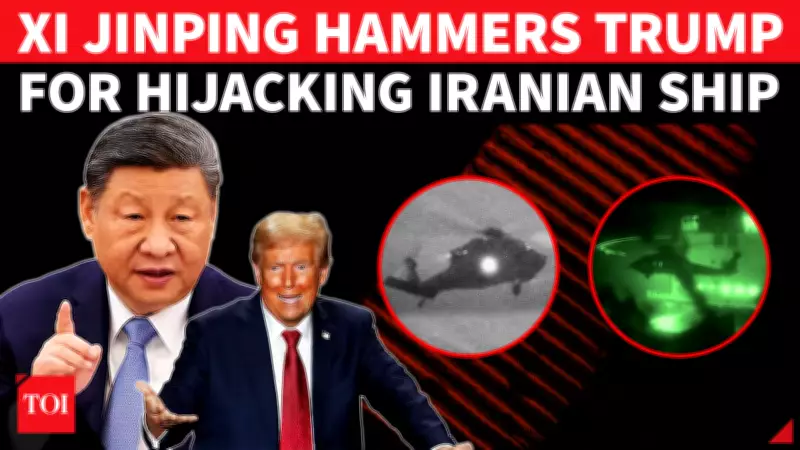
In a significant escalation of geopolitical tensions, China has sharply criticized the United States for what it describes as the "forcible interception" of an Iranian vessel near the strategic Strait of Hormuz. The incident, which occurred recently, has drawn Beijing directly into the dispute, with Chinese officials warning that the already fragile situation in the region risks further deterioration and potential conflict.
Beijing's Formal Protest Against U.S. Actions
The Chinese government has formally objected to the U.S. naval seizure, characterizing it as an aggressive maneuver that violates principles of international maritime law. According to Chinese statements, this action represents a dangerous precedent that could destabilize one of the world's most crucial shipping lanes, through which approximately one-fifth of global oil supplies transit daily.
Iran has joined China in condemning the seizure, labeling it a clear violation of international law and an agreed ceasefire arrangement. Iranian officials have framed the incident as part of a broader pattern of pressure tactics by Washington, suggesting it reflects ongoing attempts to undermine Tehran's regional influence and economic stability.

Expanded Warning Regarding Indo-Pacific Military Activities
In a related development, China has also issued a stern warning against recent joint U.S.-Philippine military drills conducted in the Indo-Pacific region. Beijing has characterized these exercises as provocative actions that amount to "playing with fire" in an already tense geopolitical environment.
The Chinese statements specifically cautioned against:
- Further military provocations in sensitive maritime regions
- Actions that could be interpreted as containment strategies against China
- Exercises that might escalate existing territorial disputes
- Activities that undermine regional stability and economic cooperation
Broader Geopolitical Context and Implications
This diplomatic confrontation occurs against a backdrop of increasing great power competition in both the Middle East and Asia-Pacific regions. The Strait of Hormuz incident represents just one flashpoint in a complex web of international rivalries, with China positioning itself as a counterbalance to U.S. naval dominance in key global waterways.
Analysts suggest that Beijing's strong response serves multiple strategic purposes:
- Demonstrating solidarity with Iran as part of China's broader Middle East policy
- Asserting China's growing role as a global diplomatic power
- Warning against what Beijing perceives as U.S. attempts to contain Chinese influence
- Protecting Chinese economic interests in vital shipping lanes
The situation remains fluid, with all parties monitoring developments closely. The potential for miscalculation or accidental escalation remains a significant concern for international observers, particularly given the strategic importance of both the Strait of Hormuz and the broader Indo-Pacific region to global trade and security.