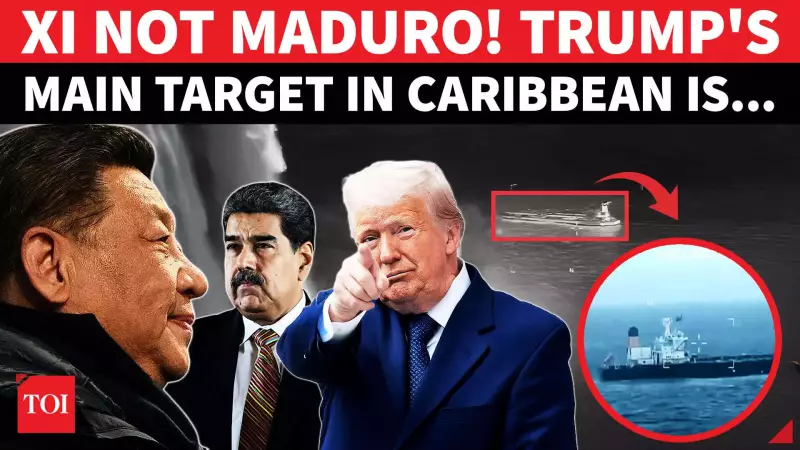
In a sharp escalation of diplomatic tensions, China has launched a forceful rebuke against the United States following Washington's order to blockade and seize sanctioned oil tankers connected to Venezuela. The incident, reported on December 25, 2025, has Beijing warning of potential disruptions to global energy security.
Beijing's Stern Warning to Washington
Chinese authorities have condemned the American actions, labeling them an abuse of unilateral sanctions and overreaching "long-arm jurisdiction." Officials in Beijing argue that such moves by the US could destabilize international energy markets and introduce new security risks. The core of China's argument is that Washington is imposing its domestic laws on other nations, a practice it firmly rejects.
A Caribbean Chase with Asian Destinations
The confrontation is playing out in the Caribbean Sea, where U.S. forces have been actively pursuing and capturing vessels carrying Venezuelan crude oil. Reports indicate that multiple seized tankers were en route to Asia, with industry experts and analysts identifying connections to Chinese-linked traders. This detail has fueled speculation that the true target of the American operation may not be Venezuela alone, but a strategic challenge to China's energy supply chains.

The situation raises a critical question: Is Venezuela the real objective, or is this a direct confrontation with China playing out through energy politics? The standoff merges tangible actions like tanker seizures with revived geopolitical rhetoric, including references to the Monroe Doctrine, highlighting a widening proxy battle for influence.
Latin America Caught in the Crossfire
Analysts observe that this standoff underscores a deepening energy and geopolitical rivalry between the two superpowers, with Latin America finding itself squarely in the middle. The region's resources have become a focal point in the broader competition for global influence between Washington and Beijing. From sanctions enforcement to naval deployments, every action is seen as part of a larger strategic game with far-reaching consequences for international trade and diplomacy.
The recent events signal that energy security and maritime routes are becoming primary theaters for this great-power competition, with the rules of engagement being tested in real-time on the high seas.