Bangladesh's political landscape entered a new chapter on Tuesday with the death of its first woman Prime Minister, Khaleda Zia, at the age of 80. The former leader, who dominated the country's politics for decades, passed away after a prolonged illness, leaving behind a legacy marked by democratic struggle and a notably cautious stance towards neighbouring India.
A Political Journey Forged in Tragedy
Khaleda Zia's entry into politics was not by design but by circumstance. She was thrust into the public arena following the assassination of her husband, military strongman-turned-President Ziaur Rahman, in an abortive army coup on May 30, 1981. At the time, she was just 35 years old. She subsequently took over as chairperson of the Bangladesh Nationalist Party (BNP) in May 1984, a position she held for nearly four decades.
Her political career spanned over four decades, during which she was elected Prime Minister three times – in 1991, 1996, and 2001. She was only the second woman to hold the post in the Muslim world after Pakistan's Benazir Bhutto. Her party remembered her as a pivotal figure in restoring democracy after a period of tumultuous military rule. However, her later years were marred by legal battles; she was convicted on corruption charges and later received a presidential pardon.

A Strained Relationship with India: Key Flashpoints
Khaleda Zia's tenure was characterised by a wary and often aggressive approach towards India. She positioned her BNP as the protector of Bangladeshi interests against what she perceived as Indian domination. Several key issues defined this strained relationship.
The 1972 Indo-Bangladesh Friendship Treaty was a major point of contention, which she argued had "shackled" Bangladesh. She also consistently opposed the Farakka Barrage, operational since 1975, claiming it deprived Bangladesh of its rightful share of Ganga waters. As Prime Minister, she denied India transit rights through Bangladeshi territory, stating it would compromise her country's security and sovereignty, even calling toll-free movement of Indian trucks "slavery".
Furthermore, her political alliance with the fundamentalist Jamaat-e-Islami became a major sore point. This alliance, particularly in the first decade of the 2000s, allowed terrorists and anti-India elements a free run in Bangladesh, using its territory as a launch pad for operations against India.
Succession, Funeral, and Regional Diplomacy
Zia's death comes at a critical juncture, with national elections scheduled for February 12. Her elder son, Tarique Rahman, who returned to Bangladesh on December 25 after more than 17 years of self-exile in London, confirmed her passing. As the BNP's acting chairperson, he is now set to formally lead the party into the parliamentary polls.
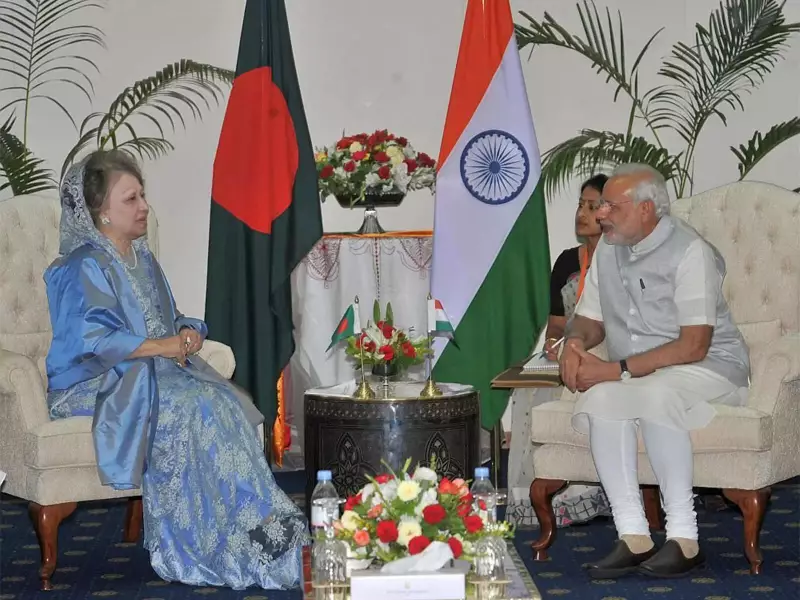
India's External Affairs Minister, Dr. S. Jaishankar, will represent the country at Zia's funeral in Dhaka on Wednesday. Despite the historical tensions, Prime Minister Narendra Modi expressed grief, recalling his "warm meeting with her in Dhaka in 2015" and hoping her legacy would continue to guide the bilateral partnership. The Modi government's caution in maintaining ties with the BNP appears validated as the party, under Tarique Rahman's leadership, could emerge as a frontrunner in future elections.
The interim government, led by Chief Adviser Yunus and formed after the ouster of Zia's arch-rival Sheikh Hasina last year, announced that Zia will be buried with full state honours beside her husband in Dhaka. The government has declared three days of state mourning and a one-day general holiday.

An Enduring Rivalry and a Nation's Reflection
Khaleda Zia's political identity was inextricably linked with her decades-long rivalry with Sheikh Hasina of the Awami League. This rivalry shaped Bangladesh's deeply polarised politics and defined alternating eras of governance. Hasina, who fled the country last year following an uprising, paid tribute from exile, describing Zia's death as "a profound loss for Bangladesh's political life" and acknowledging her significant contributions.
The contrast in their tenures regarding India is stark. While Zia's rule saw friction, her successor Sheikh Hasina actively addressed India's security concerns by cracking down on hardline outfits targeting India. As Bangladesh prepares for its first election since Hasina's ouster, the passing of Khaleda Zia marks the definitive end of an era, leaving the BNP at a crossroads and the nation reflecting on a complex political legacy.