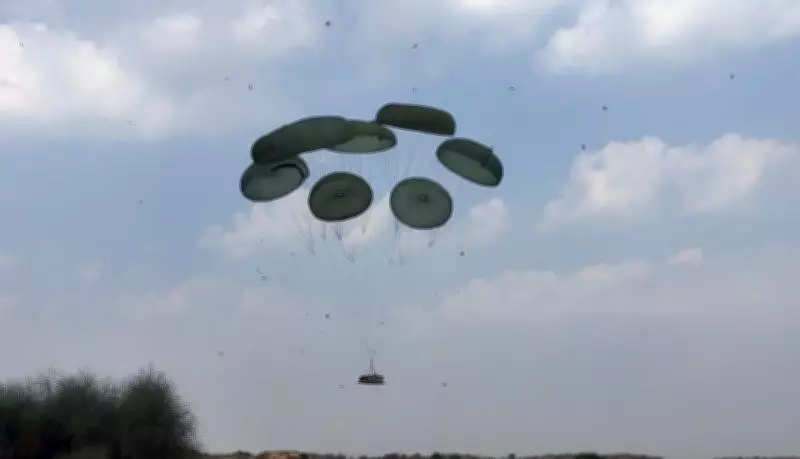
Indian Army Achieves Milestone with Indigenous Parachute System for BMP Airdrop
The Indian Army has marked a significant advancement in its operational readiness by successfully testing the airdrop of a BMP infantry combat vehicle from a C-17 Globemaster III aircraft. This critical trial utilized a fully indigenous parachute system, underscoring India's growing self-reliance in defense technology and logistics.
Details of the Successful Airdrop Test
Conducted recently, the test involved deploying the BMP, a versatile armored vehicle used for troop transport and combat support, from the C-17 heavy-lift transport aircraft. The indigenous parachute system, developed by Indian defense agencies, ensured a controlled and safe descent of the vehicle to the ground. This achievement highlights the army's capability to rapidly deploy heavy equipment in remote or challenging terrains, enhancing its strategic mobility during operations.
Strategic Implications and Operational Benefits
The successful airdrop test has profound implications for the Indian Army's operational flexibility. By leveraging the C-17's long-range capabilities and the indigenous parachute system, the army can now efficiently airlift and drop critical assets like the BMP in diverse scenarios, including border areas, disaster relief missions, or rapid response situations. This reduces dependency on foreign technology and aligns with the government's Make in India initiative in the defense sector.

Key aspects of this development include:
- Enhanced rapid deployment of armored vehicles to support infantry units in forward locations.
- Improved logistical support for operations in inaccessible regions, such as mountainous or desert areas.
- Strengthened indigenous defense manufacturing, contributing to national security and economic growth.
Technological Advancements and Future Prospects
The indigenous parachute system represents a leap in aeronautical engineering, designed to handle the weight and dynamics of heavy combat vehicles like the BMP. This test paves the way for further innovations in airdrop technologies, potentially extending to other military equipment. It also demonstrates the Indian Army's commitment to modernizing its arsenal and adapting to evolving battlefield requirements.
Looking ahead, this success could lead to more frequent integration of such systems in joint exercises and real-world deployments, bolstering India's defense preparedness on the global stage.