Iranian Activist Masih Alinejad Confronts Kamala Harris in Fiery Social Media Post
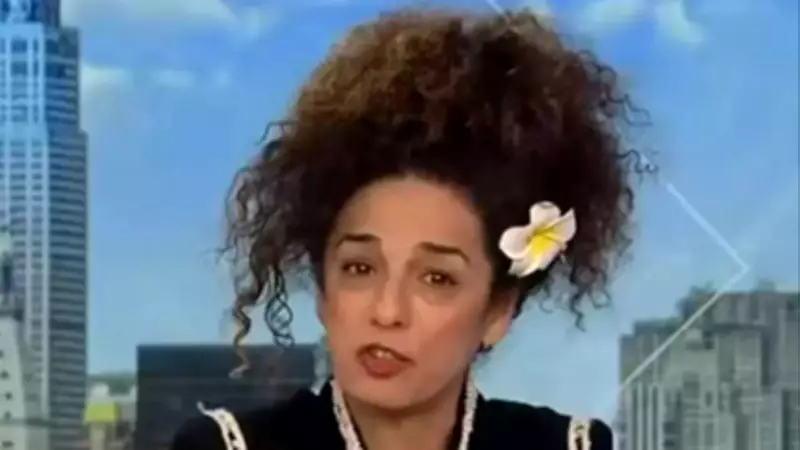
Prominent Iranian activist Masih Alinejad has launched a sharp public critique against former United States Vice President Kamala Harris, questioning her commitment to women's rights and accusing her of selective silence during critical moments of violence. In a pointed post on the social media platform X, Alinejad directly addressed Harris, igniting a heated online debate amid escalating military tensions between the US, Israel, and Iran.
Social Media Confrontation Over Women's Rights and Mass Killings
In her post, Alinejad wrote: "Who are you? No, honestly. Who are you? A Democrat who built a career talking about women's rights, yet stayed silent when more than 30,000 people were massacred. Now suddenly you've found your voice?" The message quickly gained widespread attention, drawing strong reactions from users across the political spectrum as discussions about US-Israel military actions against Iran intensified.
Alinejad, a long-time critic of Iran's clerical leadership, recently posted an emotional video responding to the death of Iran's Supreme Leader Ali Khamenei. In the clip, she stated, "Finally, you're dead, finally, you're gone, Ali Khamenei," with her voice breaking with emotion. She was also seen embracing strangers in New York, later describing these gestures as acts of survival rather than celebration.

Kamala Harris's Position on Recent US Strikes Against Iran
Harris criticized former President Donald Trump regarding the recent military strikes during a March 1 book tour event in Madison, Wisconsin, for her memoir "107 Days." She labeled the attacks an unauthorized "war of choice" and accused Trump of involving America in conflict without proper congressional approval.
"In the last 48 hours Donald Trump has dragged America into a war that we don't want," Harris declared. She expressed opposition to regime-change warfare in Iran, characterizing the operation as a "dangerous and unnecessary gamble" with American lives.
Simultaneously, Harris acknowledged Iran as a serious threat, asserting that the country "must never be allowed to have a nuclear weapon." She emphasized that US troops deserve leadership marked by steadiness and discipline. Harris also contested Trump's claim that Operation Midnight Hammer had completely destroyed Iran's nuclear facilities, noting intelligence assessments suggesting the strikes may have set back Iran's nuclear program by months to years rather than eliminating it entirely.
Background on Masih Alinejad's Activism and Career
Born on September 11, 1976, in northern Iran, Alinejad began her journalism career in 2001, writing for reformist newspapers including Hambastegi and Shargh. Following the disputed 2009 Iranian presidential election and subsequent protests, she left Iran and eventually settled in New York City.
She gained international recognition by launching the My Stealthy Freedom campaign in 2014, encouraging Iranian women to share photographs without headscarves to protest compulsory hijab laws. This movement expanded into initiatives like White Wednesdays and My Camera Is My Weapon, utilizing social media as a powerful tool for civil resistance.
Alinejad hosts "Tablet" on Voice of America's Persian service and has contributed to prominent outlets such as The New York Times. Her memoir, The Wind in My Hair, became a bestseller, and she has received multiple international honors, including the Geneva Summit Prize and recognition as Time's Woman of the Year.
Broader Context of US-Iran-Israel Tensions
The confrontation occurs against a backdrop of significant military escalation. Recent reports indicate Iran launched a massive missile strike at a US airbase in Bahrain, while Israel conducted bombings in Beirut. Satellite imagery has revealed the aftermath of strikes on Iranian sites, including Khamenei's compound and nuclear facilities.

Operation Epic Fury, the US military campaign, reportedly cost approximately $700 million in just 24 hours, with final war expenses remaining uncertain. Alinejad has consistently urged Western governments to adopt tougher stances against Tehran and has criticized what she perceives as inconsistent support for Iranian women protesting state repression.
This public exchange highlights ongoing debates about international diplomacy, human rights advocacy, and military strategy in one of the world's most volatile regions.