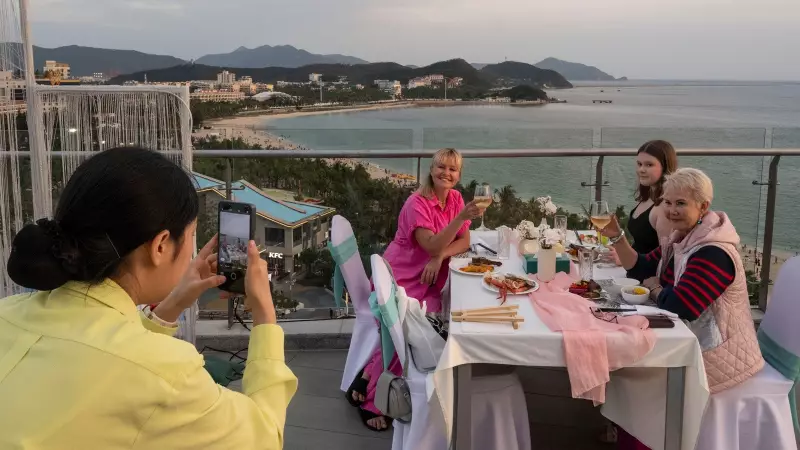
On the sun-drenched shores of China's Hainan island, a remarkable transformation is underway. The tropical paradise, often dubbed China's Hawaii, is rapidly becoming a favored warm-weather refuge for a specific group of travelers: Russians. Amidst the sweeping geopolitical shifts and travel restrictions following Russia's actions in Ukraine, Hainan has emerged as a surprising and bustling sanctuary.
A Tropical Refuge Amidst Global Tensions
The change is palpable in the resort city of Sanya. Where once the chatter of domestic Chinese tourists dominated, the melodic sounds of the Russian language now fill the air at beaches, shopping malls, and restaurants. This shift is a direct consequence of Western sanctions and closed airspace, which have severely limited traditional Russian holiday destinations in Europe, Southeast Asia, and the Middle East.
In response, China has strategically positioned itself as a viable alternative. Direct flights connect Russian cities like Moscow, Vladivostok, and Irkutsk directly to Hainan. The island offers what Russian travelers seek: reliable warmth, visa-free access, and a sense of normalcy. Local businesses have been quick to adapt. Menus now feature Russian translations, hotels display signage in Cyrillic script, and shops prominently advertise their ability to process payments through Russia's Mir bank cards and China's UnionPay system, circumventing the blocked Visa and Mastercard networks.

Economic Lifeline and Cultural Adaptation
For Hainan's tourism economy, which suffered significantly during China's strict zero-Covid period, this influx is a vital lifeline. The island's ambitious plan to become a free trade port by 2025 receives a boost from this new, steady stream of international visitors. Data underscores the trend: in the first half of 2023, over 22,000 Russian tourists visited Hainan, a figure that continued to grow robustly into 2024.
The adaptation extends beyond mere translation. Entrepreneurs like Artyom Ushakov have identified a niche, establishing businesses specifically to cater to the new clientele. From opening a supermarket stocking Russian staples like buckwheat and pelmeni (dumplings) to planning a Russian-language school for the children of longer-term visitors, the infrastructure for a semi-permanent community is being built. This mirrors a larger trend of Russians relocating to nearby countries like Georgia, Armenia, and Kazakhstan since 2022.
"Everything is available here, and the most important thing is the sea and the warmth," remarked Margarita, a tourist from Moscow, capturing the simple appeal. The scenic backdrop of Sanya's coastline, combined with practical amenities, creates a powerful draw.
Navigating a Complex New Normal
This burgeoning tourism relationship is not without its complexities. It operates within the broader context of strengthened political and economic ties between Moscow and Beijing, described by their leaders as a "no-limits" partnership. While the Chinese government maintains a publicly neutral stance on the Ukraine conflict, the flourishing people-to-people connections in places like Hainan illustrate a deepening practical interdependence.
For the Russian tourists, Hainan represents more than just a beach holiday; it is one of the few accessible international destinations that offers a semblance of the pre-2022 world. For China, it is an opportunity to revitalize a key tourism zone and foster economic engagement with a friendly nation. The situation on the island is a microcosm of how global realignations manifest in everyday life—transforming hotel lobbies, restaurant menus, and local economies.
The future of this sunny sanctuary appears bright, at least for the foreseeable future. As long as the current geopolitical landscape persists, Hainan's white-sand beaches and warm South China Sea waters will likely continue to serve as a crucial haven for Russians seeking escape, sunshine, and a taste of normalcy far from home.