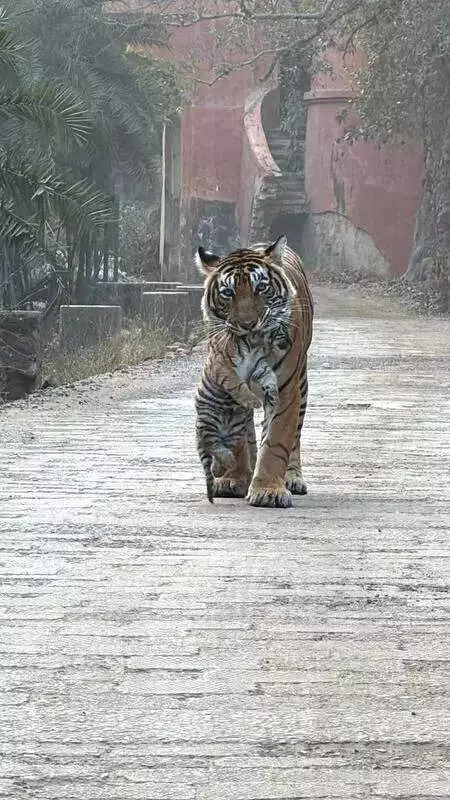
Visitors heading to a popular temple inside Rajasthan's famed Ranthambore Tiger Reserve faced a brief but thrilling interruption on Monday morning. The access route was temporarily closed after the majestic tigress T-107, famously known as 'Sultana', was spotted moving with her young cub.
Route Closure Ensures Mother and Cub Safety
The forest department took swift action, closing the 2.5-kilometer stretch leading to the Trinetra Ganesh temple. The precautionary measure lasted for approximately half an hour. A forest official explained that the priority was the safety of the animals. "The route was reopened once the tigress moved her cub to a secure location deeper inside the forest," he stated. The official added that continuous monitoring of the tigress and her cubs is currently underway to ensure no further disruptions or dangers.
Sultana's Maternal Instincts on Display
This event marks the second such recorded movement by the protective tigress in recent weeks. Earlier, on December 19, Sultana was observed shifting her cubs from a cave near the Mishradarra Gate towards the interior of the forest. According to officials, the area near the gate is one of her preferred locations. "The tigress gave birth to her cubs in a cave near the Gate. Most of her earlier litters were also born in the same region," the official shared, highlighting her attachment to the spot.

A Pattern of Protective Relocation
Wildlife experts note that about a month after birth, tigresses often begin shifting their cubs to safer, more secluded parts of their territory. This behavior helps protect the vulnerable young from potential threats. True to this instinct, after her movement on December 19 towards Territory Zone No. 1, Sultana was again seen on Monday morning. She was relocating a cub from the Atal Sagar area towards Gaumukh, a forest staff member confirmed. This repeated action underscores her diligent efforts to ensure the utmost safety for her offspring.
The incident, while causing a short delay for temple-goers, was met with understanding and served as a rare glimpse into the life of one of Ranthambore's celebrated big cats. It also highlights the successful coexistence protocols managed by the forest department, which prioritizes wildlife safety while facilitating regulated human access.