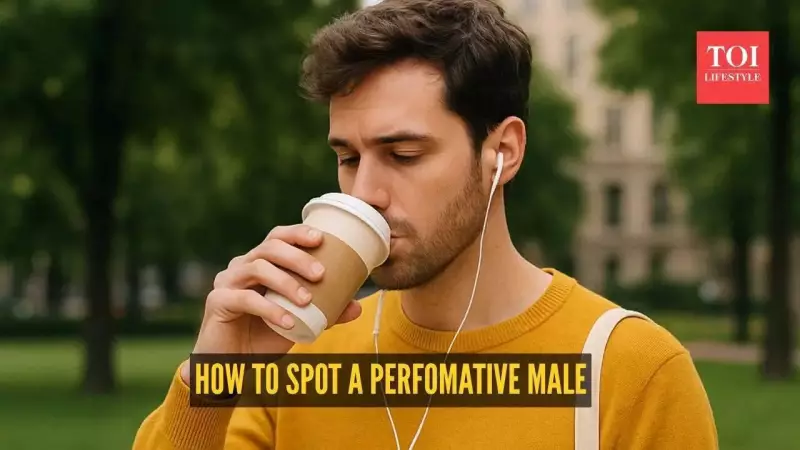
In the natural world, the male of the species has always been the more flamboyant one. Evolution has consistently favored extravagance, from the frog with the loudest croak to the bird with the most intricate dance. The peacock, with its six-foot-long tail adorned with 150 shimmering eyespots, is the ultimate example. As Sir David Attenborough explained in his series 'Life in Colour', this glorious display is driven entirely by female choice.
From Feathers to Facades: The Human Adaptation
This primal dynamic of performance for attention feels strangely familiar in human society today. The instinct to perform hasn't vanished; it has simply changed its costume. For centuries, patriarchal norms dictated the roles: men were expected to project stoicism, strength, and competence. This framework largely obscured the phenomenon of male display, until it became impossible to ignore.
At first glance, the modern 'performative male' appears to be the antidote to toxic masculinity. He is soft-spoken, aesthetically aware, and politically conscious. He seems to be the man who has learned to read the room, not dominate it. However, beneath this polished exterior often lies a repackaged version of an old desire: the quest for control, validation, and status. The tools have changed—now it's matcha lattes, art-house cinema references, and a gentle voice assuring you he's not like 'those other men'.

Decoding the Performance: Aesthetics Over Authenticity
This is not an attack on men, but a call for awareness. When performance is rooted in insecurity rather than genuine introspection, it can morph into a subtle form of manipulation. This growing trend of over-conscious, curated masculinity deserves a name, especially on International Men's Day, a moment meant for honesty, not ornamentation.
We have long discussed the 'male gaze,' where women subconsciously tailor themselves to male preferences. The performative male reverses this. He dresses, behaves, and intellectualizes for what he imagines is the respectful gaze of progressive women. He knows exactly which aesthetics signal sensitivity: the perfectly fitting loose jeans, vintage-washed t-shirts, silver rings, and quirky sneakers.
His tote bag might contain books by Judith Butler or Virginia Woolf—perhaps unread, but visually essential. He discusses art in a slow, deliberate cadence, as if he recently discovered vulnerability and is still practicing it. He frequents museums, or at least values being seen in them. He critiques capitalism while wearing a $400 'quiet luxury' hoodie. He cooks, uses wired earphones for aesthetic irony, loves pets with branded enthusiasm, and drinks matcha for its soft, wellness-coded charm.
The Core Issue: Curation vs. Genuine Growth
None of these traits make him a villain. Many men are genuinely evolving into gentler, more thoughtful versions of themselves. The crucial difference is that the performative male isn't growing; he is curating. His sensitivity is rehearsed, not lived. His authenticity is in the performance, not in introspection. While this act might seem harmless, it subdues the authentic self. When the mask eventually slips, what remains is often a lonely man, too afraid to truly learn and express who he is.