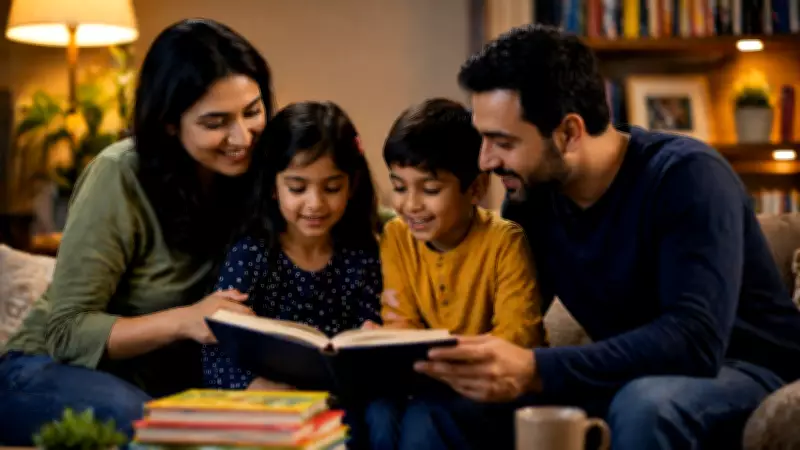
In the modern household, the competition for a child's attention is a gladiator match where the opponents are high-definition flashing lights and dopamine-triggering algorithms. To choose a book over a tablet is, for many children, like choosing a plate of steamed spinach over a mountain of candy. However, raising a reader is not about a gruelling campaign of discipline; it is about cultivating a literary garden. If we treat reading as a chore, children will view books as dusty museum relics. But if we treat them as portals, we invite our children to become world-travellers without ever leaving the living room.
The Mirror and the Map: Why Parents Must Lead
The most inconvenient truth for any parent is that children are world-class mimics. You cannot expect a child to dive into the deep end of prose if they only ever see you scrolling through the shallow ripples of social media. To raise a reader, you must first be one. Think of your home as a stage. If the lead actors (the parents) are constantly engaged with their own scripts—actual, physical books—the supporting cast (the children) will naturally want to know their lines. This is where the Family Book Club enters the scene. This isn't a formal board meeting with minutes and PowerPoint slides; it is a collaborative exploration. By reading the same book together or side-by-side, you transform a solitary act into a shared adventure. This turns reading time into quality time, a rare currency in our frantic world.
From Screen to Page: The Cinematic Hook
We often view cinema as the enemy of the book, but in the quest for literacy, Hollywood can be a powerful ally. Many of the most beloved films, from the whimsical wizardry of Harry Potter to the breathtaking landscapes of The Chronicles of Narnia or the emotional depths of Wonder, began as ink on a page. Use this to your advantage. A brilliant strategy is the Page-to-Screen Challenge. Tell your child that you will watch the movie together, but only after the final chapter of the book has been closed. This creates an internal cinematic engine in the child's mind. They begin to compare the Director's Cut in their head with the one on the screen. Usually, they'll discover the profound secret of all bibliophiles: the book was better because the special effects budget in one's imagination is infinite.

The Tangible Magic of Paper vs. Pixels
While an e-reader is a marvel of engineering, it lacks the soul of a physical book. A book is a sensory experience. There is the tactile resistance of the paper, the distinct scent of the binding, and the visual satisfaction of a bookmark migrating from the left side to the right—a physical scoreboard of progress. Moreover, the biological benefits are undeniable. Electronic items emit blue light that wages war on a child's sleep cycle and narrows their attention span to the length of a 15-second clip. A book, conversely, requires deep work. It demands that the brain slow down, process complex metaphors, and build empathy. You cannot swipe left on a difficult chapter in a book; you must inhabit it.
Creative Seeds for a Strong Habit
Building a habit doesn't require a library the size of Alexandria; it requires simple, creative consistency. Consider the following strategies:

- The Reading Nook Architecture: Create a physical space that is the sanctuary of the story. A specific chair, a soft blanket, and perhaps a lamp that is only turned on for reading.
- The Literary Picnic: Occasionally, take the books outside. Reading under a tree or at a park changes the context of the activity from schoolwork to leisure.
- The Cliffhanger Strategy: When reading aloud, stop at the moment of highest tension. When the protagonist is dangling over a pit of vipers, close the book and say, More tomorrow. The child will spend the next 24 hours mentally writing the next chapter.
- Reinforcing School Initiatives: Schools often use reading logs or incentive programs like Accelerated Reader. While these can sometimes feel like administrative homework, parents can add the metaphorical sugar to the medicine. Instead of a did you finish your 20 minutes? interrogation, try: I saw you're reading about ancient Egypt in class; let's see if we can find a documentary or a museum exhibit this weekend that matches it.
- The Power of the Living Room-Classroom Loop: When a child hears a teacher praise a book during the day and then sees their parent reading that same book (or a similar one) in the evening, the cognitive dissonance regarding reading disappears. It is no longer a task to be completed; it is a culture to be inhabited. By collaborating with the school, you aren't just checking a box on a permission slip; you are building a scaffolding that will support your child's intellectual growth for decades to come. As the saying goes, it takes a village to raise a child, but it takes a library and a dedicated team to raise a reader.
The Harvest
Ultimately, books are the compost of the mind; they enrich the soil from which a child's own ideas will grow. By weaving reading into the fabric of family life, you aren't just teaching a skill; you are handing them a compass for life. You are giving them the ability to converse with the greatest minds of history and the power to find humour and hope in the written word. In the end, the child who reads will eventually become the adult who thinks. And in a world of flashing screens, a thinking person is the most revolutionary thing one can be.