The Crescent Moon: A Celestial Phenomenon Explained
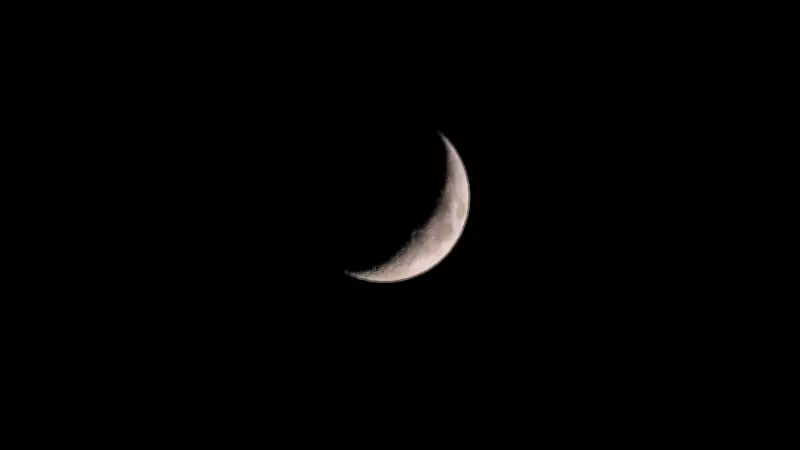
The crescent moon stands as one of the most iconic and easily recognizable features in the night sky. Countless observers have witnessed its delicate, curved sliver of light gracing the heavens during the twilight hours of dusk or dawn. This distinctive shape is not a random occurrence but a direct result of the precise orbital positions and alignments of the Earth, the Moon, and the Sun.
What Exactly Is the Crescent Moon?
Fundamentally, the crescent moon represents a lunar phase where only a small, curved portion of the Moon's sunlit surface is visible from our vantage point on Earth. It is crucial to understand that the Moon does not generate its own light; the illumination we perceive is sunlight being reflected off the lunar surface. As the Moon completes its orbit around Earth approximately every 29.5 days, the changing angles between these three celestial bodies produce the cyclical sequence of moon phases, including the slender crescent.
According to detailed explanations from NASA Science, this phase occurs specifically when just a minor segment of the Moon's hemisphere facing the Sun is also turned toward Earth, with the remainder shrouded in darkness. These phases are not haphazard but follow a strict, predictable order as part of the continuous and repeating lunar cycle.

The Two Types of Crescent Moons
The crescent phase itself is divided into two distinct categories based on the Moon's progression through its cycle:
- Waxing Crescent: This phase emerges after the New Moon. Each successive night, the illuminated portion visible from Earth gradually increases in size, signaling the Moon's journey toward becoming full.
- Waning Crescent: Occurring just before the next New Moon, this phase is characterized by the lit area diminishing nightly as the cycle prepares to restart.
NASA's Moon Phases resources clarify that these appearances are dictated by how much of the Moon's sunlit side we can observe from our planetary position.
Why Does the Crescent Moon Appear So Thin?
The crescent's characteristically slender shape is a fascinating interplay of geometry and perspective. While one entire hemisphere of the Moon is always bathed in sunlight, terrestrial observers see only a fraction of that lit area. NASA Science notes that when the Moon's position in the sky is in close proximity to the Sun, only a narrow, curved arc of its sunlit face is presented to us. The rest of the illuminated hemisphere remains out of view, creating the iconic thin crescent silhouette. This appearance is most pronounced—and the crescent appears thinnest—shortly after sunset or just before sunrise, when the Moon is low on the horizon near the Sun's location.
The Predictable Sequence of Lunar Phases
The Moon's phases unfold in a consistent and orderly pattern throughout its 29.5-day orbital period around Earth. The complete cycle, as documented by NASA Science, progresses as follows:
- New Moon (invisible)
- Waxing Crescent
- First Quarter
- Waxing Gibbous
- Full Moon
- Waning Gibbous
- Last Quarter
- Waning Crescent
This sequence then repeats continuously, governing the Moon's changing appearance in our sky.
Positioning of the Crescent Moon in the Sky
The crescent moon's location is intrinsically linked to the Sun's position:
- Waxing Crescent: Visible in the western sky following sunset.
- Waning Crescent: Observable in the eastern sky prior to sunrise.
This proximity to the solar position, as highlighted by resources like NASA's Astronomy Picture of the Day (APOD), is precisely why the crescent moon is often only visible for a brief window each day and typically sits low near the horizon.

The Nature of Moonlight and Earthshine
It bears repeating that the luminous glow of the Moon is entirely reflected sunlight, a fact confirmed by NASA Science. The Moon itself emits no light. An intriguing related phenomenon is Earthshine—a subtle, faint illumination sometimes visible on the dark portion of a crescent moon. This glow is caused by sunlight reflecting off Earth's surface (specifically clouds and oceans) back onto the Moon. The NASA Earth Observatory notes that Earthshine is a measurable effect, and its intensity depends on Earth's reflectivity, or albedo, at any given time.
How to Observe the Crescent Moon
Observing the crescent moon is accessible to everyone. It can be seen with the naked eye by looking toward the horizon just after sunset or just before sunrise. For a more detailed view, using binoculars or a small telescope can reveal fascinating features along the terminator—the sharp line dividing the lit and dark areas of the lunar surface, where shadows accentuate craters and mountains.