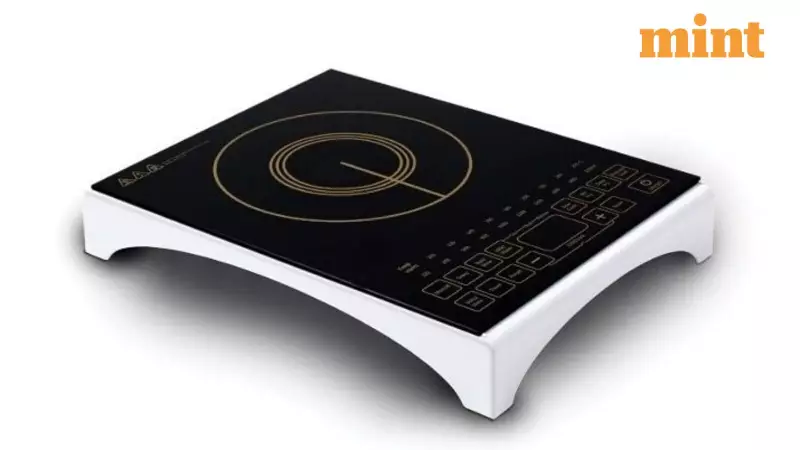
Induction cooktops are celebrated across Indian homes for their speed, modern look, and energy-saving promise. They boil water in moments and offer precise temperature control. Yet, many users find their cooking experience becomes frustrating over time, with uneven browning and inconsistent results. The core issue often lies not in the technology itself, but in two critical design aspects: the physical size of the cooktop and the layout of its electromagnetic coils.
The Hidden Role of Cooktop Size in Daily Cooking
Choosing a cooktop size is about more than just fitting it on your kitchen counter. It fundamentally shapes your cooking workflow, the cookware you can use effectively, and your comfort during meal preparation.
Compact cooktops may save space but limit your pots and pans. A large kadai, tawa, or frying pan might overhang the marked heating zone. When this happens, only the centre of the pan receives direct heat, leaving the edges cooler. This leads to oil pooling unevenly and food cooking at different rates, making perfect bhurji or evenly browned parathas a challenge.

Larger surfaces provide better spacing between cooking zones. This is crucial for Indian cooking, where you often need to simultaneously simmer a dal, sauté vegetables, and keep a gravy warm. On a cramped cooktop, pot handles clash, controls are hard to reach, and maneuvering becomes a hassle. A wider layout allows for a smoother, more relaxed cooking process.
Size also relates to thermal power and stability. Bigger cooktops usually house more robust coils that can maintain a consistent low heat for long periods. This is essential for slow-cooking dishes like biryani or a rich korma. Smaller units might heat up fast but can struggle to hold a gentle, steady simmer, forcing you to adjust the power frequently.
Coil Layout: The Engine Behind Even Heat Distribution
If size defines your cooking stage, the coil layout is the director ensuring even performance. This technical detail determines exactly how heat spreads across the bottom of your cookware, and it's frequently overlooked by buyers.
Basic, budget-friendly induction cooktops typically use small, circular coils. These create a concentrated hot spot directly in the pan's centre. While fine for boiling water or milk, this design fails for shallow frying, making pakoras or dosa, where you need uniform heat across the entire cooking surface. The centre browns too fast while the edges remain pale.
Advanced models employ wider coils or clever overlapping coil patterns. These designs generate a broader magnetic field, heating a larger area of the pan base evenly. The difference is immediately visible when cooking rotis or pancakes—they get a consistent golden colour without dark patches.
Some premium cooktops offer flexible or bridge zones, where multiple coils can combine to heat a single large or oddly-shaped vessel. This means you don't have to perfectly centre your pressure cooker or rectangular grill pan. The design adapts to your cookware, making cooking feel intuitive rather than like a technical exercise.
Why Design Choices Matter for Your Kitchen Reality
The interaction between your cookware and the coil layout is vital. Thick, flat-bottomed pans with ferromagnetic bases are non-negotiable for good results. On a cooktop with limited coil coverage, using a pan that's too small concentrates intense heat in one spot, while a pan that's too large wastes energy. A generous coil layout is more forgiving of the varied sizes of your pressure cookers, saucepans, and tawas.
These design elements directly impact multitasking and energy efficiency. When zones are too close, heat from one burner can interfere with another. A well-spaced layout with efficient coils allows you to manage multiple dishes without stress and ensures that more energy is transferred directly to the food, not lost around the edges of the pan.
In the long run, a thoughtfully designed induction cooktop—with adequate size and an intelligent coil layout—builds cooking confidence. It encourages experimentation, delivers reliable results, and transforms the promise of induction technology into a genuinely enjoyable and efficient everyday cooking experience.