Bombay High Court Dismisses Petitions Against Eviction on Railway Land
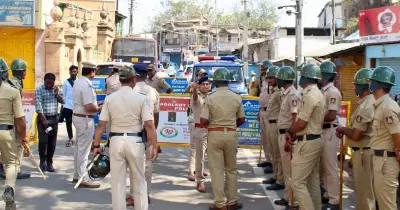
In a significant ruling, the Bombay High Court has dismissed petitions filed by residents of unauthorised structures located on Western Railway (WR) land at Chincholi Phatak in Malad East, Mumbai. The court has directed the petitioners to vacate the premises within 60 days, failing which the railway authorities may initiate forcible dispossession and demolition with police assistance.
Court Holds Railways Partly Responsible
Justices Ravindra Ghuge and Abhay Mantri, delivering the verdict on Thursday, made a noteworthy observation regarding the railway authorities' role. They stated, "It is pertinent to note that the fact remains that the railway authorities do not dispute their occupancy, their identities and measurements of their structures." Consequently, the bench held that the railways are equally responsible for the situation and are liable to provide some support to those affected by the removal of their structures.
Background of the Legal Battle
The High Court's decision came on 25 petitions challenging an estate officer's order from January 2025, which had directed the residents to vacate within 15 days. The case traces back to August 2022, when show-cause notices were issued under the Public Premises (Eviction of Unauthorised Occupants) Act. In May 2025, the city civil court had already dismissed their appeals, leading to this High Court hearing.
Arguments Presented by the Petitioners
Advocate Aseem Naphade, representing the residents, argued that the estate officer failed to consider a December 2000 Government Resolution (GR). This resolution, he contended, would qualify them as project-affected persons (PAPs) under phases I and II of the Mumbai Urban Transport Project (MUTP) and under the Corporate Plan 2014-34 for rehabilitation. Naphade further asserted that even if they are considered squatters, their existence since 1980 makes them eligible for rehabilitation and resettlement (R&R) benefits.
Railways' Counter-Arguments
In response, the advocate for Mumbai Railway Vikas Corporation argued that the residents are neither PAPs nor are their structures within 10 meters of the sixth railway line from Mumbai Central to Borivli. This distance is a key criterion for eligibility under certain schemes.
Court's Findings and Rationale
The judges noted that the petitioners failed to produce documents demonstrating that their structures are:
- Authorised or protected
- Affected by the MUTP
- Covered under any railway scheme
- Within 10 meters of the sixth railway line
In fact, the court pointed out that in an undated representation, the petitioners themselves stated they were located beyond 10 meters. The bench concluded it is "evident" that the structures are unauthorised and not covered by any scheme or project, making the petitioners ineligible for PAP benefits under the R&R policy.
Rehabilitation Considerations
Despite the eviction order, the High Court provided a measure of relief. It directed that before commencing eviction and removal of structures, the collector must ensure the personal details of the residents are recorded and preserved. This step is to consider their eligibility for suitable accommodation if the state or railways has a rehabilitation scheme. The court clarified that the concerned authority may provide suitable accommodation in lieu of rehabilitation, but only if the petitioners are found eligible under such schemes.
The verdict underscores the complex interplay between urban development, legal compliance, and humanitarian concerns in Mumbai's ongoing infrastructure challenges.