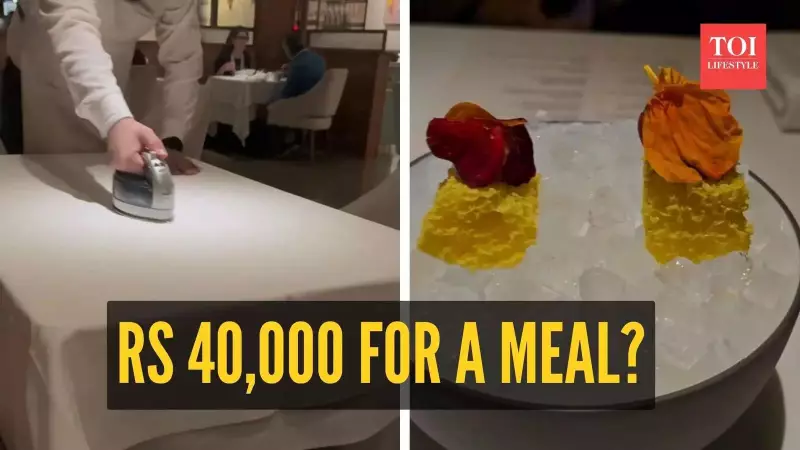
A simple, straightforward video documenting a single expensive meal has captivated social media feeds across India and beyond. The focus isn't on scandal or outrage, but on a universally relatable yet often unspoken topic: the real value of a luxury dining experience. The video, shared by Indian content creator Anushk Sharma, features his visit to a Michelin-starred Indian restaurant in Chicago, and its honest portrayal has sparked widespread debate about the evolution of Indian food, portion sizes, and whether such high-priced meals are justified.
The Viral Rs 40,000 Dinner Review
Anushk Sharma, who shares his culinary explorations online under the handle @anushkinusa, begins his video with a direct statement that immediately grabbed attention. He reveals that the tasting menu for two cost a staggering Rs 40,000. His calm declaration, "It's an Indian Michelin-star restaurant here in Chicago, and it is definitely worth it," served as the catalyst for a flood of reactions. The sheer price point alone left many viewers astonished, while others were intrigued to see how Indian cuisine is presented at the pinnacle of the fine dining world.
Unlike many sensationalist food reviews, Sharma's approach is notably understated. There is no exaggerated hype or manufactured drama. Instead, he provides a methodical, step-by-step walkthrough of the multi-course tasting menu. He presents each dish as it arrives, describing the components, flavours, and the creative thought behind the presentation. This transparent style allowed viewers to feel like they were at the table with him, forming their own opinions.

Tradition Reimagined on a Global Plate
The video showcases how the restaurant innovates while respecting its roots. Sharma highlights modern interpretations of classic Indian street food and home-style dishes. For instance, he shows a dhokla elevated with curry leaf and mustard, and a pani puri reinvented with passion fruit, buckwheat, and green apple. These dishes are designed to appeal to an international palate while retaining the essential soul of Indian flavours.
The innovation continues with more experimental offerings. A standout dish featured by Sharma is a mushroom galouti served in the form of an eclair, accompanied by goat cheese and truffle. Other courses included a yoghurt chaat with strawberry and tamarind, and a medu vada paired with butternut squash and tomato pachadi. The main courses comprised items like celeriac kebab, paneer kofta with black dal, and garlic naan, followed by desserts such as a mango delight. Throughout, Sharma's commentary remains focused on taste balance and artistic presentation, emphasising the chef's meticulous attention to detail over the quantity of food served.
Public Reaction: A Divide Between Art and Value
Once the video spread online, the comment section became a battleground of perspectives. A significant portion of the discussion zeroed in on the cost versus portion size. One typical comment read, "I understand that Michelin is a star. But this quantity isn't enough for the price." Another user pointed out, "Not everyone can afford to pay $400 for food."
This sparked a broader conversation about the very philosophy of fine dining. One side of the debate appreciates the creativity, storytelling, technique, and the overall experiential luxury that such restaurants offer. The other side questions the accessibility and value-for-money, especially for a cuisine often associated with warmth, generosity, and hearty portions. The discussion extended into pride about Indian cuisine gaining global prestige, contrasted with concerns that such avant-garde interpretations might distance the food from its cultural origins and make it inaccessible to the average person.
Ultimately, Anushk Sharma's video transcended being a mere restaurant review. It became a social media case study that prompted people to discuss food culture, globalisation of cuisine, and the economics of experiential dining. By simply sharing his genuine experience without persuasion or provocation, Sharma ignited a conversation that reaches far beyond a single restaurant in Chicago, touching on themes of culture, value, and identity.