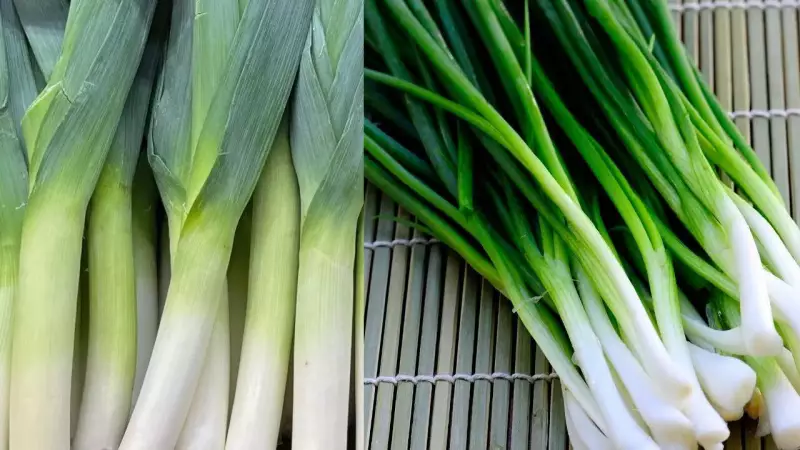
In the bustling vegetable markets and home kitchens across India, a common culinary confusion unfolds. Two long, green-stemmed ingredients – leeks and green onions – often get mistaken for one another. They look nearly identical at a glance, leading many home cooks to use them interchangeably. However, this simple substitution can be the reason your soup tastes unexpectedly flat or your stir-fry has a harsh, sharp edge. The truth is, these are two distinct ingredients that behave very differently under heat, and knowing the difference is a small secret to more intentional, flavourful cooking.
The Flavour Profile: A Tale of Loud and Quiet
The most significant difference lies in how they express themselves in a dish. Green onions are the extroverts of the duo. They announce their presence immediately with a fresh, sharp, and distinctly oniony note. Whether used raw or cooked briefly, their flavour is bright and penetrating, capable of cutting through richer elements like oil and salt to lift an entire dish.
In contrast, leeks are the quiet, subtle background artists. When raw, they are surprisingly mild and almost bland. But their magic unfolds with patience. When cooked slowly, they transform, becoming soft, mellow, and slightly sweet. They don't dominate a recipe but instead provide a deep, foundational flavour that blends seamlessly into stews, soups, and curries, offering depth without any sharpness.

Texture and Preparation: Tender vs. Dense
Handling these two reveals another layer of difference. Green onions are tender and straightforward. A quick wash, trim, and slice, and they are ready to go. Their delicate structure means they soften almost instantly in the pan but can also turn limp and lose their character if overcooked.
Leeks, however, demand more attention. They are dense, layered, and famously good at hiding grit and soil between their leaves. Proper cleaning is non-negotiable. The best method is to slice them lengthwise and rinse thoroughly under running water while separating the layers. Their texture is robust; when cooked gently, they collapse into a beautiful, almost creamy softness. Rushed cooking leaves them unpleasantly stringy and chewy.
Raw vs. Cooked: Knowing Their Natural Habitat
This is a simple but crucial rule. Green onions are versatile and perfectly comfortable being eaten raw. They shine in fresh applications like salads, chutneys, raitas, sandwiches, and as a vibrant garnish sprinkled over finished dishes like dal or noodles. Even when cooked, they are often added in the final minutes to retain a hint of their fresh bite.
Leeks are almost exclusively a cooked vegetable. Eaten raw, they are fibrous, tough, and lacklustre. They come alive only when introduced to heat, preferably with a bit of butter or oil, and given time to soften and sweeten. If a recipe calls for a raw, crunchy onion element, green onion is your only correct choice. For body, sweetness, and softness, turn to leeks.
Cooking Time and Nutritional Notes
The clock in the kitchen is critical here. Green onions need mere minutes—often just one or two—over heat. Any longer, and their vibrant contribution is lost. Leeks require a slow, gentle approach. Think ten minutes or more on low heat with occasional stirring to achieve that perfect, melting texture.
Nutritionally, they serve different purposes. Green onions, often consumed raw, provide a light, fresh burst of vitamins and antioxidants. Leeks, being more substantial and fibre-rich, aid in digestion and promote a feeling of satiety, making them a beneficial addition to warm, comforting meals. Neither is superior; they simply fulfil different roles in your diet.
The confusion between leeks and green onions stems purely from their visual similarity, not their culinary behaviour. Once you stop treating them as substitutes, your cooking gains clarity and balance. Dishes no longer taste unexpectedly sharp or underwhelmingly flat. It's a small piece of kitchen wisdom, but mastering these quiet distinctions is what transforms everyday cooking from good to great.

Disclaimer: This content is intended purely for informational use and is not a substitute for professional medical, nutritional or scientific advice. Always seek support from certified professionals for personalised recommendations.