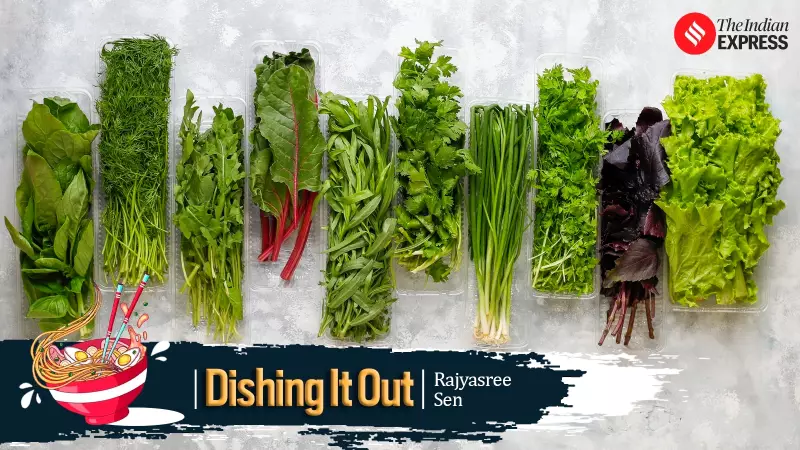
India's relationship with leafy greens is a profound culinary and cultural journey, stretching far beyond the simple salad bowl. From the mustard-laden fields of Punjab to the ritualistic fourteen greens of a Bengali kitchen, the humble 'saag' represents a seasonal map of the nation's incredible biodiversity. These varieties offer a masterclass in how simple tempering and regional spices can transform basic leaves into nutritional powerhouses and beloved dishes.
A Tapestry of Taste: Regional Spinach Varieties Across India
Unlike many Western countries which often recognize a single type of spinach, India boasts a stunning array. Native to South Asia, spinach here is a vegetable that grows on your palate as you mature. It allows for a multi-course meal featuring various types without ever repeating a dish.
In the valleys of Kashmir, one finds the delicate Sotschal Wangan made with mallow leaves. This simple yet flavorful preparation involves chopping and cleaning the leaves, then sautéing them in hot mustard oil with dried red chilis, red chilli powder, a pinch of asafoetida, and ginger powder. It is typically served with hot rice, celebrating the leaf's natural flavour.

Traveling to Punjab, the iconic sarson ka saag reigns supreme. This pungent delicacy cooks mustard leaves with radish and onions, seasoned with the holy trinity of tomato, ginger, and garlic, along with asafoetida and red chilli powder. Pressure-cooked until it disintegrates into a mash, it is then pureed and served with makki ki roti, embodying the robust spirit of Punjabi cuisine.
Eastern Delicacies and Winter Specials
Eastern India presents its own spectrum of greens. Pui shaag or Malabar Spinach, which grows on a thick edible vine, has a mild taste. In Bengal, it is cooked with fish head or mixed vegetables in a dish called labra. Odisha prepares pui saaga rai with mustard paste and garlic, while in Karnataka, Andhra Pradesh, and Telangana, it finds its way into delicious dals.
Winter brings methi or fenugreek leaves, with their slightly bitter flavour, often paired with potatoes or used to flavour Sindhi fish curry. Red Amaranth (lal shaag), now highly recommended by nutritionists, is a Bengali staple simply sautéed in mustard oil with dried red chilis. Another favourite is kolmi shaag or water spinach, which can be enhanced with shrimp and diced potatoes.
North India's winter special, bathua saag (pigweed), has a distinctive taste. Its preparation involves sautéing the leaves with a blend of red chilli powder, turmeric, whole cumin seeds, and coriander powder, then cooking with onions and tomatoes.
The Grand Celebration: Bengal's Choddo Shaag
The pinnacle of India's spinach diversity is perhaps best showcased in Bengal's tradition of Choddo Shaag, or 14 different leafy greens, prepared on the eve of Bhoot Chaturdashi, the day before Kali Pujo. This practice has strong symbolic significance, believed to honour visiting ancestral spirits and celebrate diversity.
The impressive list of fourteen includes:
- Palong shaag (garden spinach)
- Pui (Malabar spinach)
- Methi (fenugreek)
- Lal shaag (red amaranth)
- Kochu shaag (taro leaves)
- Lai shaag (mustard greens)
- Thankuni shaag (Centella)
- Brahmi shaag (Bacopa)
- Kolmi shaag (water spinach)
- Neem shaag (neem leaves)
- Hingche shaag (Leucas)
- Bhat shaag (Clerodendrum)
- Sushni shaag (Marsilea)
- Chalkumro shaag (Ash gourd leaves)
All these greens are typically sautéed in mustard oil with green or dried red chillis, a little turmeric, and salt. The secret, as many chefs and home cooks assert, is to keep the preparation simple to preserve both the spinach's vital nutrients and its inherent flavour.
This rich tapestry of regional spinach varieties underscores a deep-seated culinary wisdom. It is a testament to how India has sustainably integrated biodiversity into its daily diet, turning humble greens into haemoglobin-boosting, flavour-packed superfoods that tell a story of the land and its people with every bite.