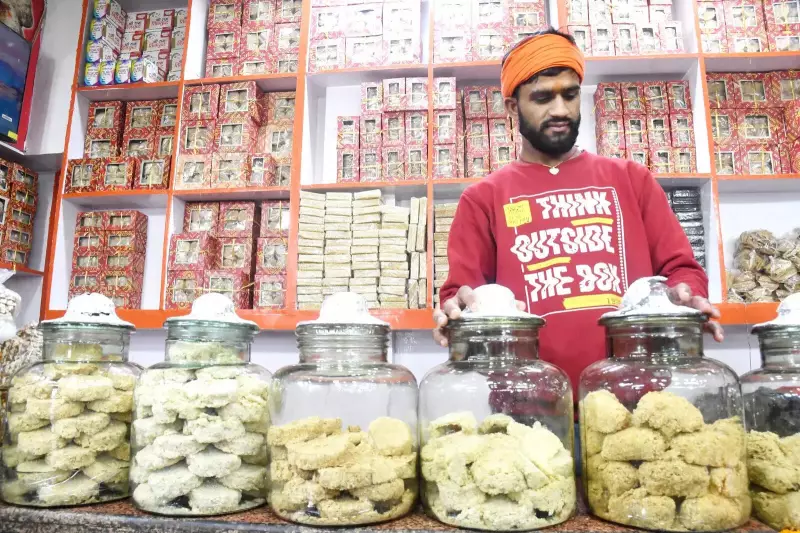
In a delightful twist to a century-old tradition, Gaya's iconic winter sweet, tilkut, is experiencing a healthy renaissance. Known for its crunchy texture and warming properties, this beloved treat has welcomed a contemporary variant that promises to retain its soul while adding a modern health-focused chapter. The innovation centers on 'neera', the fresh, non-alcoholic sap from palm and date palm trees.
The Birth of a Healthier Sweet
The story of this reinvention began in 2023 in Ilra village, near the spiritual hub of Bodh Gaya. Here, a local producer named Dablu Kumar started experimenting with the traditional recipe. For over 150 years, tilkut has been crafted from white sesame seeds (gingili) combined with sugar or jaggery. Dablu's breakthrough was replacing the conventional sweetener with jaggery prepared exclusively from neera.
"The process of neera tilkut is longer compared to traditional tilkut," Dablu explained. He detailed the meticulous method: procuring the fresh sap, converting it into jaggery, and then mixing it with sesame seeds in the perfect proportion. He believes the extra effort is justified by the product's enhanced appeal. "Because neera has many medicinal properties including anti-diabetic and multi vitamins, the tilkut made from it is also safe to consume for diabetes patients," he stated.

Market Success and Growing Ambitions
The market's response has been overwhelmingly positive, proving there is substantial appetite for this fusion of tradition and wellness. A stall strategically located near the world heritage Mahabodhi Mahavihara in Bodh Gaya has become a major draw, attracting both foreign devotees and domestic tourists. Dablu reported impressive sales figures, with everyday sales exceeding 150kg. During prominent events like the Saras Mela at Patna's Gandhi Maidan, daily sales soared past the 100kg mark.
Buoyed by this success, ambitions are scaling up. "This year, one lakh litres of Neera has been procured from which about 250 quintals of tilkut has to be prepared. In the future, we aim to increase the production," Dablu revealed, highlighting the venture's growth trajectory.
The Institutional Backing: JEEViKA's Crucial Role
Behind this sweet success story lies significant institutional support from JEEViKA, Bihar's state rural livelihoods mission. The organization played a pivotal role by training tappers to collect fresh palm sap before sunrise, a critical step that prevents fermentation and keeps the extract non-alcoholic. This initiative gained further impetus after prohibition was enforced in Bihar.
Kautilya Kumar, Manager of Livelihood Farm at JEEViKA, elaborated on their strategy: "Training was imparted to tappers by JEEViKA as per government policy to collect Neera so that consumption of toddy can be checked." The results have been remarkable, with Gaya district topping the state's neera collection last year with an impressive 21.94 lakh litres.
He also cited research by Dr. Aftab of Sabour Agriculture University, Bhagalpur, to underscore neera's health credentials, noting its anti-diabetic properties and richness in multi-vitamins. JEEViKA's training empowers tappers to sell neera through district counters and directly to producers like Dablu, creating a sustainable supply chain for innovations like neera tilkut.
This evolution of tilkut is part of a gentle but persistent trend. Over the decades, variants like condensed milk-stuffed tilkut have won younger fans, while jaggery-based versions from areas like Dumaria block travel far beyond Bihar to other Indian states and Gulf countries. The neera variant, however, stands out as a conscious step towards a healthier legacy, ensuring that this winter delicacy from Gaya remains relevant for the next 150 years.