

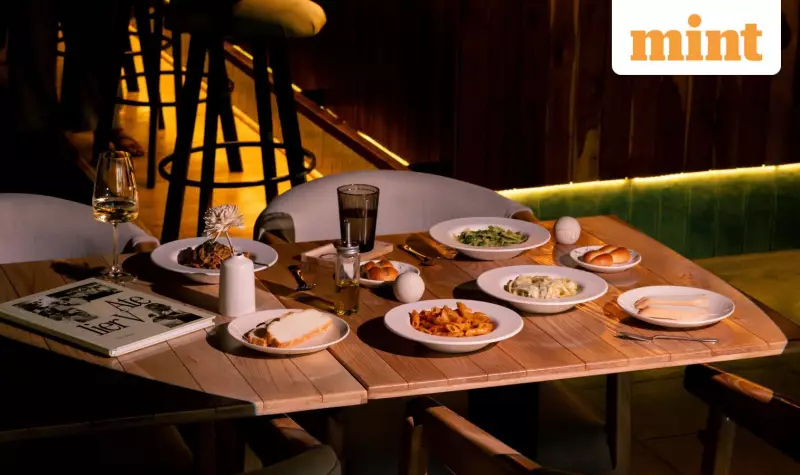
A quiet revolution is simmering in India's kitchens, far from the bustling food scenes of Mumbai, Delhi, and Bengaluru. Today, ambitious chefs are planting their flags in smaller towns, crafting exceptional dining experiences that rival their metropolitan counterparts. This shift is reshaping the nation's culinary map, proving that gastronomic excellence no longer requires a big-city address.
The New Culinary Pioneers
Imagine picking olives from a prop tree before a meal of fresh salads, pasta, and Basque cheesecake in Indore. Or savoring authentic sushi, soba noodles, and katsu curry in the remote village of Turtuk, Ladakh. These are not scenes from a food festival in a metro but regular service at Atelier V in Indore and Yakitori in Virsa Baltistan, Turtuk.
This trend is gaining impressive momentum. Chef Prateek Sadhu's exclusive 16-seater, Naar in Kasauli, sets a high benchmark for remote fine dining. In Mangaluru, chef Shriya Shetty's artisanal bakery and café, Buco, has become a mandatory stop for locals and visitors. Food enthusiasts now drive from Bengaluru or plan a pit stop specifically for Sapa Bakery in Mysuru, while tourists in Aurangabad book a seat at the intimate eight-seater Accentuate Food Lab.

Community and Creativity in Smaller Settings
For these entrepreneurs, smaller towns offer a unique advantage: the space to build a community and experiment freely. Dina Weber, the 30-year-old self-taught German baker behind Sapa Bakery, arrived in India on a gap year in 2014-15 and decided to stay. When she started in 2019, Mysuru lacked European-style bakeries. She began with sourdough breads, French and German pastries, and mousse cakes, initially delivering samples to bed-and-breakfasts.
"Big cities don't lend themselves to creating something with a feel of community," Weber says. "We can be more playful and daring because our overheads aren't as heavy. That allows for more trial and error with our guests." Her persistence paid off, with customers returning weekly for her babkas and doughnuts.
In Indore, Vedant Newatia, 30, founded Atelier V in 2024 after working at the Michelin-starred Steinhalle in Bern, Switzerland. He identified a gap in the market for technique-driven global cuisines and a solid cocktail program. "While Indore has always been a great food city, the menus haven't evolved much beyond Indian cuisine and casual dining," Newatia explains. The initial response was mixed, leading to smart adaptations like replacing French onion soup with the spicier Bhutanese Ema Datshi stew, which locals loved.
Overcoming Unique Small-Town Hurdles
Operating in a smaller city comes with a distinct set of challenges. For Japanese chef Minori Ota at Yakitori in Turtuk (opened in 2021), sourcing ingredients is a major logistical feat. Supplies must travel from metros to Leh, which is 200km away. Ota recalls improvising when she ran out of shiro-dashi, a key soba soup seasoning, by using vinegar and creating a local-Japanese hybrid stock powder.
Staffing and kitchen culture present another hurdle. "Operationally it was tough to deal with the feudal mindset present in many Indian kitchens. It's harder in smaller towns, where many come from traditional set-ups," says Newatia. He contrasts this with European kitchens where everyone pitches in, a culture he strives to instill.
Visibility is also harder to achieve. Mohib Farooqui, the 43-year-old chef-consultant behind Accentuate Food Lab in Aurangabad (opened in 2021), admits that being an eight-seater in a small town means no big PR budgets. "Being based in Aurangabad has diminished the publicity that is easily accessible in metros," he says. His solution was to create tasting menus of 9-13 courses that blend Indian flavours with international ones, catering to Aurangabad's well-travelled industrial community.

A Sustainable Future for Tier-2 Dining
The success of these ventures signals a lasting change. Atelier V has already hosted bar takeovers by popular names like Muro (Bengaluru) and collaborated with Stir Modern Classic Cocktail Bar from Vietnam. The intent driving these kitchens—from Mysuru to Leh—is clear: to create something special for the diner, powered by conviction rather than city gloss.
These chefs are not just opening restaurants; they are building destinations. They prove that with passion, adaptation, and a focus on community, a great culinary concept can thrive anywhere. The steady increase in such conceptual spaces suggests that India's small-town dining revolution is just beginning to swell, offering gourmet travellers exciting new roads to explore.





