

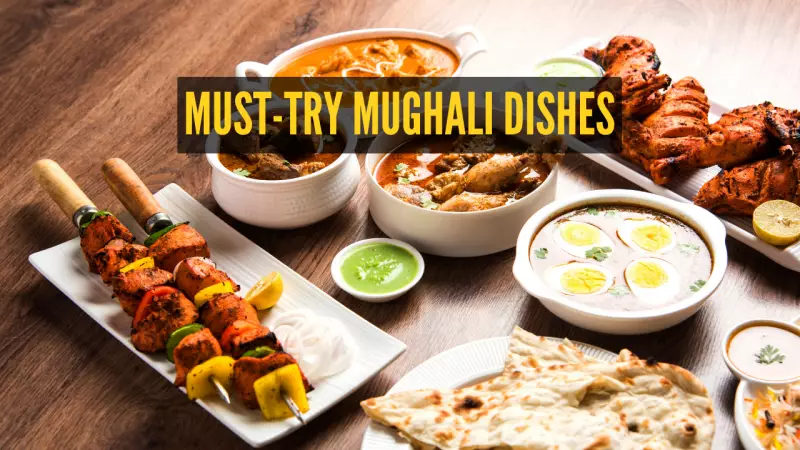
The rich tapestry of Indian cuisine owes a significant debt to the Mughal era, which introduced a legacy of flavours and culinary techniques that remain beloved today. Mughlai cuisine, with its emphasis on rich aromas and the sophisticated use of whole spices, became woven into the Indian food landscape as early as the 15th century AD. This gastronomic gift encompasses both vegetarian and non-vegetarian delights, creating a lasting impact on the nation's palate. Here is a look at ten iconic dishes that stand as enduring gifts from the Mughals to India.
The Royal Legacy of Meat and Kebabs
Mughlai cuisine is renowned for its succulent meat preparations and kebabs, which were often fit for royalty. Chicken Korma, a dish with Persian roots, was adopted by Rajput chefs in Emperor Akbar's kitchen. It was later named after the Rajput tribe Kurma. This classic features chicken pieces simmered in a luxuriously creamy and aromatic gravy.
Another regal creation is Nalli Nihari, traditionally consumed by Mughal emperors after their morning prayers. This slow-cooked delicacy was originally made with mutton stuffed with juicy bone marrow and is best enjoyed with naan or rice.

The kebab tradition travelled from Turkey to India towards the end of the 14th century. Murgh Malai Kebab is a delectable treat made from boneless chicken, skewered and cooked over an open flame. Similarly, Mutton Seekh Kebab, made from expertly spiced minced mutton, remains a staple. The legendary Galouti Kebab was reportedly created in Lucknow for a Nawab who had difficulty chewing. This melt-in-the-mouth kebab is perfectly paired with flaky tandoori roti or lachha paratha.
Signature Main Courses and Breads
Beyond kebabs, the Mughals gifted India with hearty main courses that are now central to festive and everyday meals. Biryani, the celebrated dish of rice, meat, and spices, gained immense popularity in the 16th century and now exists in countless regional variations across the subcontinent.
Roghan Josh, a vibrant and flavorful mutton curry, was also introduced to India by the Mughals and has become a staple, particularly in Kashmiri cuisine. Nargisi Kofta, featuring boiled eggs encased in spiced minced meat, is another rich addition to the Mughlai repertoire, often served with rice.
For bread lovers, the Mughlai Paratha is a fulfilling creation. This stuffed bread, made with refined flour, is generously filled with a mixture of onions, herbs, meat, and spices, making it a meal in itself.
The Sweet Finale
No Mughlai feast is complete without a decadent dessert. Shahi Tukda is the crowning glory, a royal treat made with fried bread slices soaked in sweet, thickened milk (rabdi), and garnished with kesar (saffron), malai (cream), and roasted nuts. It perfectly embodies the opulence of Mughlai culinary artistry.
The influence of Mughlai cuisine is a testament to how food can transcend time and become an inseparable part of a nation's identity. These ten dishes are not just recipes; they are edible history, continuing to delight generations with their complex flavours and rich stories.






