10 Ancient Dishes That Have Survived Centuries: Culinary Time Capsules
Food, at its most enduring, represents memory you can taste. Long before recipes were documented or kitchens standardized, certain dishes traveled through time, passed from generation to generation. These culinary creations were shaped by climate, trade, war, and ritual yet never entirely lost. They are not merely meals but living archives where a single spoonful can contain centuries of migration, survival, and quiet continuity.
Across continents, a handful of dishes have outlived empires and revolutions, remaining recognizable today. Their enduring presence proves that flavor, when deeply rooted in culture, resists erasure. Here are ten remarkable dishes that have survived for centuries.
Kheer: The Ancient Indian Rice Pudding
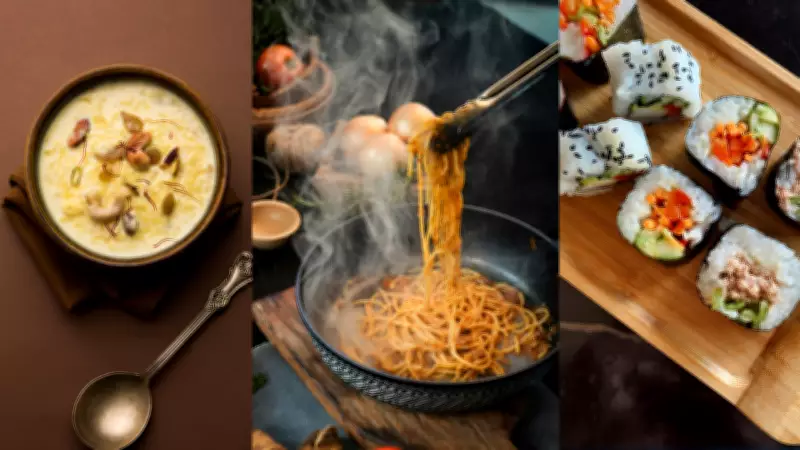
One of the oldest surviving dishes is kheer, the slow-simmered Indian rice pudding mentioned in ancient Sanskrit texts. This simple yet profound dessert involves milk thickened with rice and gently sweetened. For thousands of years, it has been offered in temples and homes alike. Its simplicity is deceptive; whether flavored with cardamom, saffron, or jaggery, each version carries a sense of ritual and devotion, prepared with care rather than haste.

Hummus: A Middle Eastern Philosophy
From the Middle East comes hummus, a dish that transcends mere recipe to become a culinary philosophy. Ground chickpeas blended with sesame, olive oil, and lemon have been consumed for centuries, with references tracing back to medieval Arab cookbooks. Its endurance lies in its perfect balance—earthy, creamy, and bright—and its remarkable adaptability across cultures that have each embraced it as their own.
Tamales: Mesoamerican Sustenance
Tamales, wrapped in corn husks and steamed, carry the imprint of ancient Mesoamerican civilizations like the Aztecs and Mayans. Portable, nourishing, and deeply tied to maize culture, they once served as practical sustenance for travelers and warriors. Today, they remain central to celebrations, with fillings varying but their essence unchanged—a meal designed to be held, shared, and remembered.
Congee: China's Humble Rice Porridge
In China, congee has quietly sustained generations for over two thousand years. This humble rice porridge evolves with region and need, sometimes plain and sometimes enriched with meats or preserved vegetables. Congee embodies comfort at its most elemental, appearing at both the beginning and end of life—fed to the ill, the elderly, and newborns, anchoring it firmly in the human experience.
Ancient Flatbread: The Foundation of Civilization
Bread, in its earliest form, claims an ancient lineage. Egyptian flatbreads, baked as far back as 3000 BCE, laid the foundation for countless variations worldwide. What began as a simple mixture of grain and water cooked on hot stones became a cornerstone of civilization itself. Today, every culture has its own version, but the act of mixing, kneading, and baking remains eerily familiar.
Pasta: Italy's Versatile Legacy
Italy’s pasta, often romanticized, has roots stretching deeper than many assume. Early forms of boiled dough appear in ancient Roman writings, evolving over centuries into the shapes and textures we know today. Pasta’s survival is due not only to its versatility but also its ability to absorb the character of a place—each sauce and region tells its own story through the same basic structure.
Injera: Ethiopia's Communal Bread
In Ethiopia, injera serves as both plate and bread—a fermented flatbread made from teff flour. Its spongy texture and tangy taste have remained consistent for centuries despite changing times. Meals are served atop it and eaten with hands, reinforcing a communal way of dining that has resisted modern fragmentation.
Garum: Ancient Rome's Fish Sauce
From ancient Rome comes garum, a fermented fish sauce that once dominated the empire’s culinary landscape. Though its original form faded, its descendants live on in modern condiments across Southeast Asia and the Mediterranean. Garum is a reminder that even when a dish disappears in name, its essence can echo through other traditions.

Sushi: Japan's Evolution from Preservation to Precision
In Japan, sushi began not as the delicate art it is today but as a method of preserving fish through fermented rice. Over time, what started as preservation transformed into precision cuisine. Yet traces of its origins remain in technique and philosophy—respect for ingredient, season, and balance.
Stew: The Universal Culinary Tradition
Finally, there is stew, arguably the most universal of all dishes. From prehistoric times, humans have simmered available ingredients—grains, meat, vegetables—into something cohesive and sustaining. Whether appearing as a French pot-au-feu, an Indian curry, or a Middle Eastern tagine, the idea remains unchanged: to cook slowly, extract depth, and create something greater than its parts.
These ten dishes are more than food; they are testaments to human resilience, creativity, and the enduring power of culinary tradition. They remind us that in every bite, we taste history itself.