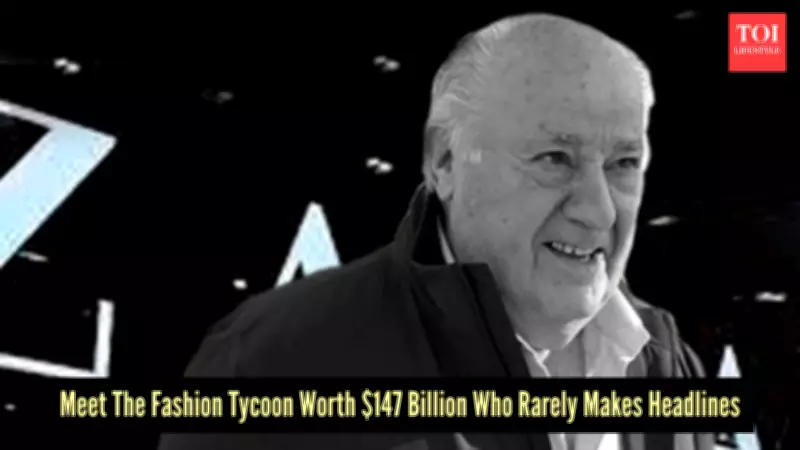
Amancio Ortega, the man behind Zara, is a quiet billionaire whose $147 billion empire transformed global fashion. Unlike typical billionaires, he avoids the spotlight, with no paparazzi or TV interviews. Yet his influence is undeniable. Starting from humble beginnings in La Coruña, Spain, Ortega built Inditex, the parent company of Zara, Pull&Bear, Bershka, and Massimo Dutti, into a retail giant with 7,400 stores in 77 countries. In 2015, his net worth briefly surpassed Bill Gates, making him the world's richest person. Today, he owns nearly 60% of Inditex and a $17.2 billion real estate portfolio including Miami skyscrapers and Amazon's Seattle headquarters.
From Humble Beginnings to Global Dominance
Ortega did not inherit wealth or attend college. At 13, he worked folding shirts in a small shop in La Coruña. Later, he started sewing bathrobes with his siblings. This modest start laid the foundation for Inditex, which now generates $31 billion annually. His real estate holdings are equally impressive, featuring properties from Miami to Seattle.
The Two-Week Rule That Revolutionized Fashion
Before Zara, fashion moved slowly. Designers created seasonal collections that took six months to reach stores. Ortega shattered this model with a vertically integrated system that responds to trends in just two weeks. When a new style appears on a Paris runway, Zara can design, manufacture, and deliver similar items globally within days. While competitors predicted future trends, Zara sold them immediately.

The Psychology of Scarcity
Ortega cleverly engineered scarcity to drive sales. Zara limits inventory for each style, creating a fear of missing out (FOMO). Shoppers know that if they do not buy immediately, the item may vanish. This tactic works: average shoppers visit department stores three times a year, but Zara customers visit 17 times annually. They constantly check for new arrivals.
The Unseen Giant
Ortega bridged the gap between luxury and mass retail, offering runway-inspired fashion at affordable prices. However, his fast-fashion model faces criticism for environmental harm and overconsumption. Despite these issues, Ortega remains a ghost, having reshaped the industry without ever seeking fame. His legacy is one of speed, data, and psychological insight, all delivered quietly from behind the scenes.