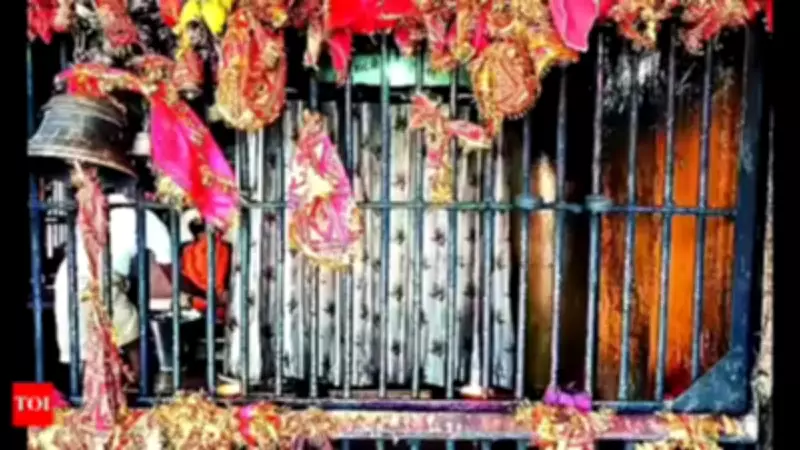
The Paradox of Eclipse Rituals: Temple Closures and Personal Prayer
For many observers, a perplexing contradiction arises during solar or lunar eclipses: Hindu temples close their doors to the public, yet individuals are simultaneously encouraged to pray and chant mantras privately. This dual approach reflects a nuanced understanding of ritual timing and spiritual focus within traditional Hindu observance.
Understanding the Chandra Grahan Tradition
A Chandra Grahan, or lunar eclipse, is viewed as a period when the Moon—representing the mind and emotional balance—falls under temporary shadow. This celestial event creates a unique energetic environment that influences ritual practices.
The visible phases of the March 3, 2026 lunar eclipse will begin in the afternoon, with the umbral phase starting at 3:21 PM. The total eclipse will occur between 4:35 PM and 5:33 PM, with the final contact ending at 7:52 PM. However, temple preparations begin much earlier than the visible shadow.

The Sutak Period and Temple Closures
Temple closures don't coincide with the visible eclipse phases. They commence during the Sutak period, which for the March 3, 2026 eclipse begins at 9:39 AM. From this time forward, routine temple activities are suspended:
- Daily aarti ceremonies are paused
- Bhog offerings are temporarily halted
- Public darshan is discontinued
This suspension isn't based on any belief that deities become inactive during eclipses. Rather, it reflects the understanding that certain ritual timings are considered unsuitable for outward, communal worship. The eclipse period is traditionally viewed as inward-facing rather than outward-facing.
Personal Spiritual Practice During Eclipses
While temples suspend formal ceremonies, Hindu traditions actively encourage personal spiritual practices during the eclipse itself:
- Individual prayer and meditation
- Mantra chanting and japa
- Quiet reflection and introspection
This emphasis on personal practice during temple closures creates a balanced approach where communal worship pauses while individual spirituality continues.
The Temple Reopening Process
Temples don't immediately reopen when the total eclipse phase ends. They wait until the eclipse completely concludes, which on March 3, 2026 occurs at 7:52 PM when the penumbral phase finishes. Even then, reopening isn't instantaneous for public entry.
Before welcoming devotees again, temples undergo a comprehensive cleansing sequence:
- The premises are washed with Ganga jal (holy water from the Ganges)
- The deity receives abhishek (ritual bathing)
- Fresh garments and decorations are offered
- New bhog is prepared and presented
- Shuddhi mantras are recited to restore the worship rhythm
Many households follow a simplified version of this process, taking baths after the eclipse, cleaning their prayer areas, and offering fresh flowers or water once the shadow has passed.
The Philosophical Significance
Temple closure during eclipses isn't rooted in fear or spiritual withdrawal. It represents a sophisticated understanding that time possesses different qualities—some periods are meant for action, while others are designed for silence and reflection.
The March 3, 2026 eclipse, particularly during its peak between 4:35 PM and 5:33 PM, is traditionally treated as a window for introspection. When the shadow lifts at 7:52 PM, reopening the temple symbolizes not a restoration of faith (which remains constant), but a renewal of ritual flow and communal connection.
This temporary closure—lasting just a few hours—allows tradition to continue uninterrupted while honoring the unique energetic qualities of eclipse periods. The practice demonstrates how Hindu rituals maintain continuity while adapting to celestial cycles, balancing communal worship with personal spiritual practice during significant astronomical events.