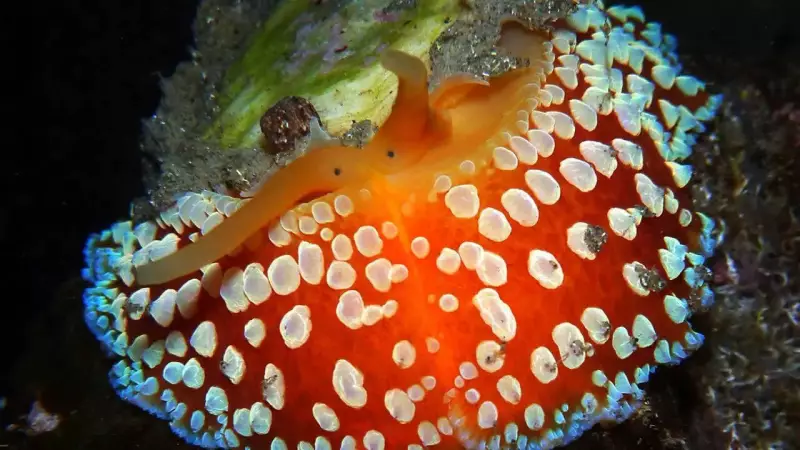
When you think about animals with numerous teeth, sharks often come to mind first, as they can grow and shed thousands of teeth throughout their lives. However, in a surprising twist, the animal that holds the world record for the most teeth in a lifetime is not a fearsome predator but a gentle, slimy creature known as the umbrella slug. According to the Guinness World Records, this peculiar sea slug produces an astonishing number of teeth, surpassing all other animals on Earth in total tooth production over its lifetime.
Umbrella Slug Produces More Teeth Than Any Other Animal
The umbrella slug is a species of sea slug that inhabits oceanic waters, and one of its most fascinating features is its radula—a tongue-like structure covered in rows of tiny teeth. Unlike humans and most other animals, which have a fixed set of teeth that last a lifetime, the umbrella slug constantly grows and replaces its teeth. It can generate tens of thousands of teeth, a number that exceeds that of any vertebrate animal. These teeth are microscopic and arranged in hundreds of rows on the radula, enabling the slug to graze on algae and small particles for sustenance. While the teeth are small, the sheer volume produced throughout the slug's lifetime earns it the world record.
How the Slug's Teeth Function
In contrast to mammals that use teeth for biting and chewing, the umbrella slug's teeth operate more like a conveyor belt for rasping. Here is how this unique system works:

- The radula is lined with tiny teeth in multiple rows.
- As teeth wear out, new ones grow at the back and move forward in a conveyor belt-like manner.
- This continuous process allows the slug to maintain efficient feeding throughout its life.
This mechanism is similar to that of many snails and slugs, but the umbrella slug's tooth replacement rate is unparalleled. Ultimately, the total number of teeth it produces exceeds that of any other animal, including sharks, which are renowned for their frequent tooth replacement.
Comparing This Record to Other Animals
To provide perspective on this remarkable record, consider the following examples:
- White sharks can replace thousands of teeth in their lifetime by growing new ones to replace old ones.
- Elephants have six sets of molars that are replaced only a few times during their lives.
- Humans typically have two sets of teeth in a lifetime—baby teeth and permanent teeth.
The umbrella slug produces teeth at such an incredible rate that it outshines all these animals due to the sheer volume of teeth generated. This exceptional ability is why it holds the Guinness World Record for the most teeth produced in a lifetime.
Why This Record Matters
The record-breaking number of teeth in the umbrella slug may seem like an intriguing trivia fact, but it also highlights the diverse evolutionary adaptations in the animal kingdom. Studying animals with continuously regenerating teeth can offer valuable insights into survival strategies, feeding patterns, and natural renewal processes. The structure of the slug's radula demonstrates how some species have evolved the ability for constant renewal and replacement, a stark contrast to the fixed nature of human teeth. This serves as a reminder that the most fascinating aspects of the natural world are not always the most obvious, encouraging further exploration and appreciation of biodiversity.