Tambula: The Sacred Hindu Gift of Betel Leaves, Nuts, and Spiritual Significance
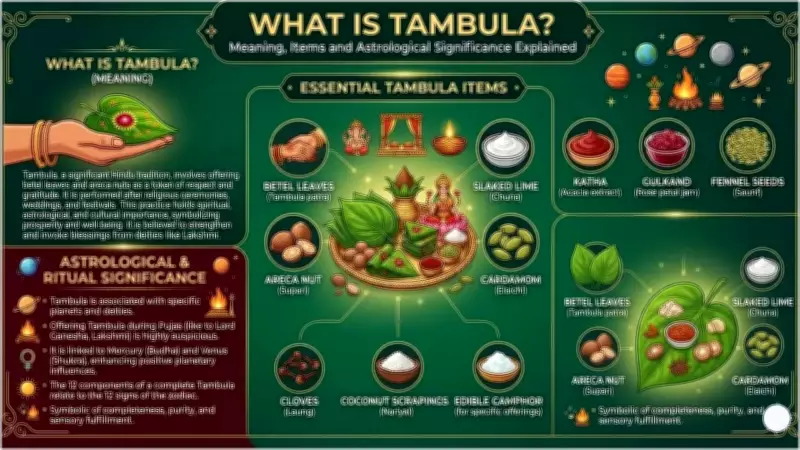
Tambula, also known as tamboolam, is a revered and integral part of Hindu cultural and religious events across India. This traditional gift is typically presented at the conclusion of various ceremonies, including weddings, festivals, pujas, vrats, and other spiritual gatherings. It serves as a profound expression of respect, gratitude, and well-wishing towards married women, guests, and elders, deeply rooted in Vedic traditions that span spiritual, astrological, and cultural dimensions.
What is Tambula?
Historically regarded as sacred, tambula is often arranged on a decorative plate or placed in a small bag for distribution. The practice is especially prominent in South Indian states such as Karnataka, Tamil Nadu, and Andhra Pradesh, where offering Tamboolam to guests and married women is a central element of celebrations. The core components of tambula are areca nuts and betel leaves, symbolizing hospitality and prosperity, respectively.
What Do You Put in the Tambula?
A standard tambula gift includes a carefully curated selection of items, each imbued with symbolic meaning:

- Betel leaves (Paan/Vetrilai): Represent wealth and new beginnings.
- Areca nut (Supari/Adike): Signifies dedication and stability.
- Turmeric (Haldi): Associated with purity, fertility, and the divine feminine energy.
- Kumkum: Invokes the presence of Goddess Lakshmi and heralds auspicious outcomes.
- Coconut: Symbolizes wholeness and spiritual awareness.
- Fruits like bananas: Denote abundance and nourishment.
- Flowers: Express affection and care towards recipients.
- Dakshina (money or coins): Shows respect and gratitude.
- Cloth or blouse piece for women: Highlights their importance in the community.
Additional items may include sweets, bangles, sandalwood paste, or other small gifts, varying based on regional customs and the specific occasion.
What Does Tambula Mean in Astrology?
In Vedic astrology and ritualistic practices, tambula is believed to enhance planetary energies, with each item representing different deities or cosmic forces. Astrologers suggest that giving tambula can amplify the blessings of beneficial planets such as Venus, Jupiter, and the Moon.
- Venus (Shukra): Governs love, wealth, beauty, and comfort. Offering tambula to married women on Fridays is thought to strengthen Venus, promoting marital harmony.
- Moon: Associated with emotional well-being, betel leaves and fruits are used in full moon ceremonies to foster positivity.
- Jupiter (Guru): Represents goodness, prosperity, and wisdom. Acts of generosity like tambula offerings are believed to attract Jupiter's blessings.
Many devotees link tambula to Goddess Lakshmi, seeking her favor for financial success and familial health, particularly when gifted to married women to ensure good fortune and strong family bonds.
Doing Sacred Things
Tambula Samarpana, the ritual of presenting areca nuts and betel leaves, marks the culmination of numerous Vedic ceremonies, signifying the event's completion and bestowing a gracious gift upon participants. This act is also considered to accrue spiritual merit during religious events, festivals, or Navaratri gatherings, underscoring the Hindu values of kindness and generosity.
Cultural Value
Beyond its religious and astrological roles, tambula embodies the Indian ethos of hospitality and sharing prosperity. Exchanged at weddings, festivals, and religious functions, it fosters community bonds and mutual understanding. This age-old tradition demonstrates how even modest gifts can hold immense significance, making tambula not merely a present but a vital religious, cultural, and astrological custom that enriches Hindu heritage.