Swami Avimukteshwaranand Exits Magh Mela Amidst Controversial Remarks on Hindu Identity
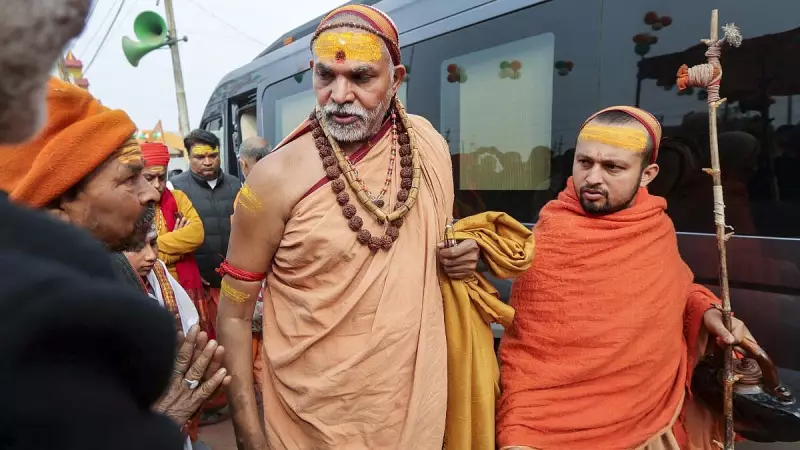
In a significant development at the ongoing Magh Mela in Prayagraj, Uttar Pradesh, Swami Avimukteshwaranand has announced his departure from the religious gathering. The spiritual leader made headlines by framing the current societal struggle as a battle between what he termed 'asli' (real) and 'nakli' (fake) Hindus. This statement has ignited widespread discussions and debates across the country, touching upon deep-seated issues of religious authenticity and community dynamics in contemporary India.
Context of the Magh Mela and the Swami's Role
The Magh Mela is an annual Hindu festival held in Prayagraj, attracting millions of devotees for ritual baths at the confluence of the Ganges, Yamuna, and the mythical Saraswati rivers. Swami Avimukteshwaranand, a prominent figure in religious circles, had been participating in the event, which is known for its spiritual significance and large-scale gatherings. His sudden exit, coupled with his provocative comments, has added a new layer of controversy to this sacred occasion.
Analysis of the 'Real' vs. 'Fake' Hindu Narrative
Swami Avimukteshwaranand's assertion that the fight is between real and fake Hindus raises critical questions about identity and belonging within the Hindu community. This dichotomy suggests a perceived divide based on adherence to traditional practices, beliefs, or perhaps political alignments. Experts note that such rhetoric can polarize communities and fuel tensions, especially in a diverse nation like India where Hinduism encompasses a wide spectrum of beliefs and customs.

- The statement may reflect ongoing debates within Hindu society about modernization versus orthodoxy.
- It could be interpreted as a commentary on the influence of external factors or ideologies on Hindu practices.
- The timing during the Magh Mela, a major religious event, amplifies its impact and reach.
Reactions and Implications for Social Harmony
Responses to Swami Avimukteshwaranand's remarks have been mixed, with some supporters echoing his concerns about purity in religious expression, while critics warn against divisive language that could undermine social cohesion. In Uttar Pradesh, a state with a rich cultural and religious tapestry, such statements are closely watched for their potential to influence public sentiment and community relations.
- Religious leaders and scholars are calling for dialogue to address the underlying issues without fostering division.
- Social media platforms have seen heated discussions, highlighting the broader national interest in matters of faith and identity.
- The incident underscores the need for nuanced conversations about religion in India's pluralistic society.
Broader Significance in Indian Religious and Political Landscape
This event is not isolated but fits into a larger pattern of debates around Hindu identity in India. With elections and policy discussions often intersecting with religious themes, Swami Avimukteshwaranand's exit and comments could resonate in political and social spheres. Observers suggest that it may prompt reflections on how religious narratives are shaped and their impact on national unity.
As the Magh Mela continues, the absence of Swami Avimukteshwaranand and his controversial stance will likely remain a topic of discussion, influencing perceptions of Hindu unity and diversity. The situation calls for a balanced approach that respects religious freedoms while promoting harmony among all communities.