The Ramayana's Enduring Legacy in Southeast Asia
The ancient Indian epic, the Ramayana, transcends its origins to weave a rich tapestry of cultural and spiritual influence across Southeast Asia, particularly in Thailand and Cambodia. This narrative, centered on the divine prince Rama and his quest to rescue his wife Sita, has been adapted and localized over centuries, embedding itself deeply into the social fabric of these nations.
Thailand's Royal Adaptation: The Ramakien
In Thailand, the epic is known as the Ramakien, which translates to "Glory of Rama." This version is not merely a translation but a distinct reinterpretation that reflects Thai values and royal traditions. Commissioned by King Rama I in the late 18th century, the Ramakien was crafted to align with Buddhist principles and Thai monarchy, portraying Rama as a bodhisattva or enlightened being.
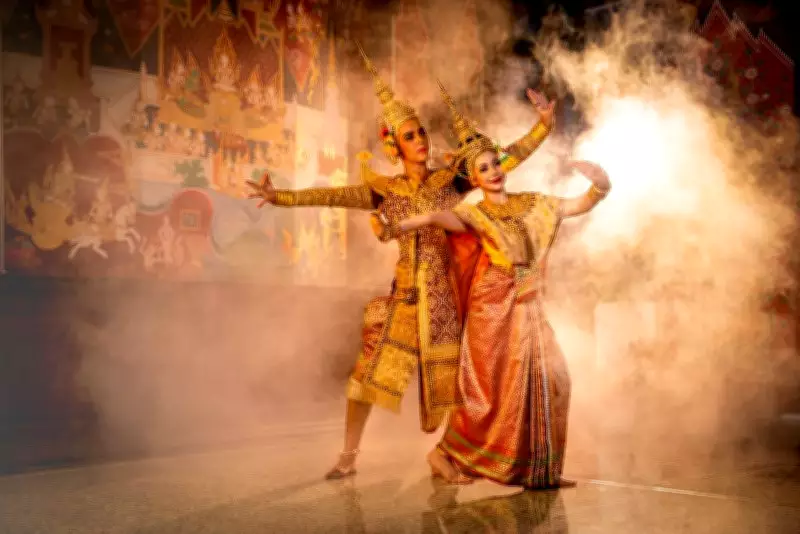
The influence of the Ramakien extends beyond literature into Thai art and performance. Traditional Khon masked dance dramas vividly bring the epic to life, with elaborate costumes and movements that symbolize moral lessons. These performances are often staged during royal ceremonies, reinforcing the connection between the epic and Thai governance. Additionally, murals in temples like Wat Phra Kaew in Bangkok depict scenes from the Ramakien, serving as visual narratives that educate and inspire devotion.

Cambodia's Ancient Roots: The Reamker
In Cambodia, the epic is called the Reamker, derived from "Rama" and "kerti" meaning glory. This adaptation dates back to the Angkor period (9th to 15th centuries) and is deeply intertwined with Khmer culture and Hinduism. The Reamker is celebrated through classical dance, known as Robam Reamker, where graceful movements and intricate gestures convey the story's themes of duty, loyalty, and righteousness.
Architectural marvels like the temples of Angkor Wat feature bas-reliefs depicting scenes from the Reamker, blending myth with historical artistry. These carvings not only showcase the epic's narrative but also highlight its role in shaping Cambodian identity and spiritual practices. The Reamker's emphasis on dharma (moral order) resonates with Cambodian values, influencing social norms and ethical conduct.
Comparative Cultural Impacts
The adaptations in Thailand and Cambodia reveal how the Ramayana has been molded to fit local contexts while preserving core themes. Key differences include:
- Religious Integration: In Thailand, the Ramakien incorporates Buddhist elements, whereas the Reamker in Cambodia retains stronger Hindu influences, reflecting each country's dominant religious history.
- Artistic Expressions: Thai Khon dance emphasizes masked performances and royal patronage, while Cambodian classical dance focuses on fluid movements and temple-based traditions.
- National Identity: Both nations use the epic to reinforce cultural pride and unity, with the Ramakien symbolizing Thai monarchy and the Reamker representing Khmer heritage.
Modern Relevance and Global Significance
Today, the Ramayana continues to inspire contemporary art, literature, and education in Thailand and Cambodia. Festivals and cultural events often feature episodes from the epic, ensuring its transmission to younger generations. This enduring relevance underscores the Ramayana's role as a universal narrative that bridges cultures and fosters cross-cultural understanding.
In a globalized world, the epic's adaptations in Southeast Asia highlight how ancient stories can evolve to address modern themes, such as justice and resilience. By studying these versions, scholars gain insights into the dynamic interplay between tradition and innovation in cultural preservation.
The Ramayana's journey from India to Thailand and Cambodia exemplifies the power of storytelling to transcend borders. Through unique adaptations like the Ramakien and Reamker, this epic has become an integral part of Southeast Asian heritage, enriching art, spirituality, and societal values for centuries.