

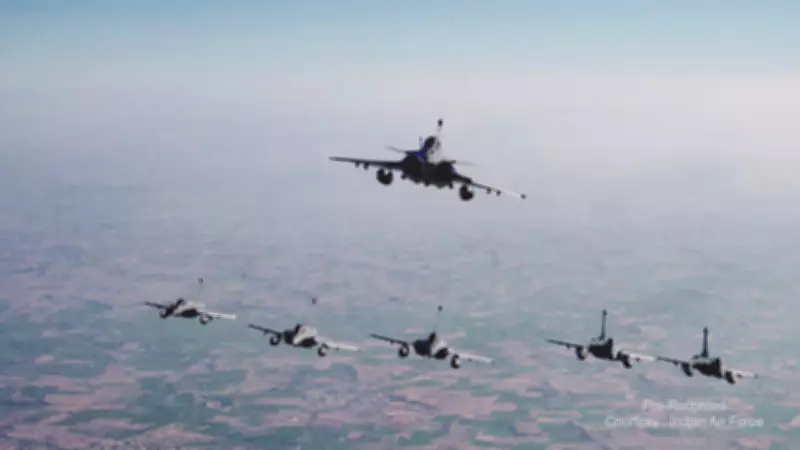
India's Defence Acquisition Council to Consider Massive Rafale Fighter Jet Purchase
In a significant development ahead of French President Emmanuel Macron's scheduled visit to India for the Artificial Intelligence Summit from February 18 to 20, the Defence Acquisition Council (DAC) is poised to deliberate on major defence procurement proposals. Chaired by Defence Minister Rajnath Singh, the DAC meeting in the second week of this month will focus on critical acquisitions to bolster India's military capabilities.
Rs 3.25 Lakh Crore Proposal for 114 Rafale Aircraft
The most prominent item on the agenda is the anticipated proposal to grant Acceptance of Necessity (AoN) for the procurement of 114 Rafale fighter jets from France. This monumental deal, valued at approximately Rs 3.25 lakh crore, represents one of India's largest defence acquisitions in recent years.
The procurement plan involves acquiring 18 aircraft in fly-away condition directly from France, while the remaining 96 jets will be manufactured in India with substantial indigenous content. Sources indicate that about 80% of the total 114 Rafales proposed under this agreement are planned to be produced domestically, marking a significant step toward India's self-reliance in defence manufacturing.

Detailed Specifications and Manufacturing Collaboration
The Indian Air Force (IAF) is set to receive a mix of 88 single-seater and 26 twin-seater aircraft under this ambitious project. The majority of these advanced fighter jets will be built in India through a strategic collaboration between French aerospace giant Dassault Aviation and various Indian private sector companies.
This indigenous manufacturing effort is expected to incorporate up to 60% local content, fostering technological transfer and boosting India's domestic defence industry. The project has already cleared preliminary hurdles, having received approval from the Defence Procurement Board last month, and now awaits the apex body's clearance to proceed to the next phase.
Strategic Timing and Regional Security Imperatives
The timing of this acquisition is particularly crucial as the IAF currently operates approximately 30 fighter squadrons, significantly below its sanctioned strength of 42 squadrons. This shortfall comes at a time of escalating regional security concerns, with defence analysts pointing to increased strategic cooperation between Pakistan and China, as well as evolving dynamics involving Bangladesh.
Once finalized, this deal will substantially enhance India's air combat capabilities, providing the IAF with a fleet of 150 Rafale aircraft when combined with the existing 36 jets. Additionally, the Indian Navy will receive 26 carrier-compatible versions of the French fighter planes, further strengthening India's maritime defence posture.
Operational Significance and Future Capabilities
The Rafale has demonstrated its combat prowess during Operation Sindoor, where it earned recognition as a '4.5-generation king' in offensive operations. Armed with sophisticated weaponry including Meteor beyond-visual-range air-to-air missiles, SCALP cruise missiles, and laser-guided bombs, the Rafale provides the IAF with a formidable multirole combat capability.
This acquisition addresses an urgent operational requirement, as India's indigenous fifth-generation Advanced Medium Combat Aircraft (AMCA) program remains in development stages. The selection process for companies to build this advanced stealth fighter continues, while Hindustan Aeronautics Limited's Tejas MkIA production faces challenges due to dependence on American company GE for engines.
The Rafale project is expected to serve as a cornerstone of India's air defence strategy for decades, providing the IAF with 4.5-generation-plus multirole fighter capabilities that bridge current operational gaps while future indigenous programs mature.






