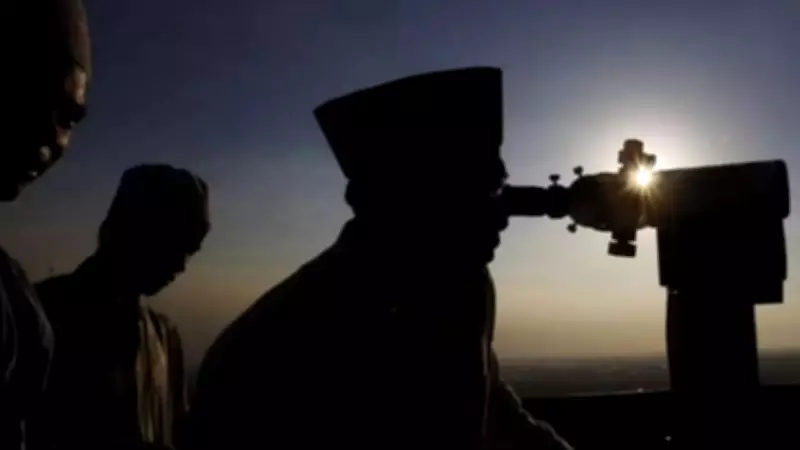
Ramadan 2026: Crescent Moon Sighting Marks Start of Holy Month Worldwide
Every year, millions of Muslims across the globe eagerly anticipate the sighting of the Ramadan crescent moon, a moment imbued with profound spiritual, historical, and communal significance. Unlike many holidays fixed on the Gregorian calendar, Ramadan adheres to the Islamic lunar calendar, commencing only after the new moon, known as hilal, is observed following sunset on the 29th day of Shaban, the preceding month.
This crescent moon sighting, often visible to the naked eye and officially confirmed by religious committees, heralds the official start of Ramadan, a sacred month dedicated to fasting, prayer, deep reflection, and acts of charity. The practice is deeply rooted in Islamic tradition and scripture, where witnessing the crescent serves as both a temporal marker and a moment of collective anticipation.
Global Variations in Moon Sighting and Fasting Start Dates
While astronomical calculations can predict the moon's birth, the traditional method relies on local visibility at sunset, leading to variations in start dates across countries. For instance, in 2026, Saudi Arabia and neighboring Gulf states reported sighting the crescent on the evening of February 17, prompting them to begin Ramadan on Wednesday, February 18. In contrast, many Muslim communities in South Asia, Europe, and North America are expected to sight the moon on February 18, with fasting likely to commence on Thursday, February 19.

These differences arise due to geographic factors, atmospheric conditions, and the relative positions of the Earth and sun. Some regions, like the Gulf states, often experience earlier visibility due to favorable sunset and horizon conditions, while others may observe it a day later. Communities may follow either strict visual sightings or astronomical predictions announced by official bodies, contributing to the diversity in practices.
Spiritual and Social Significance of Ramadan
Ramadan stands as one of the Five Pillars of Islam, representing an act of devotion, self-restraint, and purification. During this month, healthy adult Muslims abstain from food, drink, smoking, and marital relations from dawn (suḥoor) until sunset (iftar). These practices not only reinforce self-discipline but also foster empathy for those less fortunate.
The month emphasizes increased prayer, Quran recitation, nightly Taraweeh prayers, and heightened acts of charity, such as zakat and sadaqah. It culminates in Eid ul-Fitr, a festive celebration marking the end of fasting, characterized by communal prayers, feasting, and social gatherings. Cultural expressions vary globally, from decorative lanterns in Egypt to interfaith iftars in the United States, highlighting how both global unity and local traditions shape the Ramadan experience.
Historical and Scriptural Foundations
The sighting of the Ramadan crescent moon carries immense spiritual weight in Islam, as it signals the beginning of a core pillar of faith. This practice is directly rooted in the teachings of Prophet Muhammad SAW, who emphasized humility before divine timing over reliance on calculations alone. Authentic hadiths, such as those recorded in Sahih al-Bukhari and Sahih Muslim, instruct Muslims to fast upon sighting the crescent and to complete thirty days if it is obscured.
These traditions underscore that Ramadan begins not merely as a calendar date but as a moment of communal witness, a collective act of obedience, unity, and submission to Allah's decree. The moon sighting thus serves as both a legal marker and a symbolic reminder that Islamic worship aligns with the natural rhythms of creation.
Symbolic and Practical Importance of the Crescent Moon
The crescent moon's significance in Islam is multifaceted, blending symbolism with practicality. Spiritually, it represents a fresh start, prompting Muslims to embark on a period of intensified faith and moral reflection. Communally, it brings people together, as families and friends gather after Maghrib prayers to search for the hilal, often exchanging greetings of "Ramadan Mubarak."

Additionally, Ramadan's timing shifts earlier each year by about 10–11 days due to the lunar calendar's faster cycle compared to the solar Gregorian calendar. This rhythm connects Islamic worship with cosmic patterns, reinforcing a sense of unity among Muslims worldwide, from Riyadh to London to New York.
In summary, the start of Ramadan is determined by the sighting of the crescent moon, a practice deeply woven into Islamic ritual and community life. For 2026, the holy month is expected to begin on February 18 or 19, depending on local visibility, emphasizing fasting, prayer, charity, and reflection across diverse global communities.