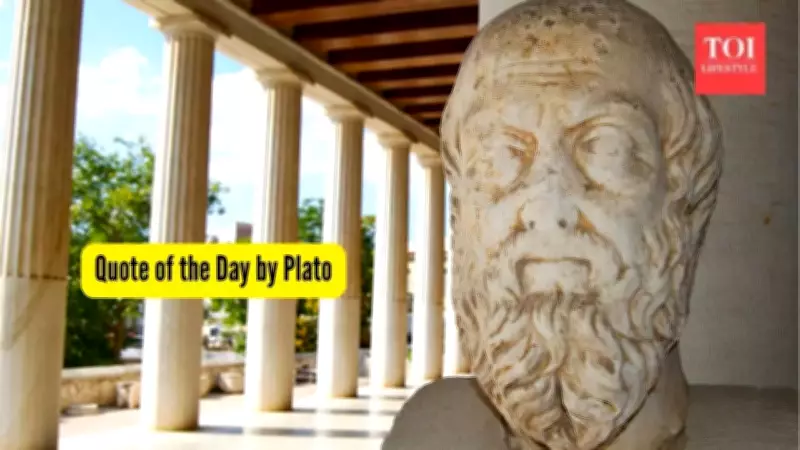
Plato: The Pillar of Western Philosophical Thought
Plato stands as a towering figure in the history of Western philosophy, whose influence has profoundly shaped intellectual discourse for over two millennia. Born in Athens around 428 or 427 BCE into an affluent family with political connections, he emerged during a period when Athens was a dominant city-state celebrated for its cultural achievements, democratic governance, and vibrant intellectual debates. Plato's early education encompassed poetry, music, mathematics, and physical fitness, reflecting the comprehensive curriculum expected of educated Athenians, and he initially considered a political career aligned with his family's legacy.
The Transformative Influence of Socrates
Plato's philosophical journey was irrevocably altered by his mentorship under Socrates, a thinker renowned for his dialectical method of questioning beliefs on virtue, justice, and truth. Through engaging dialogues rather than lectures, Socrates encouraged deep introspection, fostering Plato's dedication to philosophy as a tool for understanding and improving the world. The trial and execution of Socrates in 399 BCE marked a pivotal moment for Plato, as he witnessed the Athenian government condemn his mentor to death on charges of corrupting the youth and impiety. This event deeply disillusioned Plato with Athenian democracy, steering him toward developing his own philosophical systems.
Plato's Dialogues and Core Philosophical Tenets
Plato articulated his ideas through written dialogues, where characters, often led by Socrates, debate philosophical questions. His most famous work, The Republic, delves into justice, ideal societal structures, education, and leadership. It features the Allegory of the Cave, a powerful metaphor illustrating the journey from ignorance to enlightenment. In this allegory, prisoners chained in a cave mistake shadows for reality until one escapes and discovers the true world outside, symbolizing the philosophical pursuit of knowledge and truth.

The Measure of a Man: Power and Morality
One of Plato's most enduring concepts, often summarized as "The measure of a man is what he does with his power," encapsulates his views on morality and responsibility. Although this exact phrasing may not appear in his surviving texts, the underlying idea resonates throughout his works, particularly The Republic. Plato argued that an individual's character is revealed through their use of power—whether political, economic, social, or intellectual—rather than through mere words or status. He believed that wisdom and morality are intrinsically linked; thus, those who truly understand justice will wield power ethically.
Plato contended that power serves as a test of character, where its misuse can lead to corruption and harm, while its virtuous application promotes fairness and truth. This philosophy underpins his proposal of the philosopher-king, a leader guided by wisdom and duty rather than ambition. In contemporary contexts, this idea remains relevant across politics, business, education, and everyday life, emphasizing that authority should be viewed as a responsibility to act morally and wisely.
Plato's Lasting Impact on Modern Society
Over two millennia after his death, Plato's ideas continue to influence political theorists, educators, and academics. His explorations of truth, justice, knowledge, and ideal governance provide foundational frameworks for discussions on ethics and leadership. By examining his life, the intellectual currents that shaped him, and his core tenets, we gain insight into the persistent relevance of his philosophical contributions. Plato's legacy endures as a testament to the power of reasoned inquiry and the pursuit of a just society.