Renowned historian Jadunath Sarkar has observed that the Nawabs of Awadh played a crucial and influential role in the political landscape of northern India. This assertion is powerfully demonstrated through the events surrounding the Third Battle of Panipat in 1761, a pivotal conflict that reshaped the subcontinent's power dynamics.
The Strategic Importance of Nawab Shuja-ud-Daulah
Long before the climactic battle between Ahmad Shah Abdali and the Marathas, led by Sadashiv Rao Bhau, both factions aggressively sought to enlist regional rulers to bolster their forces. At this critical juncture, the most significant figure for both sides was Shuja-ud-Daulah, the third Nawab of Awadh. His military prowess, featuring a formidable army of Qizilbash soldiers and European-style artillery, was widely regarded as one of the finest in India at the time.
Financial and Military Might of Awadh
Thanks to Awadh's exceptionally fertile lands, Shuja-ud-Daulah commanded substantial wealth, providing him with the resources to finance extensive warfare. Both Abdali and the Marathas were acutely aware of this advantage, making the Nawab a highly coveted ally in their struggle for dominance.

Diplomatic Maneuvers and Alliances
The Maratha camp made the first move, approaching Shuja-ud-Daulah and appealing to their long-standing and cordial relationship. They portrayed Abdali as a greedy invader and tempted the Nawab with promises of greater gains and rewards for his support.
In response, Ahmad Shah Abdali initiated his own diplomatic efforts. He first dispatched Malika Zamani, the widow of Emperor Mohammad Shah, to persuade Shuja-ud-Daulah. When this attempt failed, a desperate Abdali turned to Najib-ud-Daulah, the Rohilla chieftain and founder of Najibabad, who successfully convinced the Nawab to align with the Afghan forces.
A Historic Decision Amidst Family Legacy
This alliance was particularly notable given the historical context. Shuja-ud-Daulah's father, Safadar Jang, the second Nawab of Awadh, had previously defeated Abdali in the 1748 Battle of Manupur while fighting for King Mohammad Shah Rangeela. Despite this familial precedent, Shuja-ud-Daulah chose to side with Abdali, a decision that would prove decisive in the upcoming conflict.
The Aftermath and Humanitarian Acts
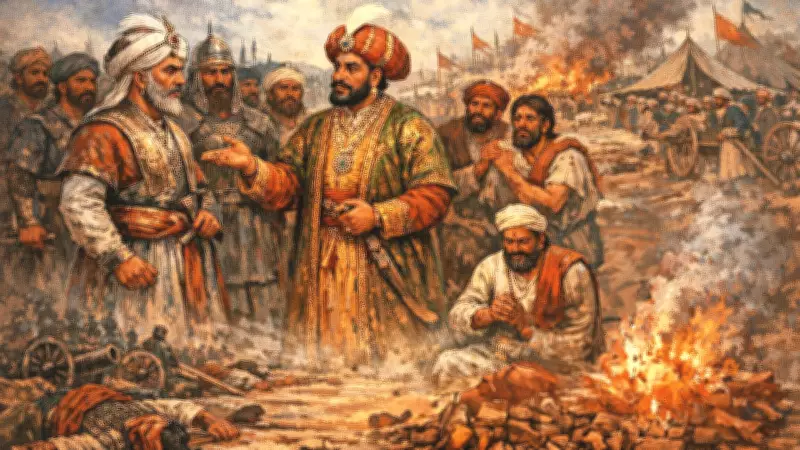
The Third Battle of Panipat culminated in a victory for Ahmad Shah Abdali on January 14, 1761. In the immediate aftermath, as Abdali's forces began executing surviving Maratha soldiers, Shuja-ud-Daulah intervened. He personally appealed to Abdali, successfully saving the lives of approximately 8,000 Marathas and 400 of their officers.
Furthermore, when Abdali's army attempted to desecrate the bodies of fallen Maratha soldiers, Shuja-ud-Daulah stepped in to prevent this dishonor. He took charge of recovering the body of Maratha chief Sadashiv Rao Bhau and entrusted the task of performing last rites according to Hindu rituals to Kashiraj and Anup Giri, demonstrating a remarkable act of respect and humanity amidst the brutality of war.
This account, based on historical analysis, underscores the complex interplay of diplomacy, military strategy, and personal influence that defined this era, with Shuja-ud-Daulah emerging as a central figure whose choices left an indelible mark on Indian history.