Historic Buddha Relics from Vadodara's MSU Embark on First International Journey to Sri Lanka
In a landmark event for cultural heritage and international relations, the most treasured artifacts of Maharaja Sayajirao University (MSU) in Vadodara – sacred relics of Lord Buddha – are set to leave the university's Department of Archaeology for the first time since their momentous discovery on January 14, 1963. This unprecedented move marks a significant chapter in the preservation and sharing of India's rich Buddhist legacy.
Sacred Journey to Colombo for Public Exposition
The revered relics, originally unearthed at the Dev Ni Mori archaeological site in north Gujarat, will travel to the Sri Lankan capital of Colombo for a special public exposition scheduled from February 4 to February 10. This carefully planned journey represents not just a physical transportation of artifacts but a profound spiritual and cultural exchange between two nations with deep historical Buddhist connections.
The transportation arrangements are both secure and symbolic, with the relics being carried aboard an Indian Air Force aircraft. They will be accompanied by a distinguished high-level delegation led by Gujarat Governor Acharya Devvrat, along with Deputy Chief Minister Harsh Sanghavi, respected Buddhist monks, and senior government officials. A specialized team from MSU's Department of Archaeology will also travel with the relics to ensure their proper care and handling throughout the journey.

Ceremonial Send-off and Historical Significance
The sacred procession to transport these precious artifacts from MSU will commence with a ceremonial send-off attended by Chief Minister Bhupendra Patel and MSU Chancellor Rajmata Shubhangini Raje Gaekwad. This marks only the second time the relics will be publicly displayed – the first being in 2010 during an International Buddhist Conference hosted by the Gujarat government in Vadodara, where His Holiness the Dalai Lama, serving as chief guest, was visibly moved upon viewing the sacred artifacts.
MSU Registrar K M Chudasama emphasized the rarity of this event, noting that the relics have remained carefully preserved within the university since their discovery, making this international journey particularly momentous for both academic and spiritual communities.
Enshrinement at Colombo's Gangaramaya Temple
During their stay in Sri Lanka, the Buddha relics will be enshrined for public veneration at the revered Gangaramaya Temple in Colombo, one of the most iconic and spiritually significant Buddhist institutions in the country. This temple serves as a major center for worship, learning, and cultural exchange, making it an ideal location for this historic exposition.
The selection of Gangaramaya Temple underscores the deep spiritual connections between India and Sri Lanka, providing devotees and scholars alike with a rare opportunity to engage with these sacred artifacts in a setting of profound religious significance.
Discovery and Preservation of the Sacred Artifacts
The story of these relics begins with archaeological explorations at Devni Mori that commenced in 1957 under the leadership of Professor S N Chowdhry from MSU's Department of Archaeology. The research team faced challenging conditions, staying in tents and carrying firearms for protection against wild animals in the remote location near Shamlaji in Aravalli district.
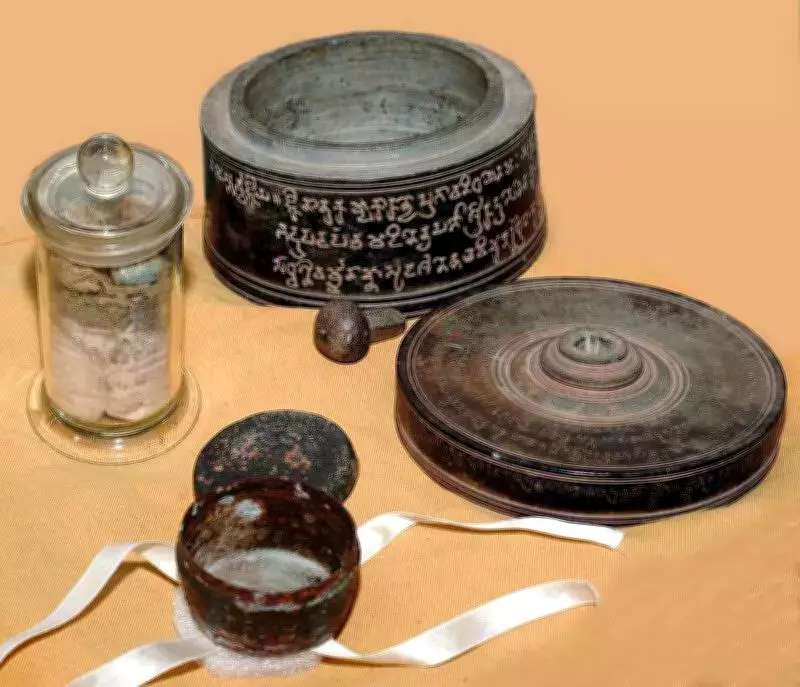
Their perseverance was rewarded on January 14, 1963, when they discovered a small casket bearing a Brahmi inscription that read: 'Dashabala Sharira Nilayaha', meaning 'This is the Abode of the relics of Dashabala (Buddha)'. This discovery ranks among the most significant archaeological finds in Gujarat, comparable in importance to discoveries at Harappan sites.
The casket was found within a stupa approximately 24 feet above the base level and contained a copper box holding organic matter including holy ashes, silk cloth, and beads. Today, these precious relics are preserved in an air-tight desiccator that prevents further deterioration of the delicate materials, ensuring their preservation for future generations.

Cultural Diplomacy and International Relations
Beyond their spiritual significance, this exposition serves vital diplomatic purposes, advancing India's cultural diplomacy initiatives in the region. The journey and display of the relics to Sri Lanka represents a gesture of spiritual outreach and cultural diplomacy that was articulated by Prime Minister Narendra Modi during his visit to Sri Lanka in April of the previous year.
This initiative reinforces India's people-centric foreign policy approach, building bridges through shared cultural and spiritual heritage rather than purely political or economic means. The exposition highlights India's Buddhist legacy while strengthening contemporary cultural engagements with neighboring countries.
The relics are scheduled to return to India on February 11, concluding what promises to be a historic chapter in international cultural exchange and spiritual diplomacy between India and Sri Lanka.