Meteoritic Iron Confirmed in Spain's 3,000-Year-Old Villena Treasure Hoard
For decades, archaeologists have marveled at the magnificent gold artifacts comprising the Treasure of Villena, discovered near Alicante in 1963. This remarkable hoard contains dozens of exquisitely crafted objects that perfectly align with what experts expect from the Late Bronze Age period in Iberia. However, two small, unassuming pieces have always presented a puzzling anomaly that challenged conventional understanding.
The Mysterious Iron Objects That Defied Explanation
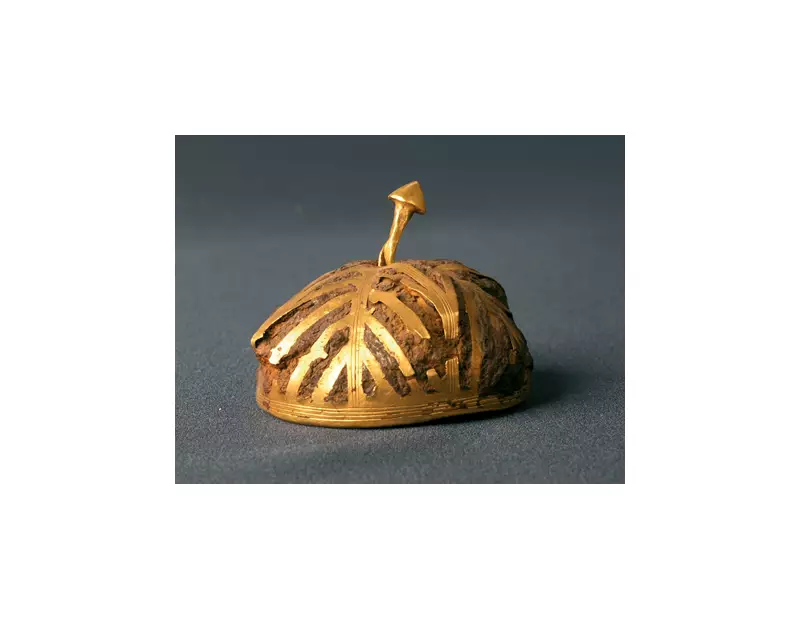
Among the glittering gold bowls, bracelets, and decorative vessels rested two peculiar items: a simple open bracelet and a small hollow hemisphere covered with pierced gold sheet. These objects stood out immediately with their dull, corroded appearance that contrasted sharply with the surrounding golden treasures. Their iron-like composition presented a chronological problem since large-scale iron production in Iberia began much later than the Bronze Age.
For years, these enigmatic pieces were treated as curious anomalies or possible intrusions from a later historical period. Some scholars suggested they must belong to a different era despite being found within a closed Bronze Age deposit. Their presence created discomfort among researchers who struggled to reconcile them with established archaeological timelines.

Meteoritic Iron: The Cosmic Metal of Ancient Civilizations
Before humans developed the technology to smelt iron from terrestrial ores, the only workable iron available came from meteorites that fell to Earth. Iron meteorites contain distinctive chemical signatures, particularly high concentrations of nickel and cobalt that are typically absent or present only in trace amounts in early terrestrial iron.
Across the ancient world, a select few prestige objects crafted from meteoritic iron have been identified, including Egyptian beads and the famous dagger found in Tutankhamun's tomb. These rare items were difficult to work with and carried significant symbolic value due to their celestial origins.
Scientific Breakthrough Through Careful Analysis
Identifying meteoritic iron presents significant challenges, especially in objects that have been buried for millennia. Iron corrodes readily over time, and the corrosion process can strip away the very nickel and other elements that would normally indicate an extraterrestrial origin. In extreme cases, little or no original metal survives beneath layers of rust, making traditional metallographic analysis difficult or impossible.
In 2007, researchers received special permission to take minuscule samples from the corroded surfaces of the Villena objects. The amounts removed were exceptionally small, taken from areas already damaged by oxidation. A second, slightly deeper sample was later taken from the bracelet to improve confidence in the results. These samples consisted entirely of corrosion products rather than fresh metal, reflecting the fragile state of these ancient artifacts.
Chemical Evidence Points to Celestial Origins
Despite these analytical limitations, chemical testing revealed patterns consistent with meteoritic iron. The ratios of nickel to iron and nickel to cobalt aligned closely with values observed in heavily weathered meteorites rather than terrestrial iron sources. While absolute nickel levels were low, this was expected given the objects' age and degree of corrosion.
When compared against published scientific datasets, the Villena samples fell squarely within the range associated with altered meteoritic material. This compelling evidence suggests the iron used in these objects did not originate from Earth but instead fell from the sky as meteorites.
Implications for Iberian Bronze Age Chronology
If the Villena iron pieces are indeed meteoritic, their presence no longer forces a later dating for the treasure. Instead, they support a Late Bronze Age chronology that predates widespread iron production in the region. This aligns well with other archaeological evidence linking the Villena hoard to nearby sites such as Cabezo Redondo, which was abandoned before 1200 BC.

The objects were likely valued not for practical utility but for their extreme rarity and celestial origins. Their inclusion in the treasure suggests Bronze Age communities in Iberia recognized and prized iron from space, possibly attributing mystical or symbolic significance to these cosmic materials.
A Historic First for the Iberian Peninsula
These findings establish the Villena objects as the first confirmed meteoritic iron artifacts from the Iberian Peninsula. While similar items are known elsewhere in Europe, they remain uncommon and often date to slightly later periods. Further non-invasive testing could strengthen the case, but current evidence strongly suggests that Bronze Age communities in Iberia had access to and appreciated the unique value of iron from space.
The two modest objects, once overlooked and puzzling to researchers, now occupy a central position in understanding ancient technological capabilities and cosmological beliefs. They represent a tangible connection between Earth and the cosmos, preserved for three millennia before revealing their extraordinary secret to modern science.