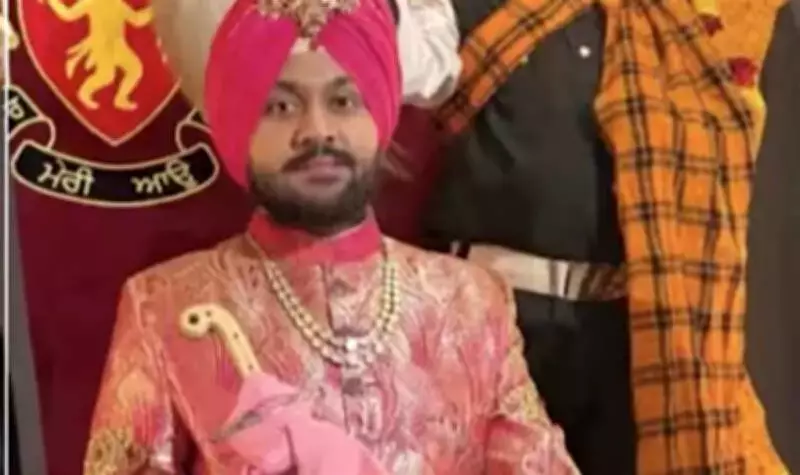
Ambala Wedding Ritual Sparks Outrage: Simranjit Singh Mann's Relative Issues Apology
A wedding ceremony in Ambala, Haryana, has ignited a significant controversy within the Sikh community, leading to a public apology from the groom, Govind Singh Sandhu. Sandhu, a relative of Shiromani Akali Dal (Amritsar) president Simranjit Singh Mann, found himself at the center of a storm after videos of his wedding rituals went viral on social media.
Viral Video Shows Use of Sacred Sikh Symbols
The controversy erupted when a video clip from the wedding began circulating widely online. The footage shows a chaur, a ceremonial fly whisk, being waved over Sandhu's head during the ceremony. Additionally, another person is seen holding a chhatar, an umbrella traditionally used as a mark of royalty. The background features the sound of drums and pipes, with two turbaned Sikh men escorting Sandhu while carrying spears.
Sandhu is identified as the son of Mann's daughter and a descendant of the Shahzadpur Riyasat family of Sandhu Jatts in Ambala district. The use of these specific items quickly drew sharp criticism from various sections of the Sikh community.

Why the Symbols Are Considered Sacred
In Sikhism, the chaur and chhatar hold profound religious significance. These are symbols of sovereignty and reverence that are exclusively associated with the movement and presence of Sri Guru Granth Sahib, the living Sikh Guru and the eternal spiritual authority of the faith. The Guru Granth Sahib is treated with the utmost respect, and these items are used in its service during religious ceremonies.
Critics argued that employing such sacred symbols in a personal wedding ritual, regardless of family traditions, constituted a grave disrespect towards the Sikh faith. Many viewed it as an inappropriate act that blurred the lines between cultural practices and religious sanctity.
Sandhu's Explanation and Apology
Facing mounting backlash, Govind Singh Sandhu took to social media on Sunday to address the issue. In his post, he provided context for the ritual, explaining that the holding of the chhatar and waving of the chaur were historically part of ancient princely wedding ceremonies. He emphasized that his family, as descendants of the Shahzadpur princely state, has followed this tradition for generations.
Sandhu clarified that the ritual was performed specifically during the janjh, which is the marriage procession led by the bridegroom, as a cultural tradition and a mark of respect. He insisted that there was no intention to undermine or disrespect Sikh beliefs in any manner.
However, in a significant move, Sandhu took full responsibility for the controversy. He admitted that waving the chaur in this particular context was a mistake. Sandhu issued a heartfelt apology to the entire Sikh community, expressing regret with folded hands. He further clarified that the brief ritual should not be interpreted as equating any individual with the eternal greatness of the Sikh Gurus.
Broader Implications and Community Reaction
This incident highlights the delicate balance between preserving cultural heritage and respecting religious protocols within communities. While family traditions are cherished, they must be mindful of religious sentiments, especially in a diverse and spiritually sensitive society like India.
The apology from Sandhu has been noted, but the episode serves as a reminder of the deep reverence Sikhs hold for their religious symbols and the Guru Granth Sahib. It underscores the importance of cultural sensitivity and awareness in public ceremonies to prevent such controversies from arising in the future.