Manipur's Yaoshang Festival: A Five-Day Cultural Explosion
In the northeastern state of Manipur, spring doesn't just arrive gently—it bursts forth across five spectacular days of vibrant color, rhythmic celebration, and deep-rooted ritual. From the first sunrise of Yaoshang, villages across the region awaken to a unique cultural pulse that transforms ordinary streets into arenas of communal joy.
The Festival's Commencement: Rituals and Community Bonds
The five-day celebration begins with Yaoshang mei thaba, the ceremonial burning of small bamboo and straw huts constructed across various localities. This simple yet potent ritual involves setting these structures aflame at sunset, with each hut containing an image of Chaitanya Mahaprabhu that symbolizes devotion and the blessing of spring. Devotees perform worship and make offerings before the image is removed and surrendered to the flames, officially ushering in the festival period.
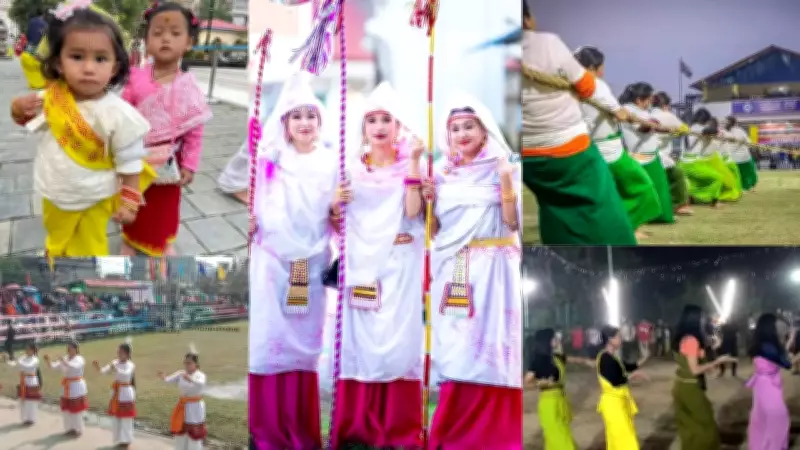
Following this initiation, young boys and girls dressed in their finest attire embark on nakatheng—the collection of donations from neighboring households. Moving through their leikai (neighborhoods) in cheerful groups, children offer blessings for success, longevity, and good health while receiving modest monetary contributions that help fund the upcoming festivities. This exchange involves laughter, playful refusals, and eventual surrender, reinforcing community ties through shared participation rather than obligation.

Historical Roots and Cultural Synthesis
Yaoshang represents a fascinating cultural synthesis that developed through the adoption and adaptation of Vaishnavism in Manipur. While often equated with Holi, scholars recognize it as the indigenization or localization of the broader Hindu festival. The Chaitanya school of Vaishnavism, originating in Bengal through the teachings of Chaitanya Mahaprabhu, introduced devotional practices centered on Krishna bhakti to the region.
Under King Bhagyachandra in the late 18th century, these Vaishnavite traditions underwent significant localization, giving rise to a distinct Manipuri Vaishnavism. Temples such as Shree Shree Govindajee and Bijoy Govindajee became central to ritual life, while Yaoshang itself emerged from this synthesis as something uniquely Manipuri. Historian Wangam Somorjit notes that this process of indigenization mirrors patterns seen across Southeast Asia, where religious frameworks were adapted rather than imposed wholesale.
Cultural Expressions: From Moonlit Dances to Devotional Songs
The festival's highlights include several distinctive cultural expressions:

- Thabal Chongba: This traditional Manipuri folk dance performed during Yaoshang features participants forming circular formations while holding hands and executing coordinated footwork. The term combines thabal (moonlight) and chongba (hopping), describing the act of dancing under moonlight. Traditionally organized by young women who pool resources for elaborate neighborhood gatherings, these dances serve as culturally accepted forums for courtship and romantic connection.
- Holi Pala: Elders and community members perform traditional Pala Eshei (devotional songs) at major temples and during home-to-home visits. These performances rich in devotional fervor also serve as occasions for collecting monetary offerings, tying spiritual practice to communal support.
- Aberteinaba: The vibrant exchange of colors represents one of the festival's most joyous elements. From the second day onward, participants adorn each other's faces with bright powders while children enthusiastically engage in playful water splashing using pichkari (water guns). This tradition symbolizes the breaking down of social barriers and fosters friendship, unity, and goodwill across generations.
Sports and Community Engagement
Over recent decades, sports have become integral to Yaoshang celebrations, blending physical discipline with festive joy. Communities across neighborhoods, villages, and towns organize competitive events throughout the five days, showcasing young talents and reinforcing community identity. According to historian Somorjit, this integration resulted from the intervention of social and political reformer Hijam Irabot, who introduced sports as part of Yaoshang festivities on an experimental basis.
The festival features both traditional indigenous games—including Mukna, Yubi Lapki, and Laphu Kabee—and modern competitions such as debates, singing contests, arithmetic challenges, and dance performances. Fun activities like spoon races, tug-of-war, blindfold games, and football matches engage participants of all ages, ensuring every community member becomes woven into the festival's fabric of collective joy and spirited competition.
Cultural Resilience and Contemporary Significance
Yaoshang represents more than mere spectacle—it embodies a layered cultural phenomenon shaped by Vaishnavite devotional frameworks, colonial-era reform movements, and modern civic life. Its survival across centuries demonstrates remarkable resilience and adaptability while maintaining essential cultural character. Thabal Chongba has emerged as perhaps the most visible surviving Manipuri folk dance practiced at the community level, remaining participatory and accessible unlike classical dances institutionalized under royal patronage.
While contemporary celebrations typically span five days, historical accounts indicate the festival once stretched to nearly two months. Historian Wangam Somorjit notes there were long Yaoshang holidays until the late 1930s, as reflected in MK Priyabrata Singh's memoir Down Memory Lane, where Manipur's first chief minister described visiting Ukhrul during the extended festival period.
Today, Yaoshang continues to thrive as Manipur's premier spring celebration—a vibrant testament to cultural preservation, community solidarity, and the joyous embrace of seasonal renewal that transforms the entire region into a living canvas of color, rhythm, and shared heritage.