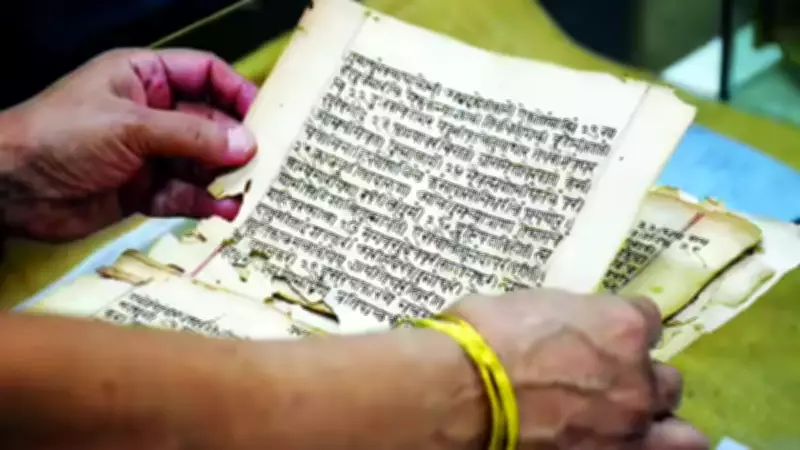
India Launches First-Ever National Manuscript Survey to Map Heritage
In a groundbreaking initiative, the Ministry of Culture is set to launch a three-month-long nationwide survey starting Monday to comprehensively map India's manuscript heritage. This first-of-its-kind exercise aims to locate all manuscripts across the country, from the district level upwards, and create a consolidated database along with a national digital repository on the central portal of the 'Gyan Bharatam Mission'. The extensive effort seeks to address conservation, preservation, and digitization needs by geotagging manuscripts found in collections, institutions, and with individual custodians.
Leveraging Technology for Digitization
Culture Secretary Vivek Aggarwal highlighted that survey teams will utilize the Gyan Bharatam app to upload details of manuscripts. Technology will be leveraged to enable digitization in a standardized format, ultimately making these cultural treasures accessible to the public. This move aligns with the vision document, the New Delhi Declaration, adopted in September last year at the Gyan Bharatam conference in Vigyan Bhawan, where Prime Minister Narendra Modi emphasized that the mission would serve as a "proclamation of India's culture, literature and consciousness".
Addressing Intellectual Piracy and Expanding Access
Prime Minister Modi noted that India possesses the world's largest collection of manuscripts, estimated at about 1 crore (10 million). Their digitization under the Gyan Bharatam Mission, announced in the 2025-26 Budget, is expected to curb "intellectual piracy" by safeguarding these valuable resources. On the survey exercise, Culture Secretary Aggarwal mentioned that committees at the state and district levels have been formed under the chairmanship of the chief secretary and the district magistrate, respectively, to oversee the process.

Integrating Existing Digital Efforts
The ministry is also working on integrating manuscripts already digitized by institutions and state governments, which are estimated to number more than a million. This integration will enhance the national repository, ensuring a more comprehensive and unified access point for researchers, scholars, and the general public. The survey represents a significant step in preserving India's rich cultural legacy for future generations.