Global Powers Exercise Caution on Trump's Call for Warships in Hormuz
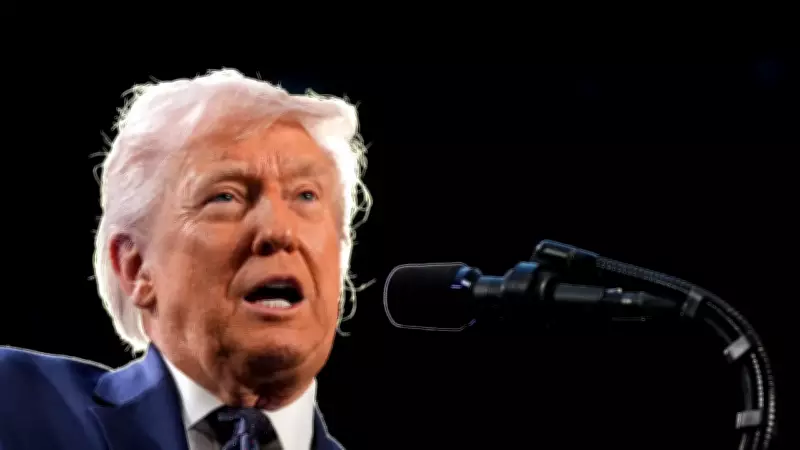
In a significant development amid escalating tensions, US President Donald Trump has appealed to several nations including China, France, Japan, South Korea, and Britain to deploy warships to ensure the Strait of Hormuz remains "open and safe." This strategic waterway, through which approximately one-fifth of global oil exports typically pass, has become a focal point as conflict between Iran and a US-Israel coalition intensifies.
No Immediate Commitments from Nations
Despite the urgent appeal, no country offered firm commitments on Sunday as oil prices continue to soar during the ongoing hostilities. The cautious responses come as Iran has explicitly stated that the strait remains open to all vessels except those from the United States and its allies.
Iran's Foreign Minister Abbas Araghchi revealed in an interview with CBS that Tehran has "been approached by a number of countries" seeking safe passage for their vessels through the critical waterway. He emphasized that decisions regarding passage "are up to our military to decide," noting that a group of vessels from "different countries" had already been permitted to pass, though he provided no specific details.
Diplomatic Responses from Key Nations
Various nations responded cautiously to President Trump's call. China's embassy spokesperson Liu Pengyu stated that "all parties have the responsibility to ensure stable and unimpeded energy supply" and that China would "strengthen communication with relevant parties" to work toward de-escalation.
United Kingdom Energy Secretary Ed Miliband told Sky News that Britain is "intensively looking with our allies at what can be done" because reopening the strait is critically important. He added that ending the war represents the "best and surest" method to achieve this objective.
South Korea's Foreign Ministry indicated it "takes note" of Trump's appeal and will "closely coordinate and carefully review" the situation with American officials. Expectations are mounting that President Trump will directly ask Japan for assistance when Prime Minister Sanae Takaichi meets with him at the White House on Thursday.
European Positions and International Coordination
France has previously indicated it is collaborating with various nations—including partners in Europe, India, and Asia—on a potential international mission to escort commercial vessels through the strategic strait. However, French officials have stressed that such operations must occur only when "the circumstances permit" and fighting has diminished.
Germany, notably absent from Trump's initial appeal, maintained distance from the conflict. Foreign Minister Johann Wadephul explicitly stated on ARD television: "Will we soon be an active part of this conflict? No."
Iran's Stance and Regional Threats
Iran has taken a firm position against negotiations with the United States. Foreign Minister Araghchi declared, "We don't see any reason why we should talk with Americans" about finding a resolution to the conflict. He attributed the fighting's initiation to coordinated US-Israeli attacks on February 28, which occurred during indirect nuclear negotiations between Washington and Tehran.
The Iranian government has issued stark warnings about potential retaliation. Officials have threatened that "all oil and energy infrastructure will turn to ashes" if Iran's oil facilities are targeted, specifically mentioning US-linked "oil, economic and energy infrastructures" as potential targets.
Escalating Military Actions and Regional Impact
The conflict has seen significant escalation in recent days. Gulf Arab states including Saudi Arabia, Kuwait, and Bahrain reported new missile or drone attacks on Sunday, just one day after Iran called for the evacuation of three major ports in the United Arab Emirates. This marked the first instance of Iran threatening non-US assets in a neighboring country.
Tehran has accused the United States of launching Friday's strikes on Kharg Island—home to Iran's primary oil terminal—from UAE territory, though no evidence has been provided. US Central Command offered no response to these allegations, while Anwar Gargash, diplomatic adviser to the UAE president, firmly rejected the claims.
Throughout the conflict, Iran has fired hundreds of missiles and drones at neighboring Gulf states, causing substantial damage and economic disruption despite most being intercepted. Iranian officials maintain they are targeting US assets, though strikes have been reported at civilian locations including airports and oil fields.
Mounting Humanitarian Toll Across the Region
The human cost of the conflict continues to rise dramatically. Iranian strikes have killed at least a dozen civilians in Gulf countries, with migrant workers comprising most casualties. Within Iran itself, the International Committee for the Red Cross reports more than 1,300 fatalities, while Iran's Health Ministry indicates 223 women and 202 children are among the dead according to Mizan, the judiciary's official news agency.
In Israel, twelve people have been killed by Iranian missile fire with additional injuries reported, including three on Sunday alone. At least thirteen US military personnel have lost their lives, six of them in a plane crash in Iraq last week.
Lebanon has suffered particularly severe consequences, with its Health Ministry reporting at least 820 fatalities since Iran-backed Hezbollah attacked Israel and Israel responded with strikes while deploying additional troops to southern Lebanon. Astonishingly, more than 800,000 people—nearly one in seven Lebanese residents—have been displaced in just ten days of conflict.
Continued Military Exchanges and Strategic Developments
Military actions continue unabated with Israel reporting ongoing strikes against Iran while facing additional Iranian missile attacks. Several strikes hit central Israel and the Tel Aviv area, damaging 23 sites and igniting a small fire. Magen David Adom, Israel's rescue service, released video footage showing a substantial crater in a street and shrapnel damage to an apartment building.
Israeli military officials report that Iran is employing cluster bombs capable of evading certain air defense systems and scattering submunitions across multiple locations. Meanwhile, the International Energy Agency announced on Sunday that emergency oil stocks "will soon start flowing to global markets," describing the collective action to lower prices as "by far the largest ever." The agency updated last week's announcement of 400 million barrels to nearly 412 million, with Asian member countries planning immediate releases and reserves from Europe and the Americas scheduled for release "from the end of March."
As the conflict enters a dangerous new phase with the Strait of Hormuz becoming a potential flashpoint, the international community faces complex challenges balancing energy security concerns with diplomatic efforts to de-escalate hostilities that have already claimed thousands of lives and displaced hundreds of thousands across the Middle East.