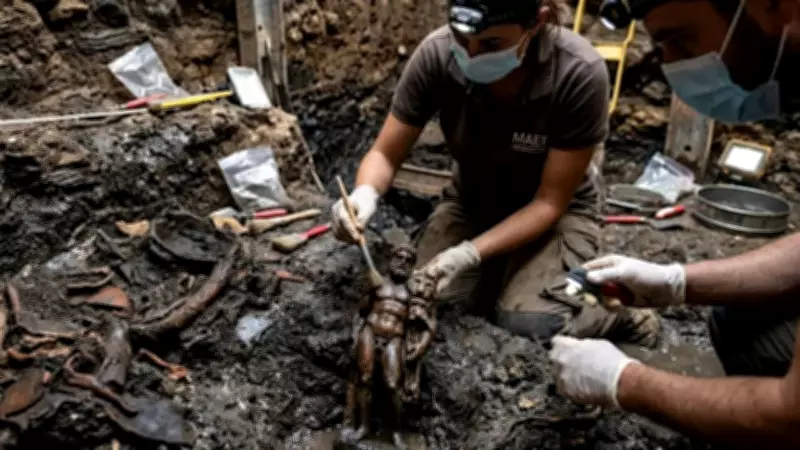
Archaeologists Unearth 2,000-Year-Old Hercules Statue in Ibiza
Archaeological investigations conducted along the sun-drenched shoreline of Ibiza, prior to construction activities, have led to a remarkable discovery: an ancient wooden statue of the legendary hero Hercules, dating back two millennia. This 30-centimetre-tall artifact was found approximately 7 metres underground within a waterlogged pit, offering a rare glimpse into the Roman period when the island was known as Ebusus.
Exceptional Preservation in a Muddy Environment
The statue's survival is particularly astonishing because organic materials like wood typically decompose rapidly in the Mediterranean climate. However, this grain silo, which had been left open to rain and developed a muddy environment after abandonment, created anaerobic (oxygen-free) conditions. These unique circumstances prevented the growth of fungi and bacteria that would normally destroy wood, allowing the statue to remain intact in a saturated state for centuries.
Alongside the figurine, archaeologists discovered leather fragments and plant remains, indicating that the pit was originally used for domestic waste or storage before being sealed. This context provides valuable information about daily life in ancient Ebusus.

Evidence of Roman Cultural Influence
Ibiza, referred to as Ebusus by the Romans, served as a crucial hub on Mediterranean shipping routes. Following the Second Punic War, the island transitioned from Carthaginian to Roman dominance. The presence of the Hercules statue, depicting a strong figure with a lion skin draped over the left shoulder—a classic representation of the hero—demonstrates how Roman religious and mythological elements were integrated into the local culture during the 1st or 2nd century BC.
High-Tech Conservation Efforts
Currently housed at the Archaeological Museum of Ibiza and Formentera (MAEF), the statue is undergoing a sophisticated preservation process. To prevent shrinkage or disintegration as it dries, conservators are replacing the water in the wood cells with stabilizing agents such as Polyethylene glycol (PEG). This meticulous treatment is essential to maintain the statue's integrity before it can be displayed to the public.
This discovery not only highlights the advanced techniques used in modern archaeology but also enriches our understanding of the spiritual and cultural dynamics of ancient societies in the Mediterranean region.