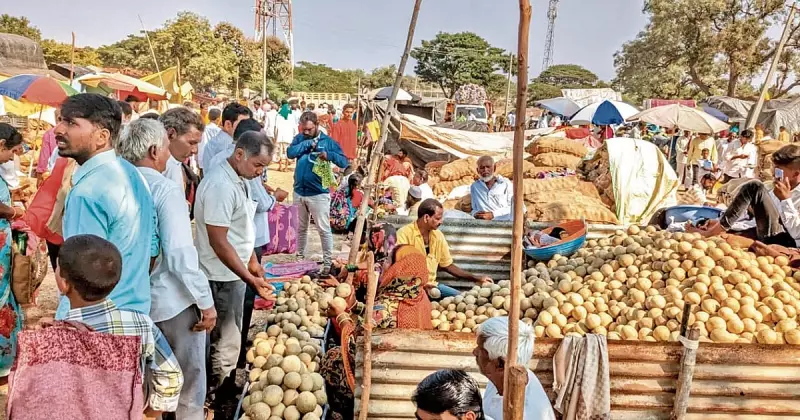
The small village of Godachi in Karnataka's Belagavi district transforms into a bustling hub of devotion and commerce every year during the Hosthilu Hunnime festival. The centrepiece of this unique event is the humble wood apple, locally known as the bel fruit, creating a vibrant fair that seamlessly weaves together health, tradition, and community.
A Sacred Gathering for the Bel Fruit
During the auspicious occasion of Hosthilu Hunnime, the premises of the historic Veerabhadreshwara Temple become the focal point for thousands of devotees and traders. The air fills with anticipation as heaps of sweet-sour bel fruits are brought in and displayed. For the local community and visitors from surrounding regions, this is more than a market; it is a sacred ritual. The festival date, highlighted as 31 December 2025 in reports, marks a key moment in the local cultural calendar.
Tradition Meets Wellbeing
The festival is a profound example of how ancient practices are intrinsically linked to wellness. The bel fruit, or wood apple, is highly revered in Ayurveda for its numerous medicinal properties. Its presence at a religious fair underscores a traditional understanding of health intertwined with spirituality. Devotees purchase these fruits not only as religious offerings but also as beneficial additions to their diet, believing in their power to aid digestion and boost immunity.

Journalists Ganadhalu Srikanta and Channappa Madar captured the essence of this event, noting the lively atmosphere where spirituality and commerce coexist. Traders are seen dumping large quantities of the fruit on the temple grounds in preparation for the fair, creating colourful mounds that attract everyone's attention.
The Cultural and Economic Impact
The Godachi wood apple festival serves as a significant economic driver for the local community. It provides a vital platform for traders and farmers to sell their produce directly to a large, captive audience. Simultaneously, it reinforces cultural identity, drawing people back to their roots and ensuring the continuation of a unique regional tradition. The event highlights Karnataka's rich tapestry of local festivals that go beyond mere celebration, embedding practical health wisdom and sustainable economic activity within a framework of faith.
In conclusion, the Hosthilu Hunnime festival at Godachi is a beautiful testament to living traditions. It successfully clubs a deep respect for religious customs with the practical benefits of a natural, health-boosting fruit, ensuring its relevance for generations to come.